You can make Dakor na Gota in an instant when you've got a big batch of dakor na gota pre-mix. Last minute guests or fried food cravings? I've got you!


You can make Dakor na Gota in an instant when you've got a big batch of dakor na gota pre-mix. Last minute guests or fried food cravings? I've got you!
Prepare these Dakor na Gota, a classic Gujarati snack, with homemade dakor na gota mix. I’m totally smitten with how simple yet flavour-packed they are!

Kansar is a traditional Gujarati sweet made with coarse wheat flour, jaggery, sugar and aromatic spices. It's deliciously comforting and oozes ghee. Heavenly!

Nankhatai are Indian style spiced shortbread flavoured with cardamom. Orange almond nankhatai take it one step further with nutty almond meal and generously thick strips of orange zest. It's an incredible flavour combination you didn't know you needed!
Try them with this ultra luxurious zafrani chai (saffron milk tea) and thank me later!

Around comes the festive season and I’m thinking up exciting new twists on Indian desserts. Whilst the original nankhatai has a place in my heart, I wanted to try out new flavours that add a little surprise - this chocolate nankhatai is one of them.
Orange is a particular favourite of mine and I love incorporating it into creamy desserts. Bhapa doi with a spiced orange syrup, white chocolate mousse and vegan burnt basque cheesecake are all perfect examples.
Be sure to check out the full recipe and exact ingredient list below in the recipe card.
Orange zest, and even orange oil, add a sunshine-esque brightness that when paired with cardamom becomes gloriously festive. It's a bit of a mix of Diwali and Christmas rolled into one!
I've stuck to my tried and tested (way too many times to count) nankhatai recipe as the base. The only difference I make is swapping the semolina for almond meal. Ground almonds add a richness often found in European baking and also complement citrus.
The result is the lightest, most buttery, melt in the mouth cookies you'll ever try. They aren't overly sweet and I've adjusted the baking time so they are perfectly crisp but melt away once you take a bite.

I'll be having a piece (or two) with a steaming cup of Indian ginger chai. You'll love them for special occasions, Diwali or other festivities.
If you're looking for a gluten-free version, try my besan nankhatai made only with gram flour.
Store orange almond nankhatai in an airtight container for up to 5 days. After this time, they will loose their freshness and start going stale.
As always if you make this recipe, be sure to leave me a comment, rate this recipe and tag me on Instagram @jcookingodyssey or #jcookingodyssey. I love seeing all your photos of my recipe recreations!
Don’t forget to follow me on social media using the buttons below – I can't wait to see you all there!

PLEASE NOTE: Nutritional values are estimated by a computer and may vary based on ingredients and portion sizes. For personalised dietary advice, please consult a qualified healthcare professional.
Share on Facebook Pin This RecipeIf you love paneer curries, this panch phoran version needs to be the next on your list! The whole spices crackle in oil, infusing the curry with robust, pickle-like flavours. Cream at the end brings everything together. It's rich and impossible to resist!

Prepare delicious farali muthiya with dudhi for a filling meal on Hindu fasting days. These are made with a mix of farali flour and plenty of aromatic tempering.

My parwal nu shaak is made Gujarati style with basic spices, lemon juice and coconut. It's ready in less than 15 minutes and can be served as part of an everyday Gujarati thali.

Prepare fluffy South Indian coconut rice, aka thengai sadam, for a quick yet flavourful side dish. I use dried shredded coconut rather than fresh to save time!

Paneer Pasanda is the sort of dish that makes everyone at the table pause after the first bite and say, “wow!". Slices of paneer are stuffed with grated paneer, coriander, nuts, and sultanas. They’re served with a silky, creamy gravy.

Prepare this flavourful homemade Balti Sauce for a delicious curry night. I like to make a batch in advance, store it and prepare a balti curry whenever I crave it. This sauce is naturally vegan and gluten free.

"like the fact that your recipe sounds really easy...other recipes have sourced complicated to me and yours has given me the confidence to give it a try, with it being easy...thank you very much for sharing your easy to follow recipe. I love knowing that I have made it myself and I know what ingredients are in it."
- Dianne
Balti Sauce is one of those curry house classics that everyone loves, but it doesn’t need hours in the kitchen to taste good.
My version is quick to prepare, yet still captures that bold flavour you’d expect from a British curry house balti. I’ve tested this recipe many times and found little shortcuts - like using tomato purée for instant depth - so you can have a rich curry base ready in under 30 minutes.
What makes balti unique from a standard Indian base curry sauce is the addition of bell peppers. I use it as a base sauce for a vegetable balti but you could add sub in meat.
Be sure to check out the full recipe and exact ingredient list below in the recipe card.
Onions – I tend use red onions here for sweetness and colour, though brown onions work if that’s what you’ve got.
Garlic & ginger – Fresh paste makes all the difference. Pre-made pastes save time, but I find they lose that punchy freshness.
Peppers – I like mixing red and green for sweetness and a hint of bitterness. It keeps the sauce balanced.
Tomato purée – My shortcut to a deep, rich flavour without simmering down fresh tomatoes for ages.
Whole spices (cumin, coriander, fennel) – A quick temper in the pan really wakes them up — it’s a small step that transforms the flavour.
Ground spices (coriander, cumin, garam masala, chilli powder/paprika) – This is where you can play with heat. Personally, I use Kashmiri chilli powder for colour and add hot chilli powder or cayenne if I want extra spice.
Kasuri methi (dried fenugreek leaves) – I crush them in my hand before adding. That last sprinkle gives the sauce a restaurant-style finish.
Oil – A neutral oil like sunflower works best; olive oil changes the flavour too much.
Salt + a pinch of sugar – Sugar balances the tang of the tomatoes — it’s a tiny tweak, but I never skip it.

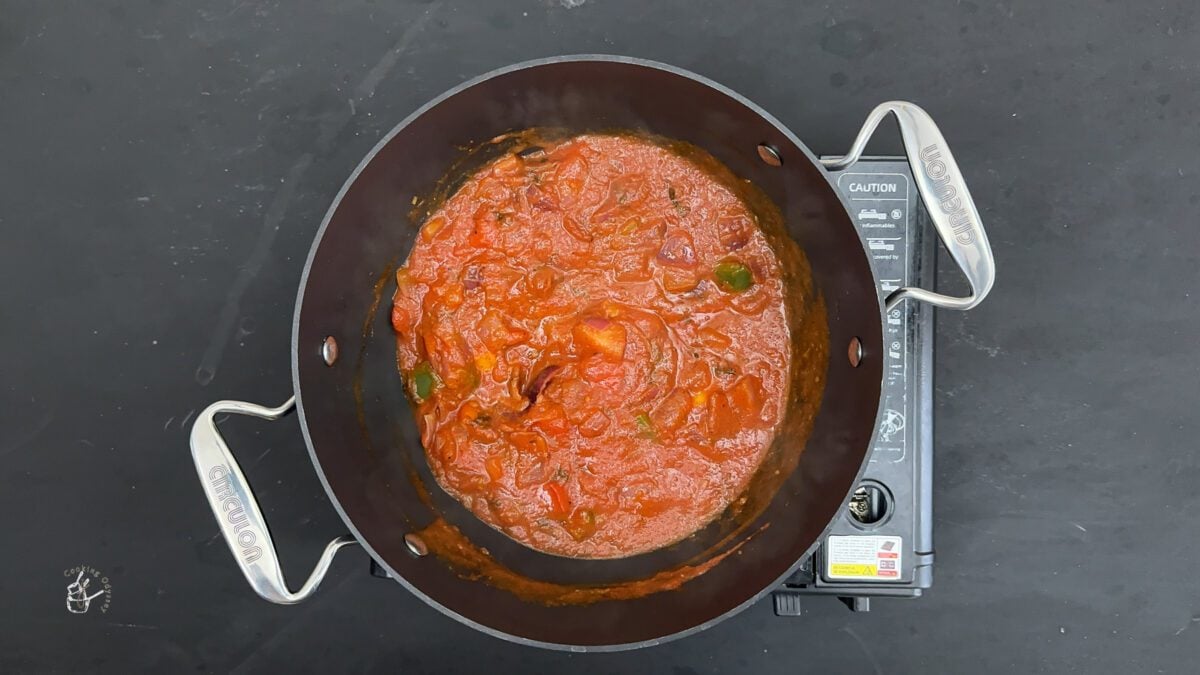
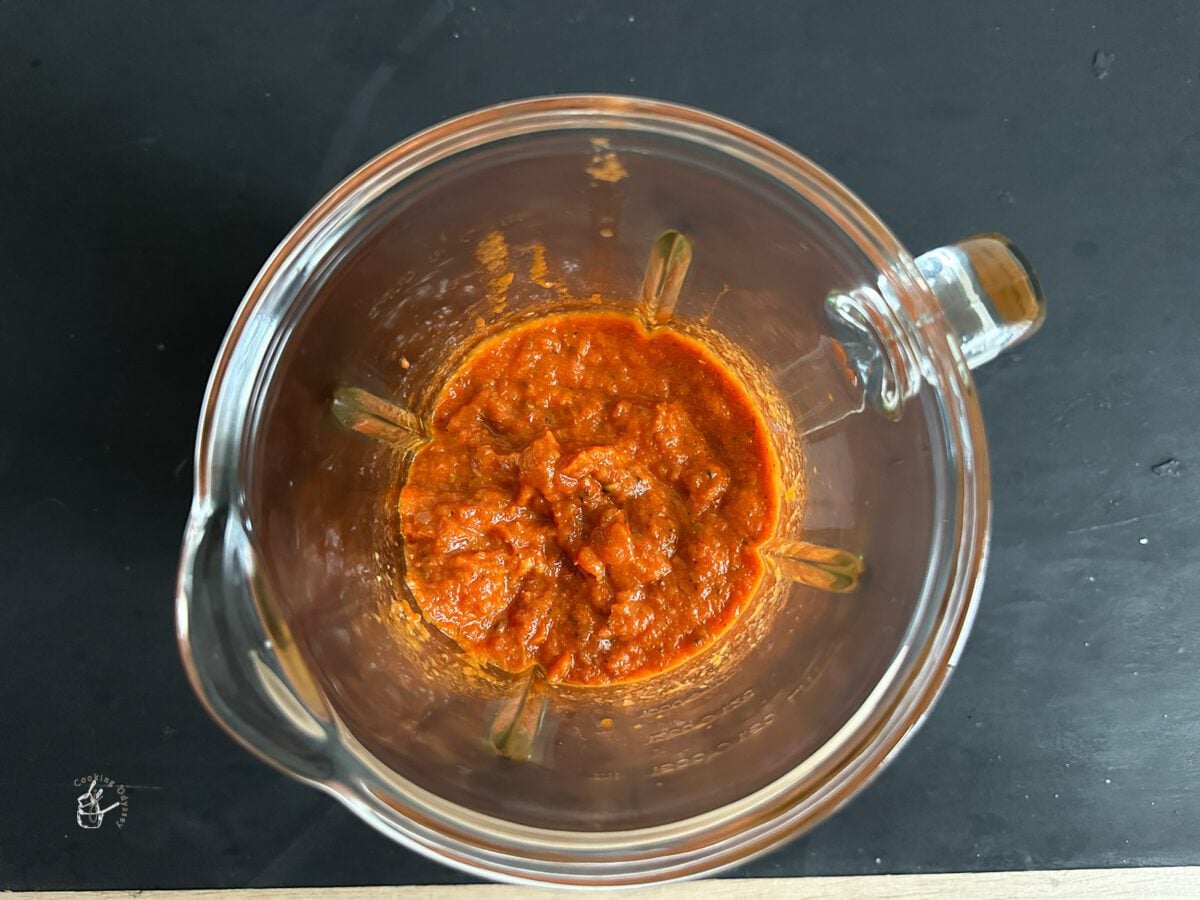
To make things quick, the sauce is cooked directly in one pot and will be blended after for convenience and ease. No need to finely chop each ingredient separately!
Prepare the vegetables by roughly chopping the onion, peeling the garlic, skin the ginger and rough chop the peppers.
In a saucepan or kadai, heat oil and add the onion on medium high heat. Sauté until becoming translucent (helps to release sweetness) then tip in the garlic, ginger and both peppers.
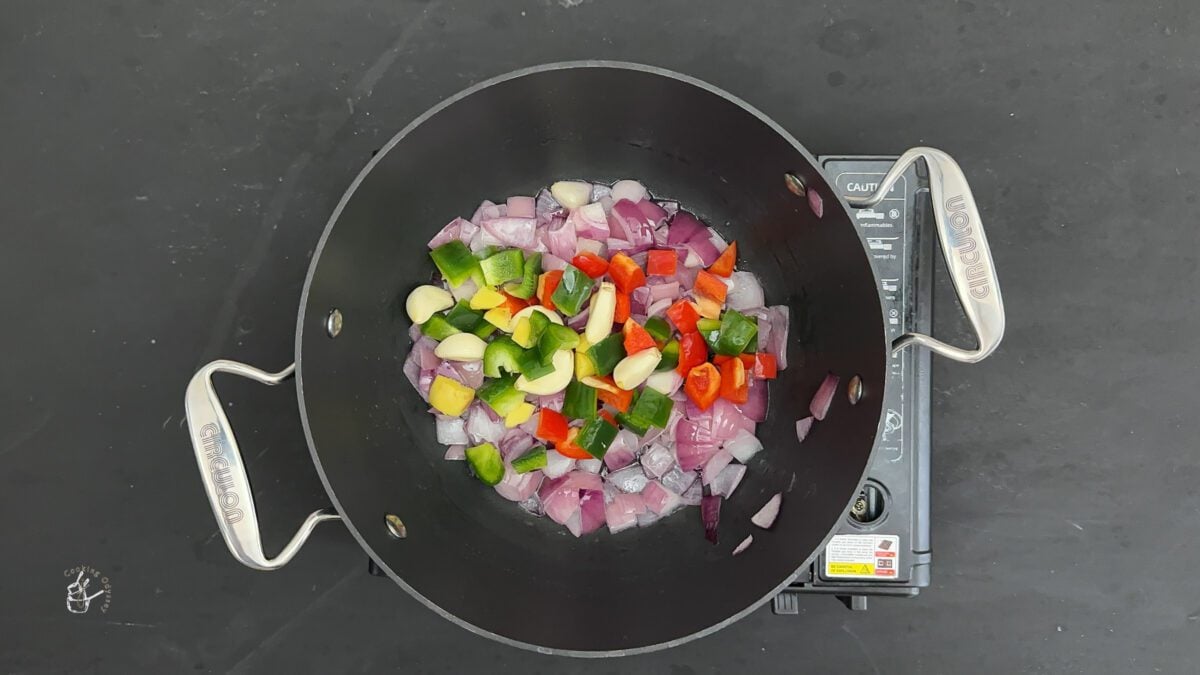
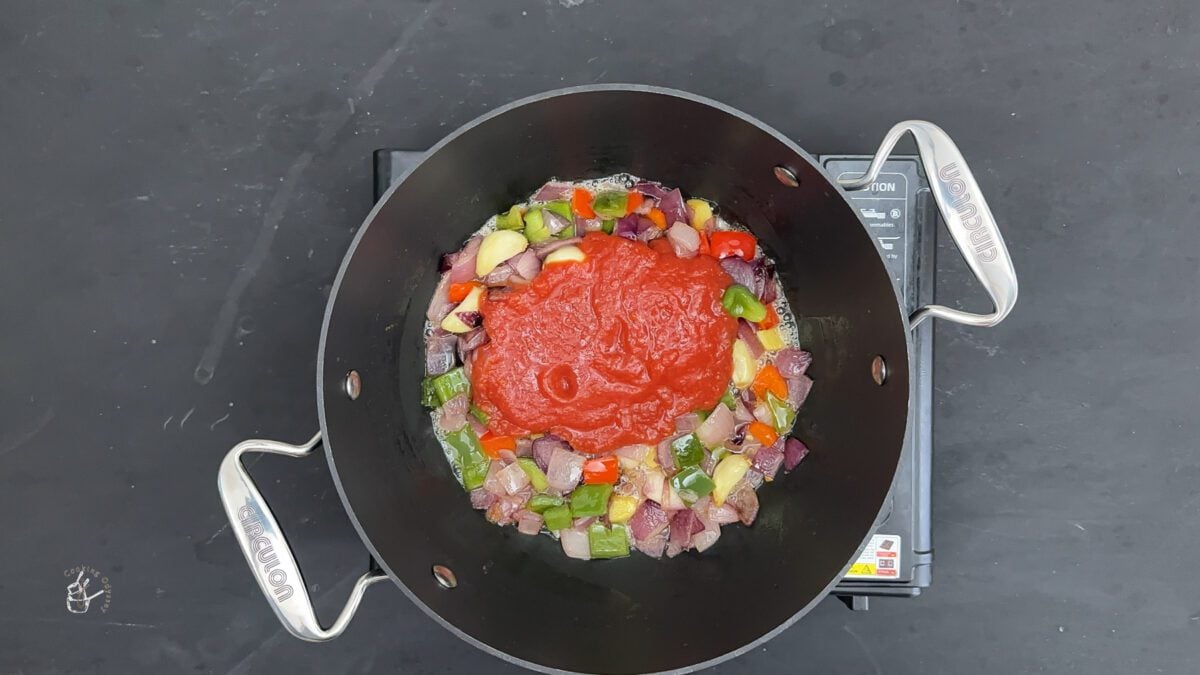
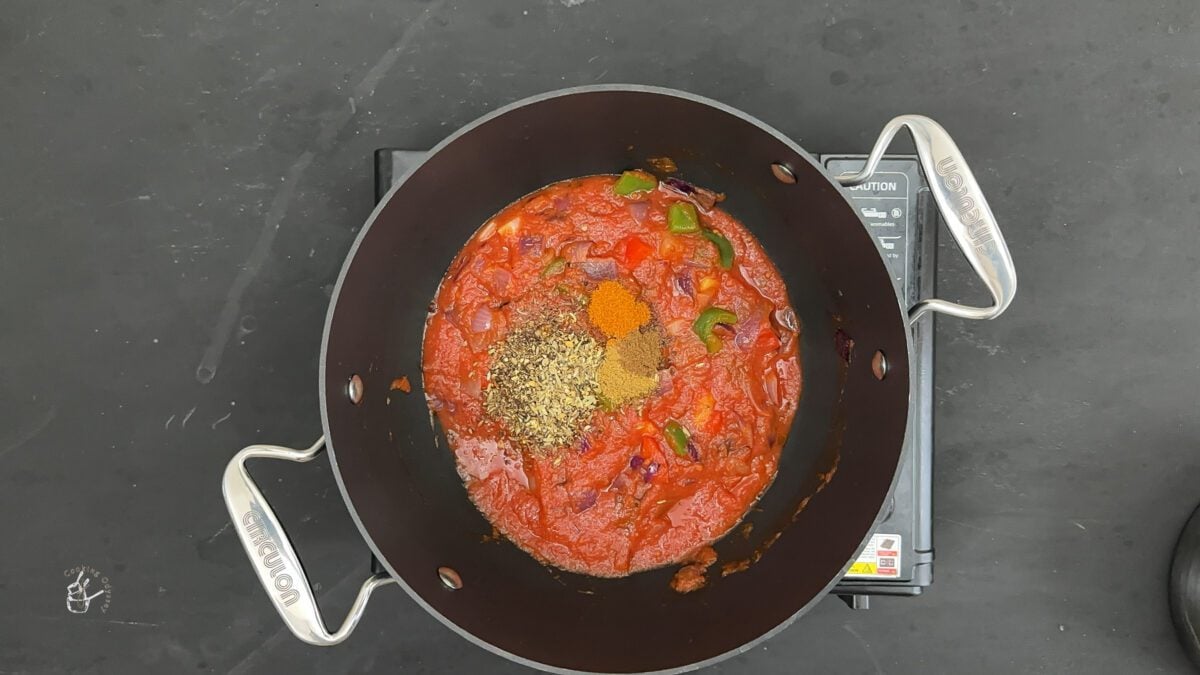
Cook until the peppers are soft. Add in the tomato, and all the spices, sugar and salt.
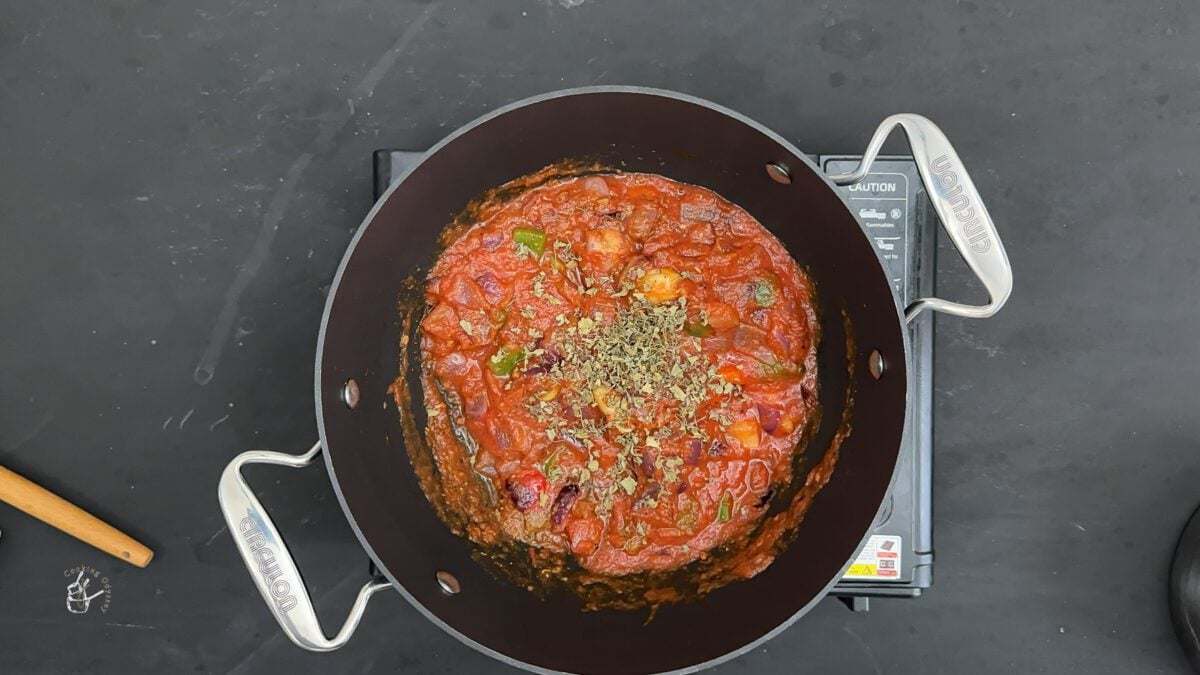
Further cook for a couple of minutes until oik appears on the surface - this is an indicator the gravy is well cooked. Rub fenugreek leaves between your palms and add to the sauce. Turn off the heat and let it cool slightly.
Place in the blender bowl or and blend until you achieve a fairly smooth consistency sauce. Adjust the consistency to your liking.
To make things even quicker and create less washing up, use an immersion blender.
I like to use a mix of vegetables such as carrots, cauliflower, potatoes, green beans, peas and even mushrooms.
You can use meat such as chicken, lamb or beef.
You need to stir-fry your meat or vegetables in a large pan with a little oil. Remove into a bowl and add a little more oil into the pan, pour over the sauce and simmer.
Once the oil appears on the sides of the pan, tip the veggies or meat back in and cook.
Top your balti with finely chopped coriander leaves and you may also like a squeeze of lemon juice.
Serve with naan bread or paratha and pilau rice. A side of poppadom dips and poppadoms complete the meal.
Store the balti sauce in a clean jar or airtight container and keep in the fridge for up to 5 days.
You can also freeze the sauce in batches for up to 3 months. Defrost at room temperature or in the microwave prior to use.

Tandoori Sauce - Indian Spice Marinade
Indian Curry Paste - Onion Tomato Bhuna Masala
As always if you make this recipe, be sure to leave me a comment, rate this recipe and tag me on Instagram @jcookingodyssey or #jcookingodyssey. I love seeing all your photos of my recipe recreations!
Don’t forget to follow me on social media using the buttons below – I can't wait to see you all there!

PLEASE NOTE: Nutritional values are estimated by a computer and may vary based on ingredients and portion sizes. For personalised dietary advice, please consult a qualified healthcare professional.
Share on Facebook Pin This RecipeItalian arancini meets Indian kesar kheer. My version of these sweet arancini is filled with creamy Indian rice pudding that's laced with saffron. Dip them in a golden white chocolate sauce to make the perfect east-meets-west fusion dessert!

Make these glorious Churma na Ladwa with sugar for Ganesh Chaturthi and other festivities. Perfect Gujarati churma ladoo are rich with ghee, have a slightly coarse mouth feel and are delicately spiced.
You're not going to be able to stop at one!

These are my Mum's Bajri na Vada made the authentic Gujarati way. They're the perfect combination of spicy, sweet and tangy - or as I like to call it - the Gujarati golden ratio! The perfect snack for Sheetla Satam or served with tea, chutney or yogurt.

Khaman is a Gujarati steamed savoury snack made with a gram flour batter. It's finished with a sweet & punchy tempering of mustard seeds and plenty of green chillies. Fair warning, self control goes out of the window!

Note – This recipe has been updated from the archives – first published in September 201o. I’ve added new images and helpful content, the recipe remains the same.
You might be surprised to know that the best khaman I’ve ever eaten out wasn’t in India, but at the Atlantis in Dubai for breakfast! They were so unbelievably spongy that when I took a bite, water literally dripped straight into my lap.
My mum often reminisces about the khaman she used to see piled high in sweet shops in Ahmedabad, and this recipe is the closest match. In fact, it actually came from her neighbour - who overheard the recipe being shared at the sweet shop just downstairs!
Ever since, we’ve stuck to this exact recipe, and it’s never failed us. As you can see from the close ups, the khaman turn out incredibly spongy with those big airy holes (called jalidar). They're incredibly delicate and soak up the tempering water just like ... a sponge.

Technically speaking, these are called nylon khaman as they're made with besan.
Khaman are typically Gujarati in flavour - they are savoury with a sweet and tangy taste that comes from the vaghar.
If you even need another reason to love them, khaman are also ready in an instant - a bit like sooji dhokla. This is unlike khatta dhokla or mag ni dal na dhokla that require soaking time and fermentation. I love them for breakfast (worth getting out of bed for) or as part of a Gujarati thali as a farsan.
Use leftover khaman (is that even a thing?!) to make dhokla chaat or sev khamani.
Be sure to check out the full recipe and exact ingredient list below in the recipe card.
For the Tempering:
Garnishing:

As always if you make this recipe, be sure to leave me a comment, rate this recipe and tag me on Instagram @jcookingodyssey or #jcookingodyssey. I love seeing all your photos of my recipe recreations!
Don’t forget to follow me on social media using the buttons below – I can't wait to see you all there!

PLEASE NOTE: Nutritional values are estimated by a computer and may vary based on ingredients and portion sizes. For personalised dietary advice, please consult a qualified healthcare professional.
Share on Facebook Pin This RecipeMathura peda are melt-in-the-mouth Indian sweets made from slow cooked mawa and sugar. No surprises here, they hail from the holy city of Mathura!
While they’re most famously prepared during Janmashtami celebrations, one bite is all it takes to have you craving them all year.

My version of veg paneer makhanwala is made without onion and garlic. Instead, the creamy sauce is made with a carefully chosen aromatic blend of whole spices, nuts, saffron and cream.
So lavish, it should probably come with a crown!

Dahi Sev Puri is a chaat-lover’s dream. Crispy puffed puris are loaded with spiced potatoes, sweet yogurt, chutneys, and plenty of crunchy sev. You’ll spot it on street corners all over India. And in my daydreams whenever I’m craving something tangy, zingy, and ridiculously tasty!

Learn how to make perfectly crispy, puffed-up puris for pani puri with my tried-and-tested recipe and easy tips. Basically, the right amount of crunch without being so hard they hurt the roof of your mouth!
All that’s left is to load them up with the pani puri stuffing and water, and you’re all set for a crunchy, spicy explosion of flavour!

Here at JCO, we love our exciting appetisers, especially the kind that wake up your taste buds! This Tandoori Mogo is exactly that. Mogo is tossed in a hot tandoori marinade, then baked until charred on the edges. It’s full of character and seriously addictive.

If you enjoy savoury, homemade snacks with Indian flavours, these multigrain crackers are a must-try. Made with chapati atta and a mix of flours you likely already have in your cupboard. They’re adaptable, nutty, crisp, and perfect with chai or chutney.

These Kesar Mawa na Penda are made purely with mawa for a wonderful melt in the mouth feel. The perfect sweet treats for special occasions and Indian festivals. Btw, treating yourself counts as a special occasion too!

Coconut Ladoos are an Indian sweet made with fresh or dried coconut. My recipe makes the softest, creamiest ladoo and are full of real coconut flavour.
Unlike the shortcut versions, I cook desiccated coconut in milk and avoid that dry, chalky texture. Just three ingredients and a perfect melt in the mouth finish. I'm passionate about this one!

Note – This recipe has been updated from the archives – first published in September 2019. I’ve added new images and helpful content, the recipe remains the same.
So many coconut ladoo recipes rely on cutting corners - a quick mix of desiccated coconut and condensed milk, often yielding dry balls that stick to the roof of your mouth. If you've coughed after eating one of these, you'll know what I mean.
But this isn't one of those.
In my version, I take the time to slowly cook fine desiccated coconut (or even coconut flour) in plenty of milk, letting it soften, swell, and absorb flavour fully. I use the same technique in my coconut khoya barfi. Even if I’m making coconut ladoo with condensed milk, I still add extra milk to keep the mixture soft, almost fudgy — never dry or crumbly.
The result is a super soft, melt-in-the-mouth coconut ladoo with intense coconut flavour and a rich, creamy finish. There’s no cardamom or extras - just three ingredients: coconut, milk, and sugar. Simple, pure, and all about letting the coconut truly shine.
See the soft, creamy texture here?

And don't worry.
The recipe is not difficult - it's simple and actually very easy to follow. You just need a little bit of time. And why not, when you're taking the effort to make such an incredible sweet.
It's an easy Indian sweet for a dinner party but will have your guests impressed with your skills!
Be sure to check out the full recipe and exact ingredient list below in the recipe card.
Desiccated coconut – the key ingredient, so it's important to get it right.
It is available in almost every supermarket and can be found in lots of varieties. I like using the fine variety. The finer, the easier for it to absorb the milk and become soft. If you can't get it, you can grind it down in a food processor.
I've also used coconut flour on many occasions like in these mango coconut ladoo, which works really well. Not to be confused with coconut powder or coconut milk powder. It doesn't act the same way.
You can of course use fresh grated coconut and follow the same steps in the recipe, but, it will require longer to roast.
Milk – full fat only for rich creaminess.
Sugar – I use granulated white sugar, and that's the only sugar I recommend to achieve the colour and flavour. I add the sugar after the milk has all cooked up to prevent the sugar burning or the ladoo becoming chewy. The milk needs some time to cook first!
All it takes is a few simple steps:
Lightly toasting the coconut brings out its aroma and deepens the flavour. It also removes some of the moisture from the coconut so it can absorb the milk. Toast on very low heat - the colour of the coconut shouldn't change.
Heat the milk until it comes to a boil whilst constantly stirring. Milk loves to stick to the pan and burn.


Add the toasted coconut to the milk and let it cook slowly - low and slow is the mantra here, like with many of my Indian milk sweets. Keep stirring constantly. And don't start doom scrolling on Instagram at the same time. Let the coconut fully absorb the milk until the mixture is soft and thick. You'll see it start coming together and forming a single mass.


Add sugar and keep cooking gently on a low heat it will loosen at first, then thicken again as it cooks down. Once done, it should hold together easily when pressed and feel soft and sticky.


Remove from the hot pan and allow the mixture to cool until it's just warm. Slightly warm is best for shaping. Grease your hands with a little ghee and roll into balls.
Roll each ladoo in fine coconut to coat - it gives a beautiful classic finish and extra texture.


As always if you make this recipe, be sure to leave me a comment, rate this recipe and tag me on Instagram @jcookingodyssey or #jcookingodyssey. I love seeing all your photos of my recipe recreations!
Don’t forget to follow me on social media using the buttons below – I can't wait to see you all there!

PLEASE NOTE: Nutritional values are estimated by a computer and may vary based on ingredients and portion sizes. For personalised dietary advice, please consult a qualified healthcare professional.
Share on Facebook Pin This RecipeFansi nu Shaak is an easy Gujarati stir-fry made with green beans. I keep the recipe quick 'n' easy by using basic spice powders only. Serve as part of an everyday Gujarati thali.

When I think of dal, I think of comfort - simple and homely. Dal Maharani, though, is something else! Rich, elegant, and made to impress. It's royally prepared with a mix of three different lentils and rich spices and finished with ghee and cream.

Paneer Tikka Biryani – Paneer and Biryani are two words that can make anyone’s mouth water. Put them together and you have a divine combination of the most flavourful rice with creamy paneer tikka masala.

Tandoori Paneer Tikka is the recipe that gets me excited for BBQ season! Chunks of paneer & crunchy vegetables are smothered in my homemade tandoori sauce marinade then grilled to smoky perfection. I serve it restaurant style with Indian mint yogurt sauce.

Mango Katli is a delicious Indian sweet made with almond flour and mango pulp. It's my unique take on the traditional kaju katli recipe.

Kachumber is a crisp, finely chopped Indian salad with onion, tomato, cucumber and coriander. It's finished with zingy lemon juice and is served alongside Indian meals.

This farali thepla recipe is a favourite in our house, especially during vrat or when we just want something light yet satisfying. The grated dudhi keeps the thepla soft, while the roasted peanut powder and ripe banana add subtle richness. It’s a beautiful balance of texture and flavour.

My take on Kala Chana Chaat is a vibrant, dry snack made by tossing black chickpeas with boiled potatoes, crunchy veggies, and a mix of bold, tangy spices.

Garvanu might not be a dessert you hear about every day, but once you’ve had a spoon, you’ll wonder where it’s been all your life! It’s a creamy, milk-based Gujarati dessert made with semolina, milk, sugar, and warm spices. This family recipe honours the method passed down through generations.

So today we’ve got one of those indulgent recipes. I clearly remember the days we had Butterscotch Tart for school dinner - the word would spread all the way down the lunch queue. Never had school kids been so excited to eat school dinners!

Our Oats, Jowar and Methi Thepla are wholesome flatbreads made using oat and sorghum flour, fresh fenugreek and basic Indian spices. These are ideal for any time of the day and pair well with keri no chundo.

Make my sweet, tangy and spiced pineapple chutney with aromatic South Indian flavours. It's so versatile, whether paired with Indian curries or alongside grills.

My soft, airy and chewy focaccia is studded with savoury sundried tomatoes, salty olives and fragrant rosemary.

Cookies and Cream Ice Cream has always been my weakness - especially the Häagen-Dazs one I loved growing up. It was so creamy, with heaps of cookie bits in every spoonful. I knew I had to make my own version that hits all the same notes. And guess what? Mine’s just as creamy and cookie-loaded, but totally egg-free.

Bengali Cholar dal is an aromatic dal made with split yellow bengal gram, fresh coconut and raisins. It has a unique sweet and savoury flavour.

My tried-and-proven eggless dulce de leche ice cream is made with only 3 ingredients. It's intensely creamy with no ice crystals and has a soft scoop consistency. I keep the recipe quick and easy by using ready-made caramel.

This particular recipe is a Dhanecha family special! Rasawala muthiya are made by simmering dumplings in a yogurt gravy. Our version is quick because you do not have to form the muthiya first.

Gujarati bhaat na muthiya that I make with leftover rice. A delicious steamed snack that's irresistible with a piping hot cup of chai!

Moong Dal Dhokla are a Gujarati specialty made with mag ni dal. I love adding garlic to make lasaniya dhokla - a delicious, fermented snack with an extra burst of flavour.

Note – This recipe has been updated from our recipe archives with new images and content. The recipe remains the same. First published in March 2013.
While dhokla is traditionally made with rice and chana ni dal, I’ve always been curious about how different lentils and flours can change the taste and texture of this classic.
Over the years, I’ve experimented with my Mum with various combinations. Recently, I made dhokla with mag ni dal - yellow moong dal - as a lighter alternative to khatta dhokla made with chana ni dal. It’s quickly become one of my favourite variations!
Whenever we get the (slightly elusive) Indian summer here in Britain, I set to work fermenting all sorts of batters for dhokla and handvo too!
Fermenting the batter in the hot sun helps - exactly what's needed for the rise. If you can't see the sun today either use the instant pot to prove dhokla batter or simply make quick rava dhokla!
The results were perfectly fluffy and well risen dhoklas that surprised everyone. They tasted great - and sour and had a wonderful spongy texture. The proof is in the pictures!
Great as a snack or as farsan in a Gujarati thali. Generously dunk them in a thick herby chutney like my finger-licking raw mango green chutney It's sweet, tart and spicy! A steaming up of adrak chai is my go-to!

Be sure to check out the full recipe and exact ingredient list below in the recipe card.
For Dhokla:
For Tempering
Don't forget the garnish - my go-to for dhokla has to be lots of freshly chopped coriander. Sometimes I do a sprinkle of desiccated coconut too!
Dhokla can easily become dense rather than airy. This usually happens when the batter is either too thick or not aerated enough. From my experience, blending the soaked moong dal with a little extra water for a smooth, pourable batter really helps. Also, I’ve found that adding eno just before steaming and lightly folding it in (never overmixing) creates the perfect airiness.
I always steam dhokla on high heat for sponginess, preventing the dhokla sinking in the middle and brown spots appearring on the surface.
Sometimes the cooked dhokla can stick to the plate. My Mum's top tip for this is to generously grease the plate with plenty of oil. It helps to lift out the dhokla. Also, wait for them to cool slightly, they'll crumble less.

As always if you make this recipe, be sure to leave me a comment, rate this recipe and tag me on Instagram @jcookingodyssey or #jcookingodyssey. I love seeing all your photos of my recipe recreations!
Don’t forget to follow me on social media using the buttons below – I can't wait to see you all there!

PLEASE NOTE: Nutritional values are estimated by a computer and may vary based on ingredients and portion sizes. For personalised dietary advice, please consult a qualified healthcare professional.
Share on Facebook Pin This RecipeThis dry style Hariyali Aloo is a finger-licking and tangy appetizer. Baby potatoes are tossed in a herby green masala and finished with crushed spices.
