
Introducing my sooji coconut halwa made with thick and creamy coconut milk. It's a twist on the classic sooji no siro. Best of all, this halwa is deliciously moist, rich and glossy and ready in less than 20 minutes!
Perfect with aloo chana made without onion garlic and puffed up poori for a delicious breakfast or brunch.
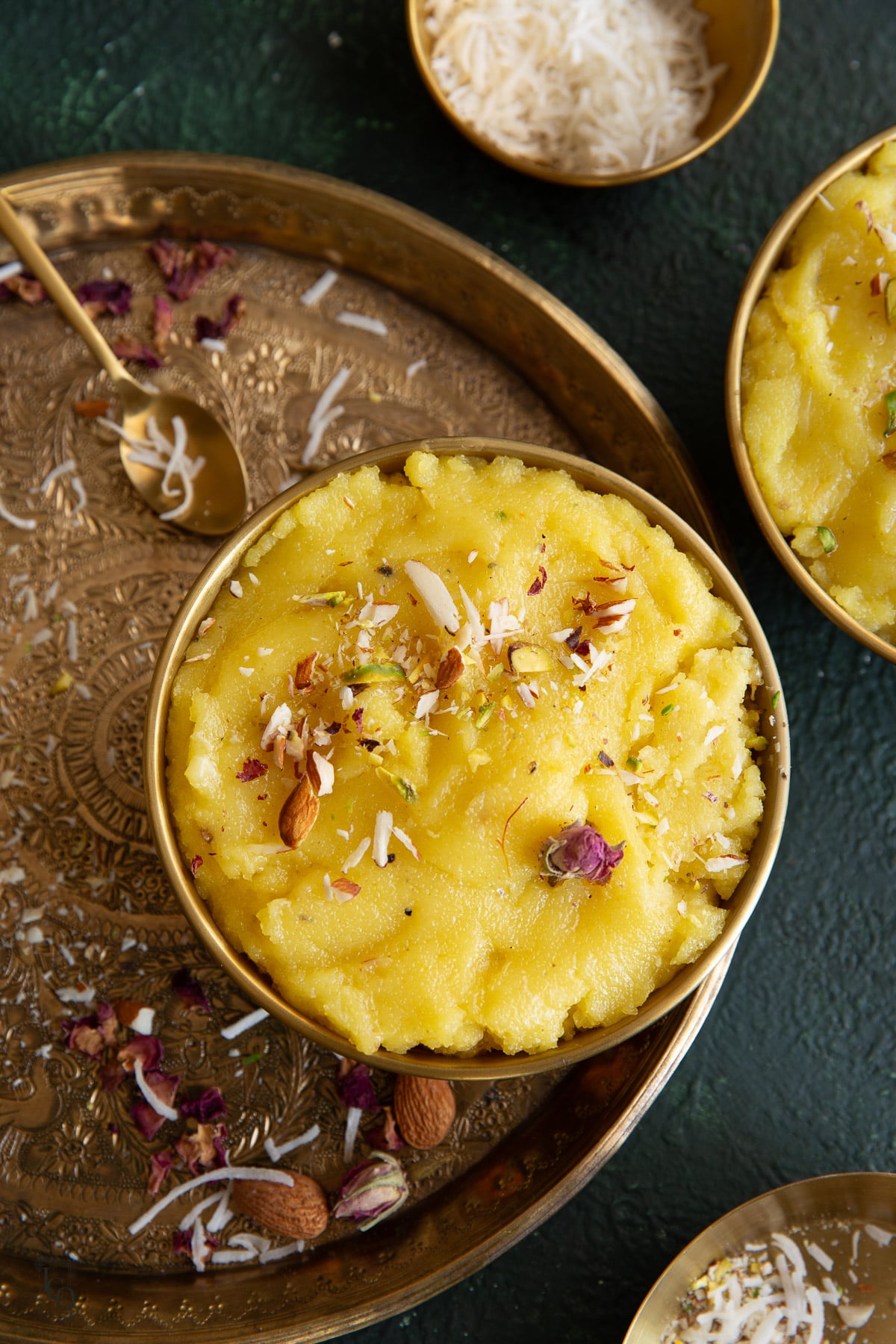
Recipe Summary: Sooji Nariyal Halwa
- ✅ Recipe Name: Sooji Coconut Halwa
- 🕒 Ready In: 20 minutes
- 👪 Serves: 4
- 🍽 Calories: 228 per serving
- 🥣 Main Ingredients: semolina, coconut milk, ghee, sugar
- 📖 Dietary Info: vegetarian, eggless
- ⭐ Why You'll Love It: This rich and creamy sooji halwa has a gentle coconut flavour and an irresistibly moist and milky texture. An easy Indian sweet, ready in 20 minutes, that feels a little more special.
SUMMARIZE & SAVE THIS CONTENT ON
Jump to:
The Recipe Details
This Sooji Coconut Halwa is one of those happy kitchen accidents that became a recipe we now make on purpose. My mum and I were making regular sooji halwa when we ran out of milk, so we tested coconut milk instead. It gave the halwa such an irresistibly moist richness and gentle coconut flavour that we knew we had to make it again.
The coconut is subtle rather than overpowering. This still tastes like traditional sooji no siro, but even creamier, richer and a little more special.
We have experimented with it in several ways over the years. Sometimes I add mawa for extra milky richness, and sometimes I roast desiccated coconut with the semolina for more texture.
The finished halwa should be moist, glossy and gently grainy, but still smooth to eat. It should never feel dry or sticky.
Important Ingredients Notes
Find the full ingredients list and measurements in the recipe card below.
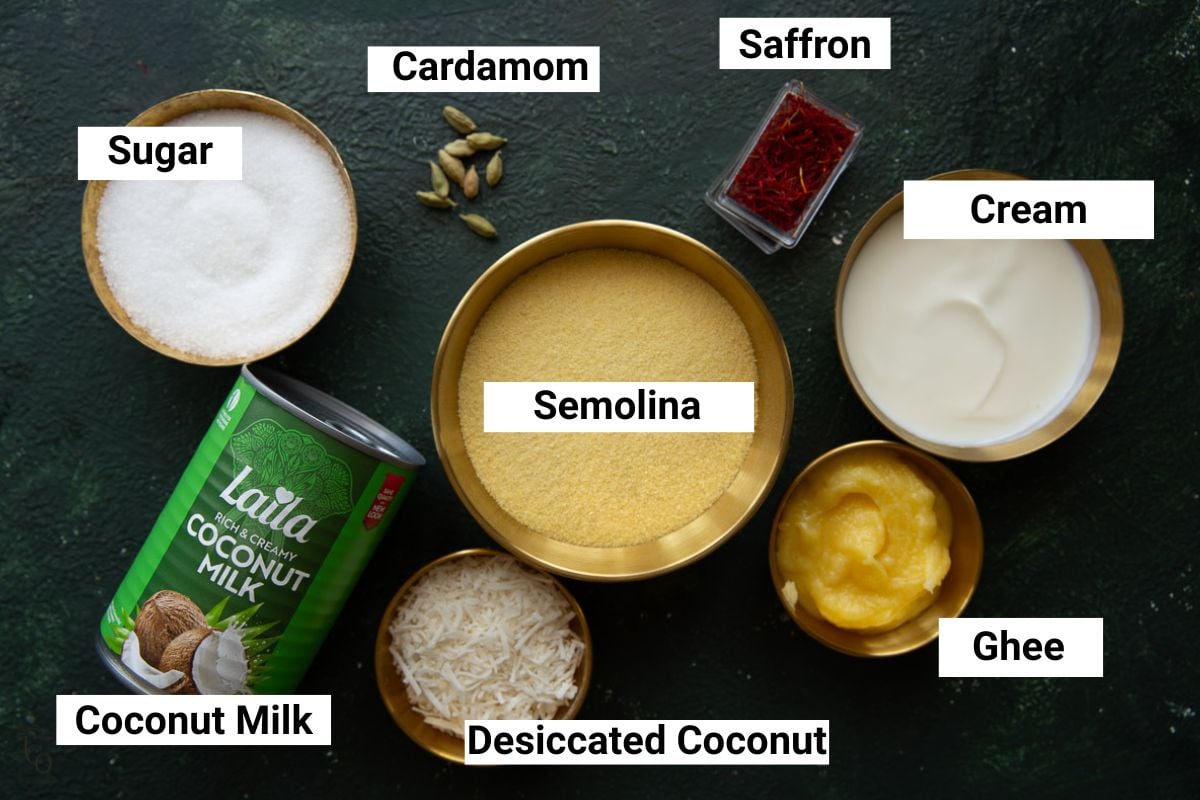
Semolina
Fine white or yellow semolina both work.
Coarse semolina can also be used, although it gives the halwa a slightly more textured finish.
The most important thing is roasting it properly before adding any liquid. It's the same technique I use in irmik helvasi (Turkish semolina halwa).
Coconut milk
Full-fat coconut milk gives the creamiest result.
Light coconut milk will still work, but the finished halwa will be a little less rich.
Shake or stir the coconut milk before measuring if it has separated in the tin.
Water
Do not replace all the water with coconut milk.
The water allows the grains of semolina to absorb enough liquid, swell and cook properly. Coconut milk alone is too thick.
Desiccated coconut
I use desiccated coconut because it is convenient and easy to keep in the cupboard.
For a little more coconut flavour and texture, I sometimes add it during the final few minutes of roasting the sooji.
You can also add it later with the coconut milk for a softer texture.
Mawa
Mawa is optional, but it makes the halwa richer and more luxurious. I use it the same way in rajgira sheera.
I use either my homemade mawa made with milk powder or homemade ricotta-based mawa.
When I do not have mawa, a small splash of double cream stirred through at the end is also lovely.
Ghee
The ghee coats the grains of semolina and gives the halwa its rich, glossy texture.
I like to use homemade ghee from butter because its aroma works beautifully with the toasted sooji and coconut.
Nuts
I usually use slivered pistachios and almonds.
Charoli, also known as chironji, is traditional in our version but completely optional.
How to Make Sooji Coconut Halwa
Have the hot water, sugar, coconut milk and remaining ingredients ready before you begin. The recipe moves quickly once the semolina has roasted.
Heat the ghee in a heavy-based pan over low heat.
Add the semolina and mix well so every grain is coated in ghee.
Roast slowly, stirring regularly to prevent it catching at the bottom.
The semolina is ready when:
- it smells lightly toasted and nutty
- the grains look separate
- every grain is coated in ghee
- it has taken on a pale golden colour
Do not rely on colour alone. High heat can burn the semolina before it has roasted properly.
If adding the desiccated coconut during roasting, stir it in for the final few minutes.
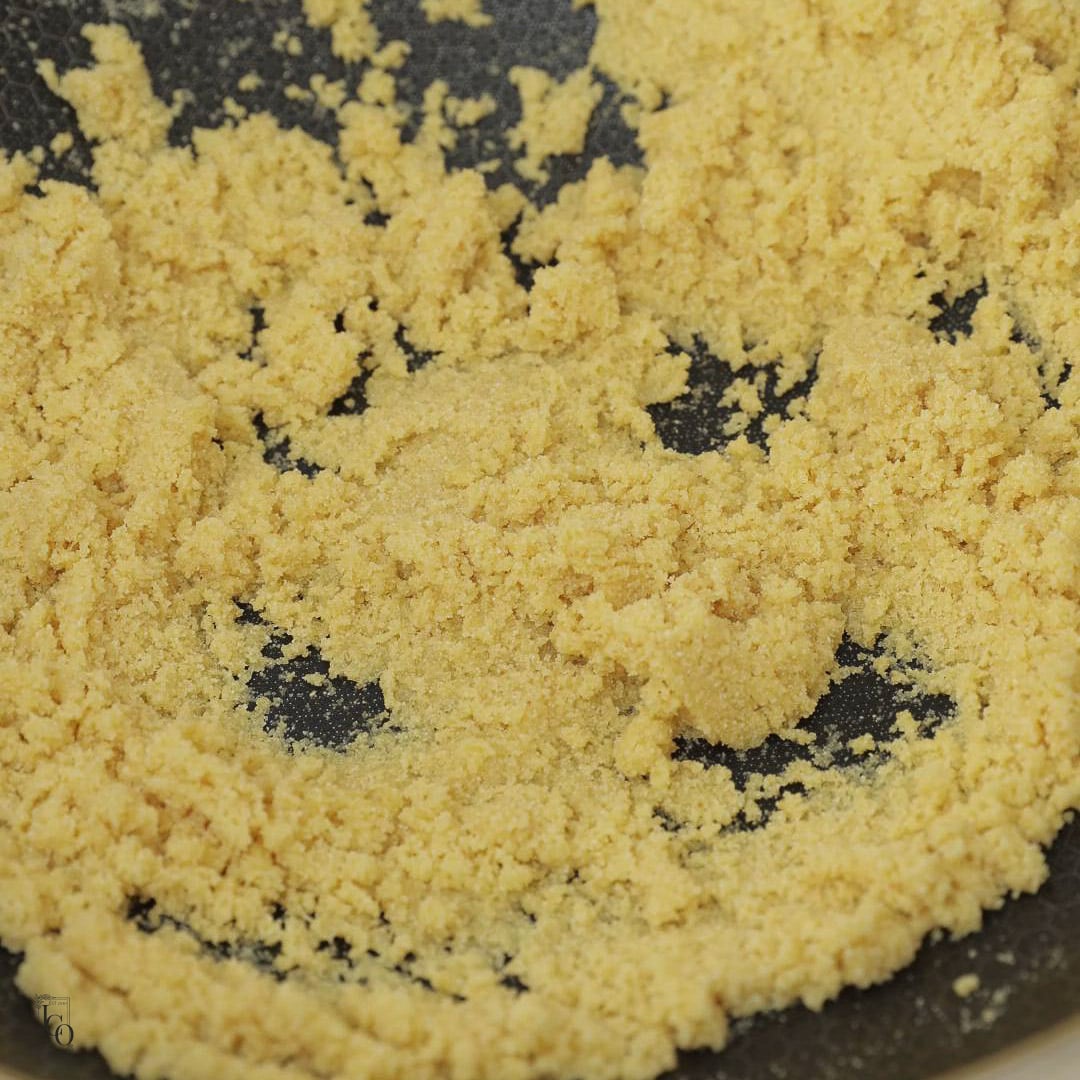
- Step 1: Roast semolina in ghee on low heat.
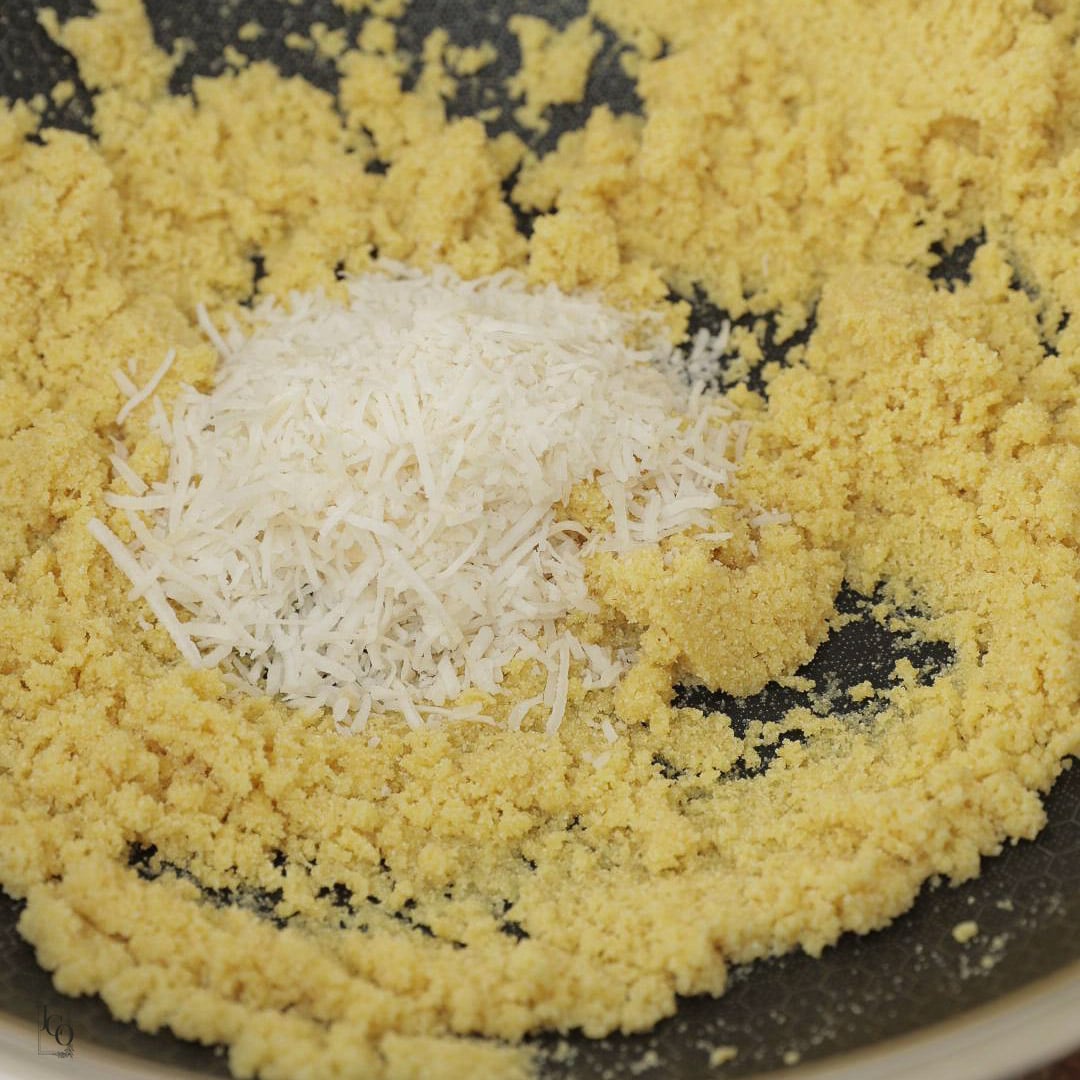
- Step 2: Add dessiccated or shredded coconut and roast for a further minute.
Carefully pour the hot water into the roasted semolina, stirring continuously.
The mixture will bubble and release steam, so add it slowly.
Continue stirring as the semolina absorbs the water and the grains swell.
Adding the water before the sugar helps the semolina cook evenly and reduces the chance of lumps.
Once most of the water has been absorbed, add the sugar directly to the pan.
There is no need to make a separate sugar syrup.
The mixture will loosen again as the sugar melts. Continue cooking over low to medium heat.
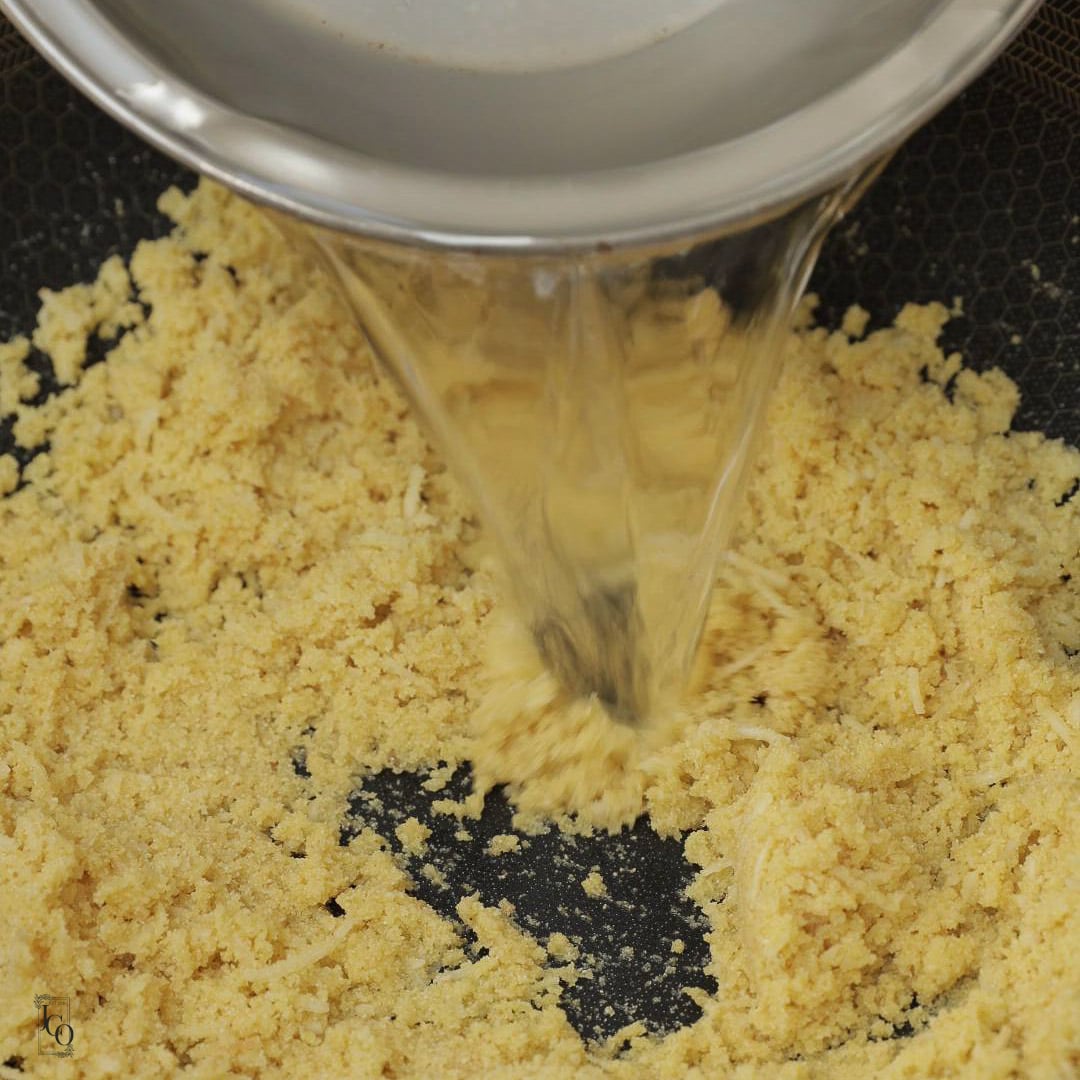
- Step 3: Pour over hot water.
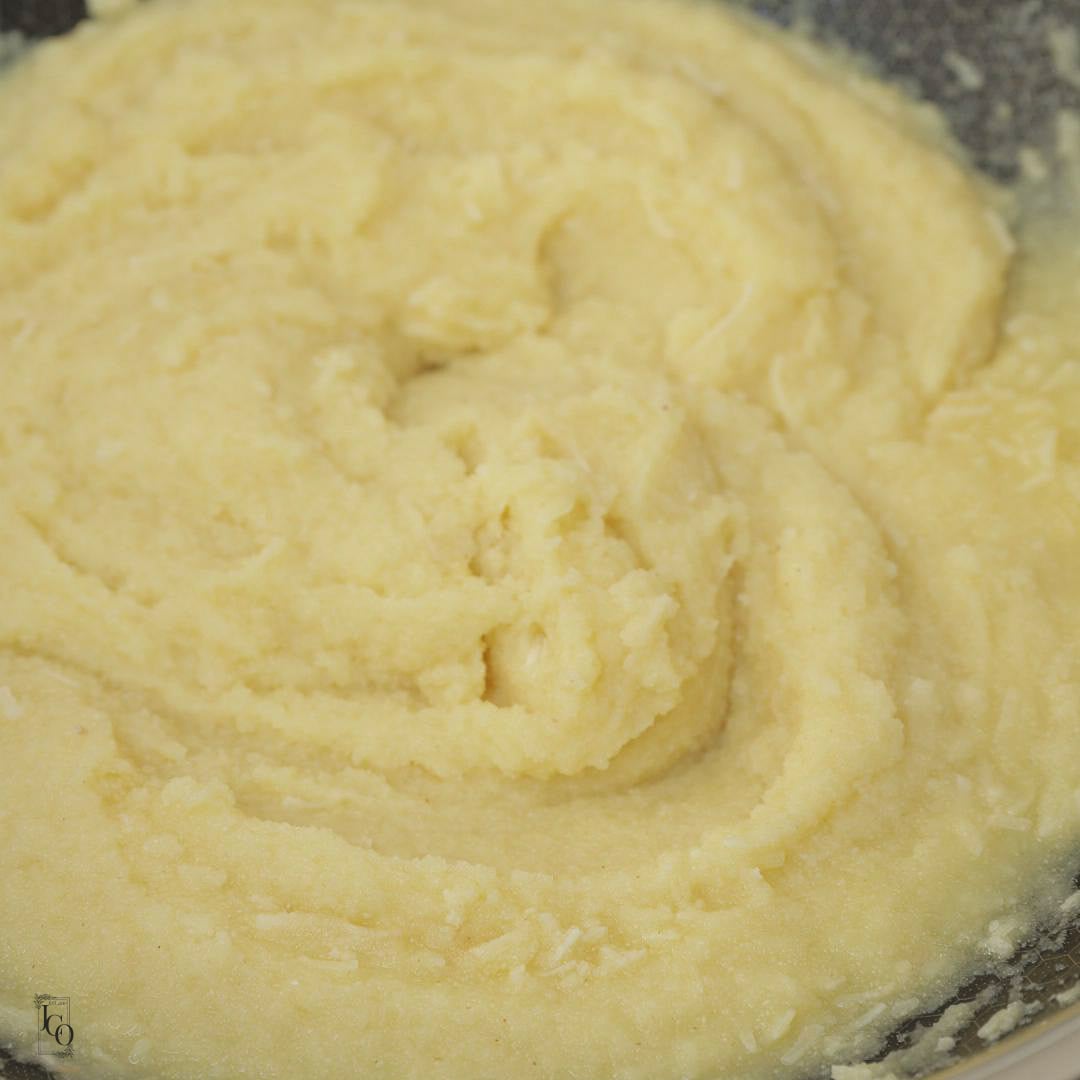
- Step 4: Allow the semolina to absorb the water.
Pour in the coconut milk and add the desiccated coconut if you did not roast it earlier.
Stir in the crumbled mawa, if using, making sure there are no large lumps.
Add the saffron, cardamom and most of the nuts.
Continue cooking gently until the halwa thickens again.
It is ready when it:
- holds softly on a spoon without looking dry
- begins to leave the sides of the pan
- looks moist and glossy
- shows a little ghee around the edges
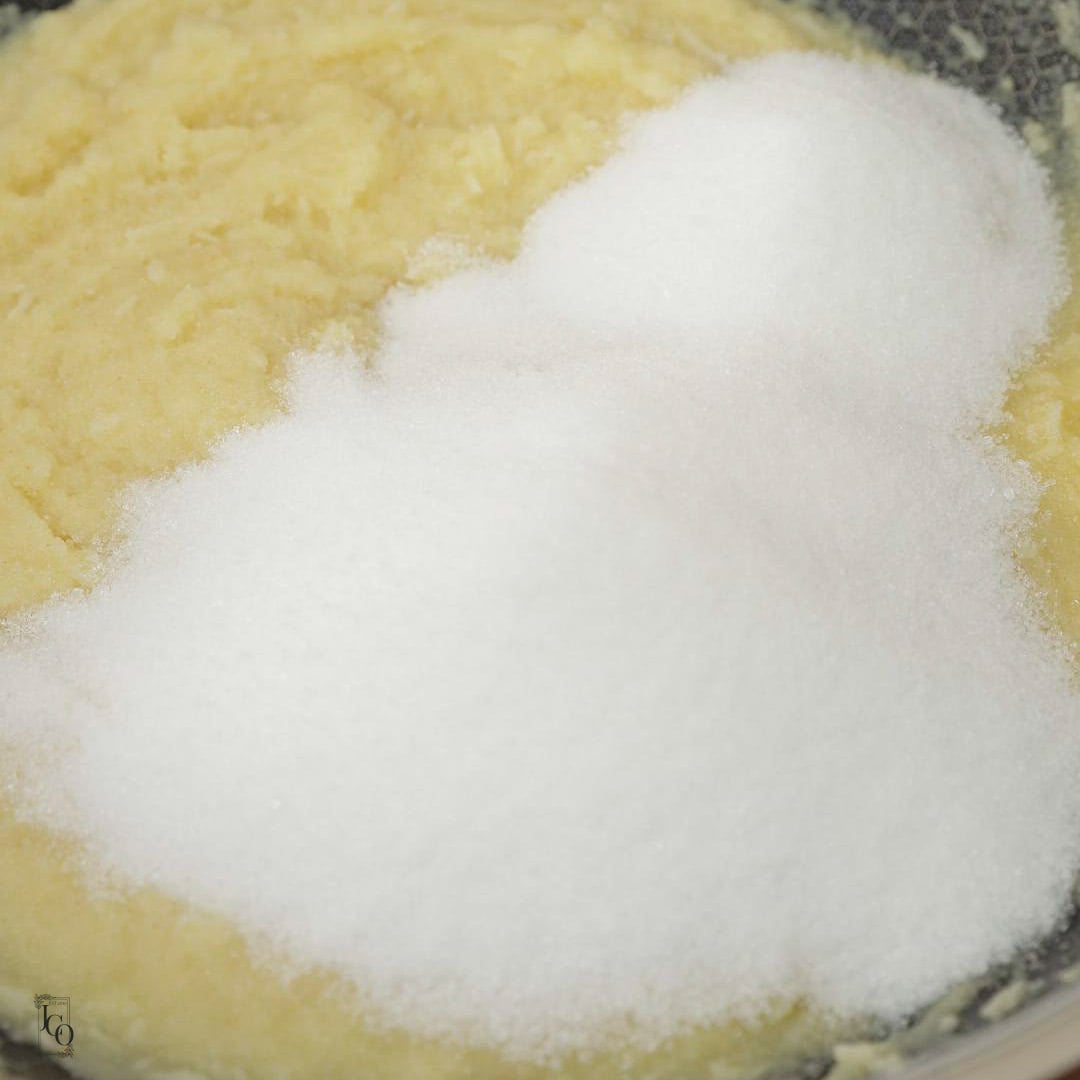
- Step 5: Add sugar.
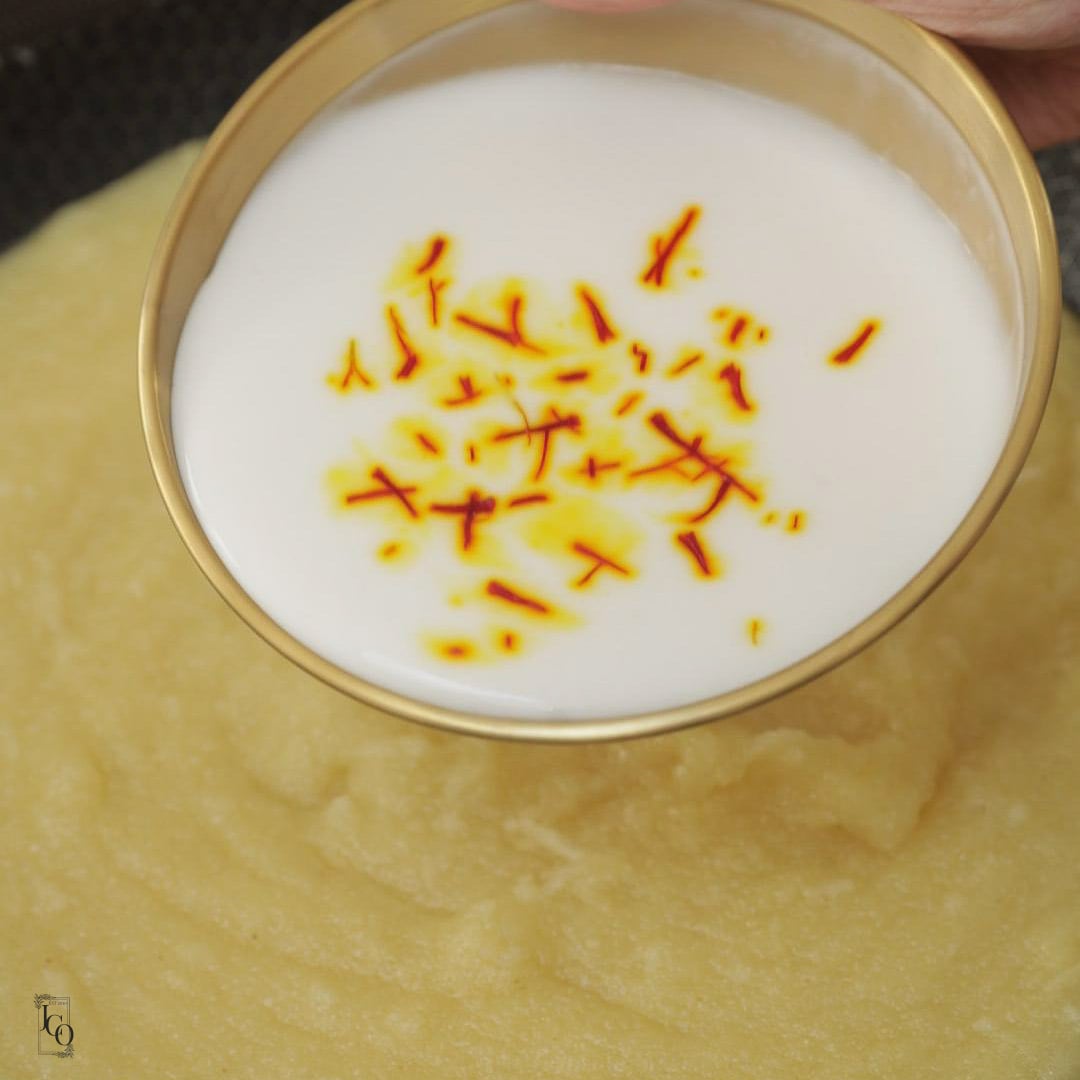
- Step 6: Add coconut milk with soaked saffon.
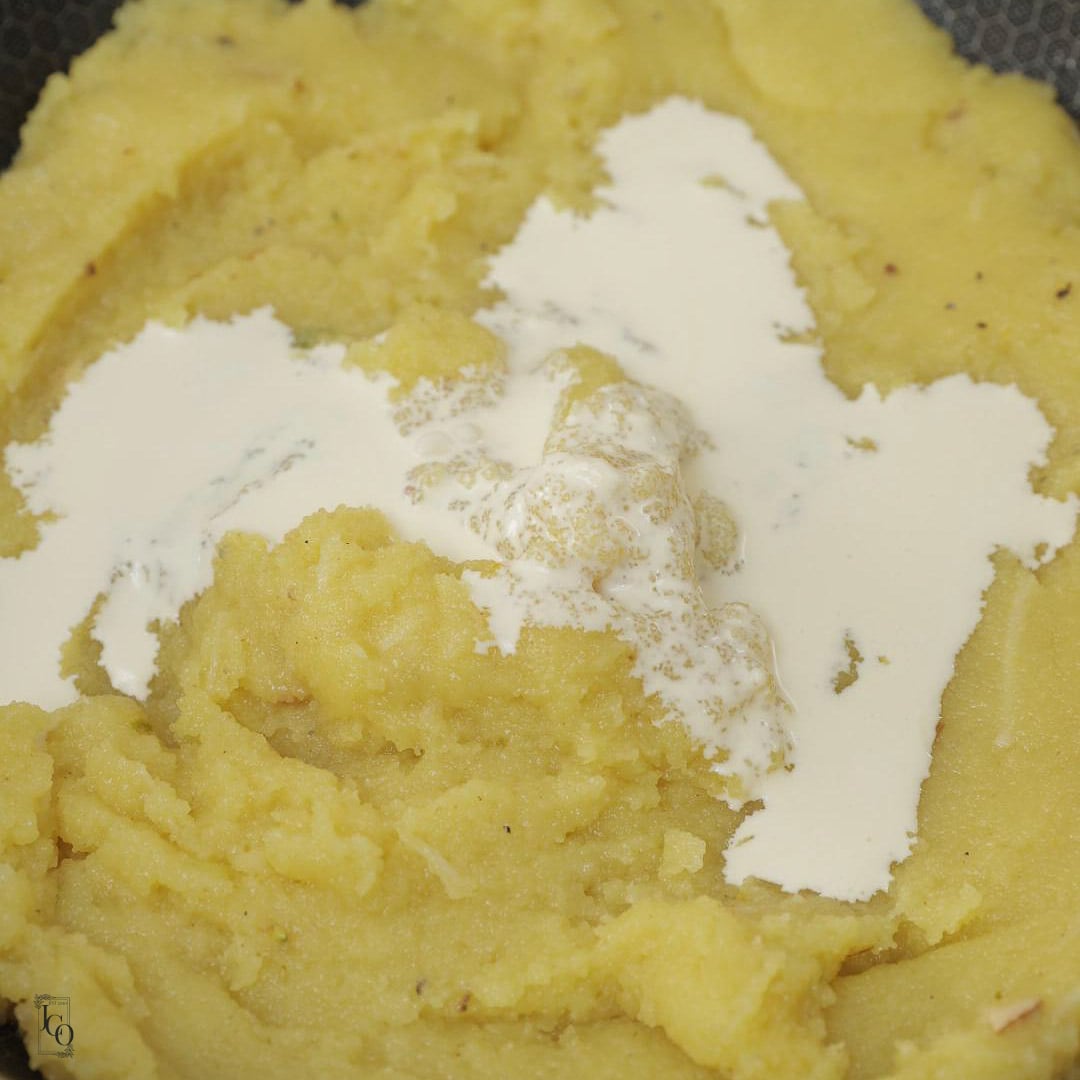
- Step 5: Add mawa or cream.
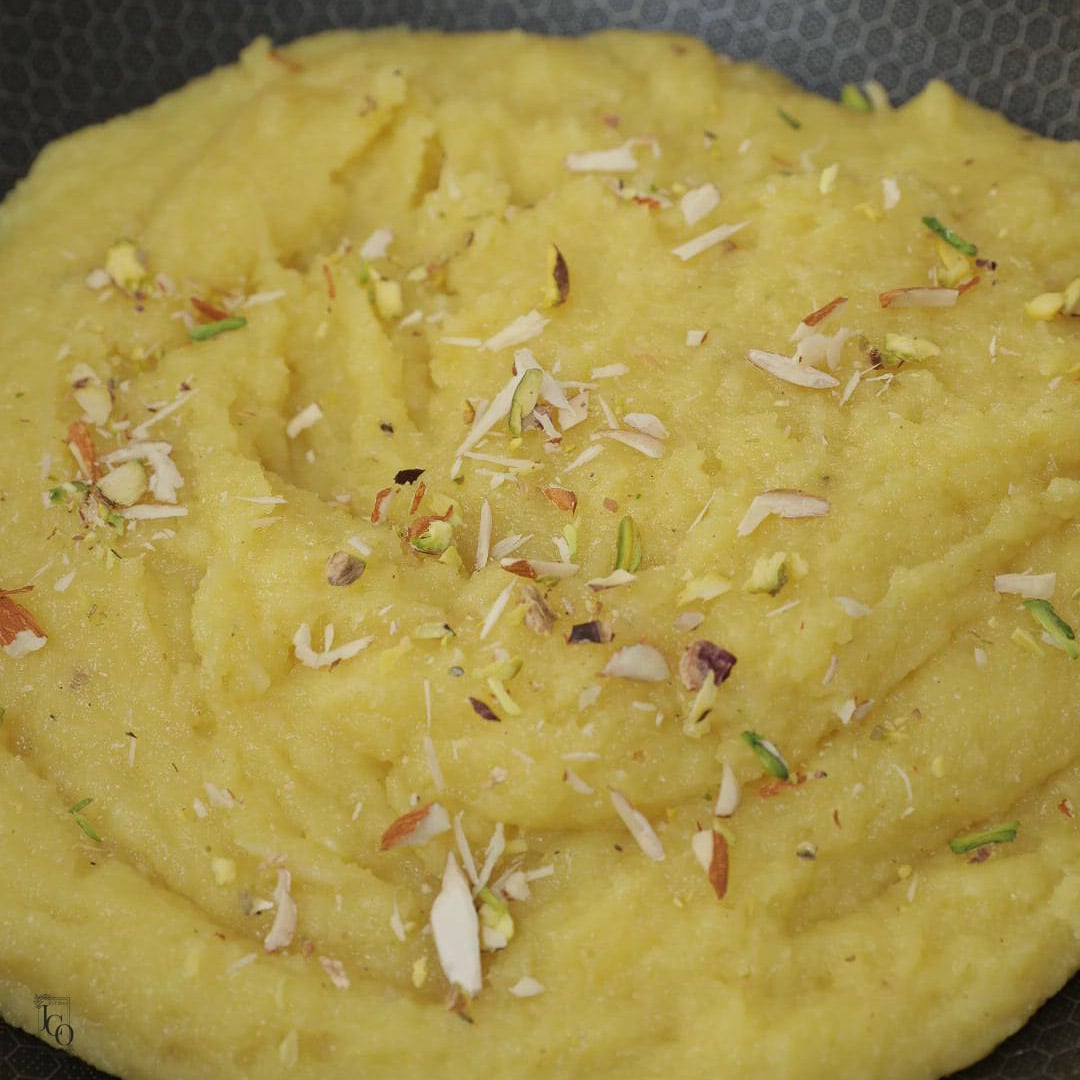
- Step 6: Add nuts and cardamom.
How I Like to Serve It
I prefer this halwa warm, while the ghee is melted and the texture is at its creamiest. It is still delicious at room temperature, which makes it surprisingly useful for taking to parties or picnics.
We often serve it as part of chole, halwa and poori, but also pair it with aloo tamatar ki sabzi and freshly fried poori. This spinach poori is a great alternative.
You can also add it to a gujarati thali or serve a small bowl after a spicy Indian meal.
For more semolina sweets, try my classic Gujarati garvanu. You may also enjoy aate ka halwa, winter special gajar halwa with mawa or badam besan halwa.
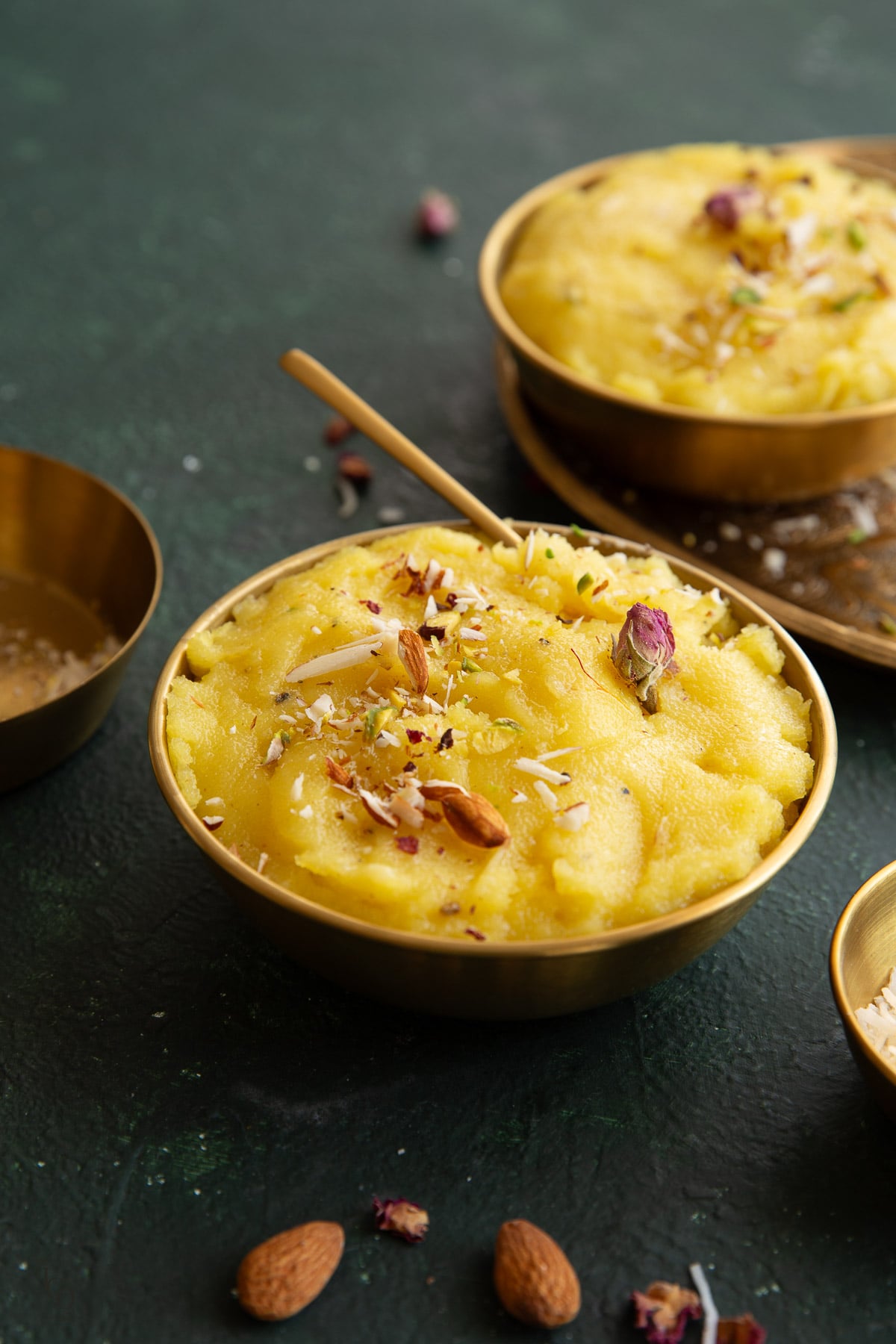
As always if you make this recipe, be sure to leave me a comment, rate this recipe and tag me on Instagram @jcookingodyssey or #jcookingodyssey. I love seeing all your photos of my recipe recreations!
Don’t forget to follow me on social media using the buttons below – I can't wait to see you all there!
📖 Recipe
Sooji Coconut Halwa with Coconut Milk
Ingredients
- ½ cup semolina
- ½ cup sugar
- ¼ cup ghee
- ¼ cup khoya or cream
- 3 tablespoon desiccated coconut
- ½ cup coconut milk
- 1 cup water hot
- 10 strands saffron
- ½ teaspoon crushed cardamom seeds
- 1 tablespoon almonds and pistachios slivered or finely chopped
Instructions
- Soak 10 strands saffron in warm ½ cup coconut milk.
- Heat ¼ cup ghee in a heavy bottom pan, add ½ cup semolina and roast on low heat until you get a toasting aroma and the semolina just changes colour. This step can take 8-10 minutes.
- Add 3 tablespoon desiccated coconut and roast for a further 1 minute.
- Pour in 1 cup water and allow the semolina to absorb and the grains to swell.
- Now add ½ cup sugar and mix well.
- Pour over the coconut milk and mix well. Cook the mixture on low heat until you see ghee separating from the sides of the pan.
- Add ¼ cup khoya or cream and stir through. Remove from the heat.
- Add ½ teaspoon crushed cardamom seeds and 1 tablespoon almonds and pistachios and mix.
- Transfer in a serving bowl or plate and optionally garnish with more slivered nuts.
Video
Notes
- it smells lightly toasted and nutty
- the grains look separate
- every grain is coated in ghee
- it has taken on a pale golden colour
- holds softly on a spoon without looking dry
- begins to leave the sides of the pan
- looks moist and glossy
- shows a little ghee around the edges
Nutrition
PLEASE NOTE: Nutritional values are estimated by a computer and may vary based on ingredients and portion sizes. For personalised dietary advice, please consult a qualified healthcare professional.
Share on Facebook Pin This RecipeNote:- This post was originally posted on 10th August 2013, since I have updated with more content and images. The recipe remains the same.

Sandhya Ramakrishnan says
This is such a fun and flavorful twist to the regular sooji ka halwa. I love the flavor of coconut and this halwa made with coconut milk will be so delicious.
Padma says
Semolina halwa is a regular affair at home and I too like to add coconut to it but never added coconut milk. Will try the net time I make it...Delicious share!!
Bless My Food by PAYAL says
Semolina halwa is very regular but adding a coconut in it is an absolutely amazing idea. Really a worth trying recipe.
Mayuri Patel says
Beautiful clicks, tempting halwa and so different. Would love to taste coconut halwa as its got my favorite ingredient, coconut. Definitely worth a try for the upcoming festivals.
Pavani says
Yumm, that halwa looks so exotic and amazing. Adding coconut milk and grated coconut sounds absolutely delicious. I want to make this for my family soon.
Lata Lala says
What a lovely combination of sooji and coconut for making halwa. Recently I made cake using the same Ingredients.
Youe detailed recipe makes this recipe a breeze to make anyday.
mildly indian says
Wow, that looks divine and I am sure if I serve this recipe as a prasad it will just be god blessed. The coconut will be sucha great addition to the dessert.
farah says
Hi haley! that looks absolutely divine! a lovely change to our usual kesari!:)
Cynthia | What A Girl Eats says
I love Indian food, so I must put this on my list!
Unknown says
I love all the flavors you used in this. I bet it tastes Yummy! And serving it in the coconut shell is such a great idea.
Unknown says
I love all of the flavors in this. It looks and sounds wonderful!
Kathryn G says
The flavor combo in this is so interesting. Looks really delicious and I love the idea of the virtual potluck - so fun!!
Lucy says
Yum! I adore Indian desserts. This one looks so light and flavorful. I love the combination of cardamom and pistachio!
Sutapa says
excellent..superb..awesome halwa and mind blowing presentation...!
Divya Shivaraman says
wonderful pudding love your presentaion and clicks too