
These Ricotta Cheese Peda are soft, milky Indian sweets made with fresh ricotta, milk powder, cream and cardamom. They're mostly smooth with a delicate grain, rich without being heavy, and firm enough to stack in a mithai box. A lovely alternative to traditional milk peda without spending hours reducing milk!

Recipe Summary: Ricotta Cheese Peda
- ✅ Recipe Name: Ricotta Cheese Peda, Ricotta Malai Peda
- 🕒 Ready In: 35 minutes
- 👪 Makes: approx 20 peda (easy to scale)
- 🍽 Calories: 128 per serving
- 🥣 Main Ingredients: Ricotta cheese, milk powder, sugar, ghee, cream and cardamom.
- 📖 Dietary Info: Make-a-head friendly, good for all ages
- ⭐ Why You'll Love It: No need to spend hours reducing fresh milk into mawa. Fresh ricotta gives you a lovely milk-sweet flavour and texture, with no condensed milk required.
SUMMARIZE & SAVE THIS CONTENT ON
Jump to:
This is one of Mum's experiments that really worked! She started using ricotta as an alternative to making mawa from scratch, and it turned out to be a lovely way to make peda at home. We've been sharing this recipe on the blog since 2010, and it's still one I come back to when I want homemade mithai without the lengthy milk-reducing process.
Why Ricotta Works So Well For Peda
Fresh ricotta has a slightly grainy, milky texture that reminds me of chenna or paneer. Once cooked with the other ingredients and kneaded, it makes a wonderfully soft peda dough.
You still get that classic milk-sweet flavour, but you don't need to start with litres of fresh milk and wait for them to reduce. That's why I also use it for my instant ricotta cheese kalakand too!
These are slightly different from my malai paneer ladoo, where I make fresh paneer (chenna) from scratch. Ricotta does a surprisingly good job of recreating that milky texture with considerably less preparation.
If you want to use ricotta for other Indian sweets and curries, my homemade ricotta mawa is another useful recipe to have up your sleeve.
I also sometimes prepare these instant kesar peda - an easy recipe made with condensed milk.

The Main Ricotta Peda Ingredients
You'll find the full ingredients list with measurements in the recipe card below, but these notes are worth reading first. They explain the small ingredient choices, swaps and texture cues I've learnt from making this recipe.
Ricotta cheese
Use fresh, full-fat ricotta from the supermarket's chilled dairy section.
I prefer the soft, creamy, spoonable type rather than a firm, dry or crumbly ricotta.
The moisture content varies between brands, which means you may need to adjust the amount of milk later. Don't worry if your mixture doesn't behave exactly like mine at first - the texture is more important than adding every last drop of milk.
Milk powder
Use full-fat milk powder for a richer milk flavour.
It helps the ricotta mixture come together into a dough that can be shaped into peda.
Double cream
I use the full four tablespoons in this recipe.
It adds richness and gives the finished peda a softer, creamier mouthfeel. I wouldn't leave it out of my preferred version.
Whole milk
This is the ingredient to adjust as needed.
Depending on how moist your ricotta is, you might need some milk to loosen the mixture after adding the milk powder.
Add it gradually rather than pouring it all in at once.
How I Make Ricotta Peda In Steps
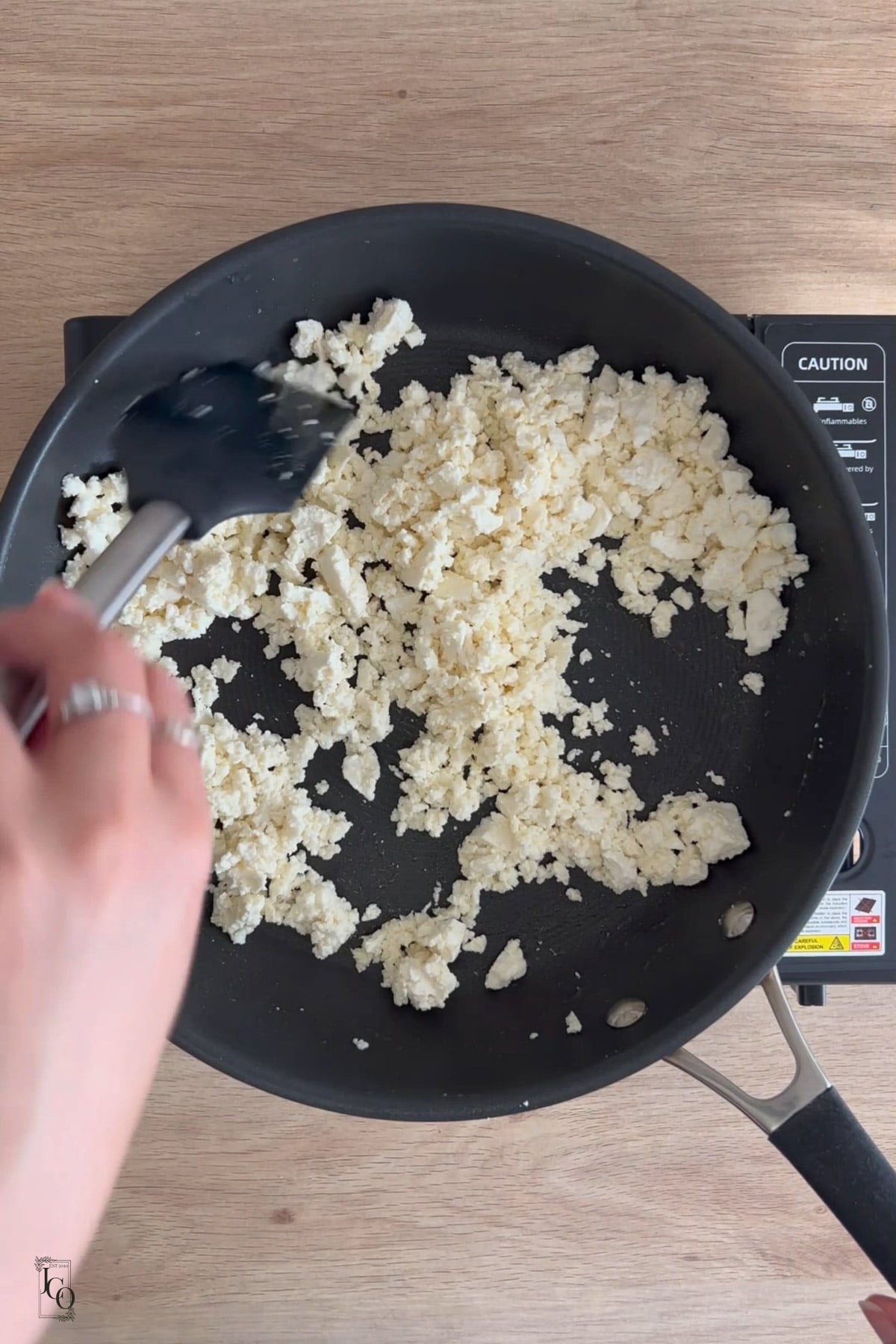
- Cook the ricotta: Cook until moisture evaporates and ricotta becomes crumbly.
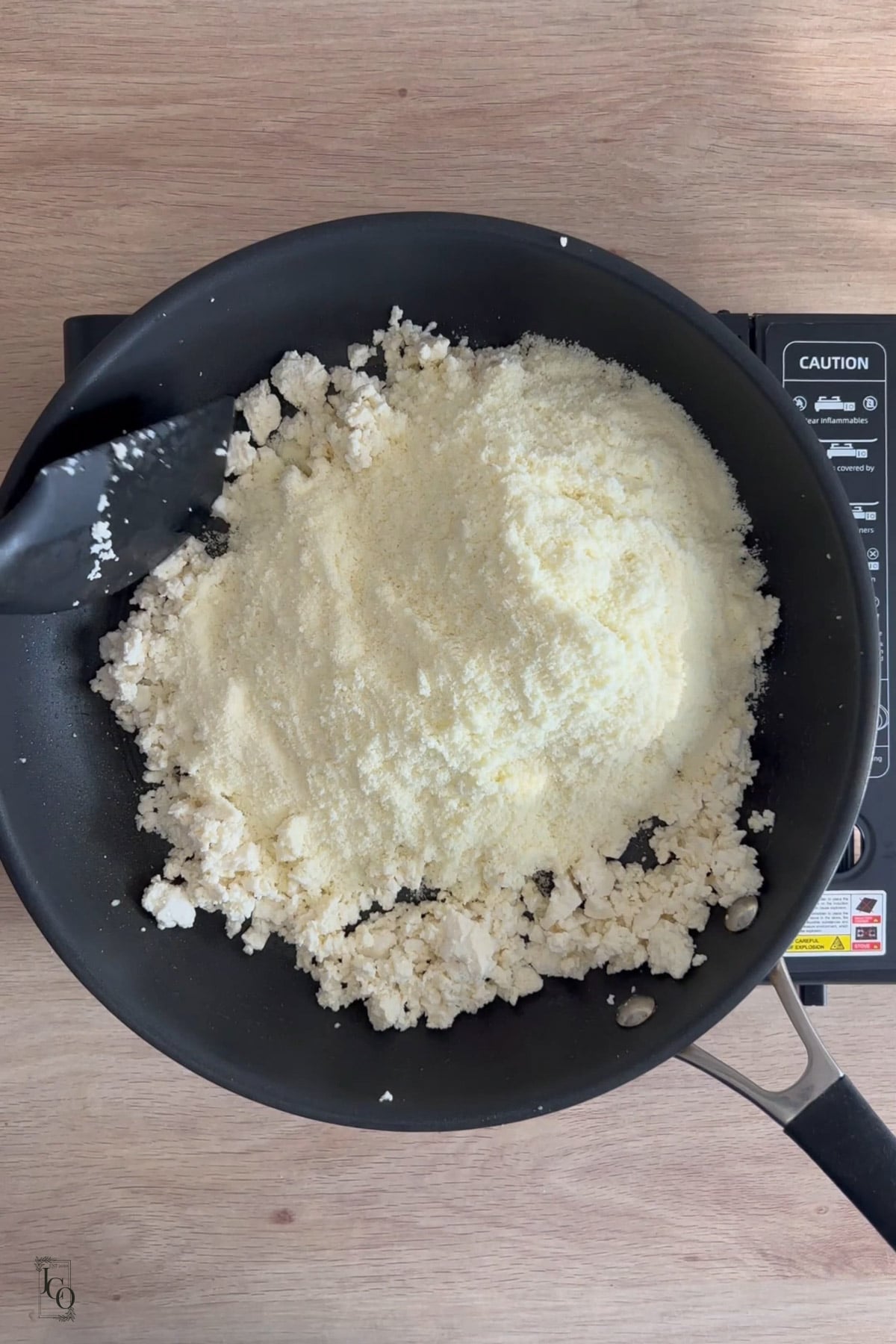
- Add the milk powder
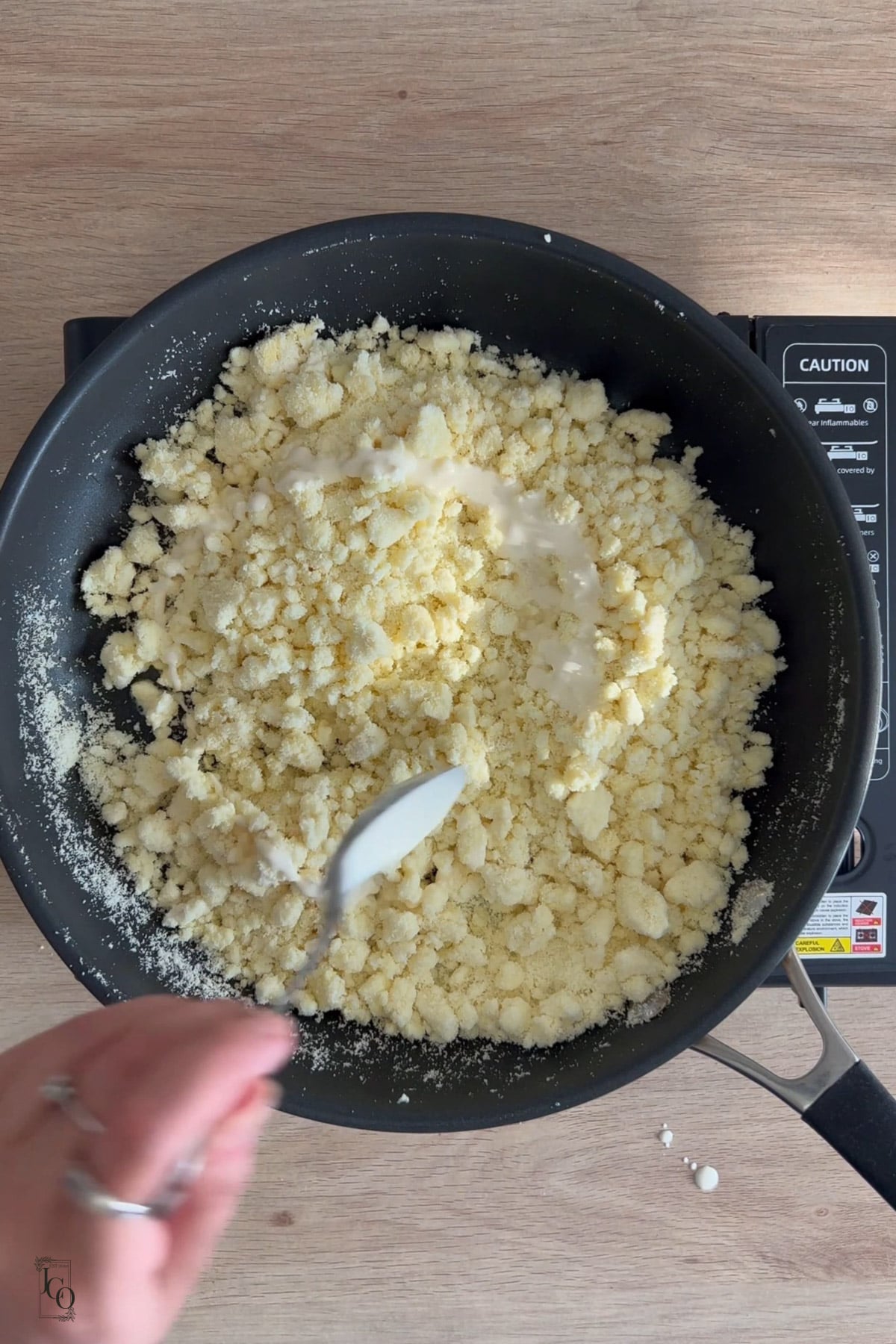
- Immediately add the cream: Stir continuously on low heat until combined.
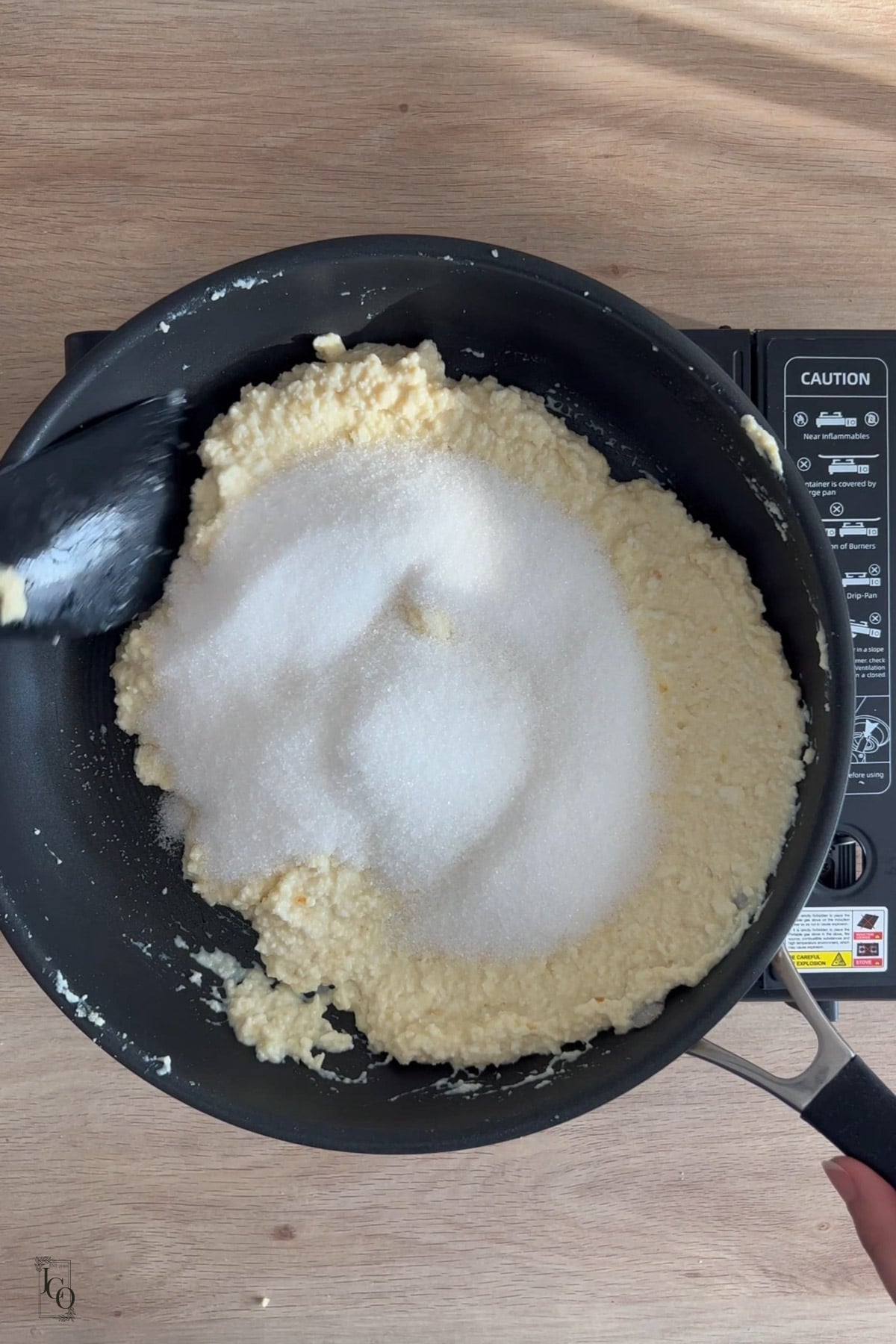
- Add in sugar: The sugar will release moisture and loosen the mixture.
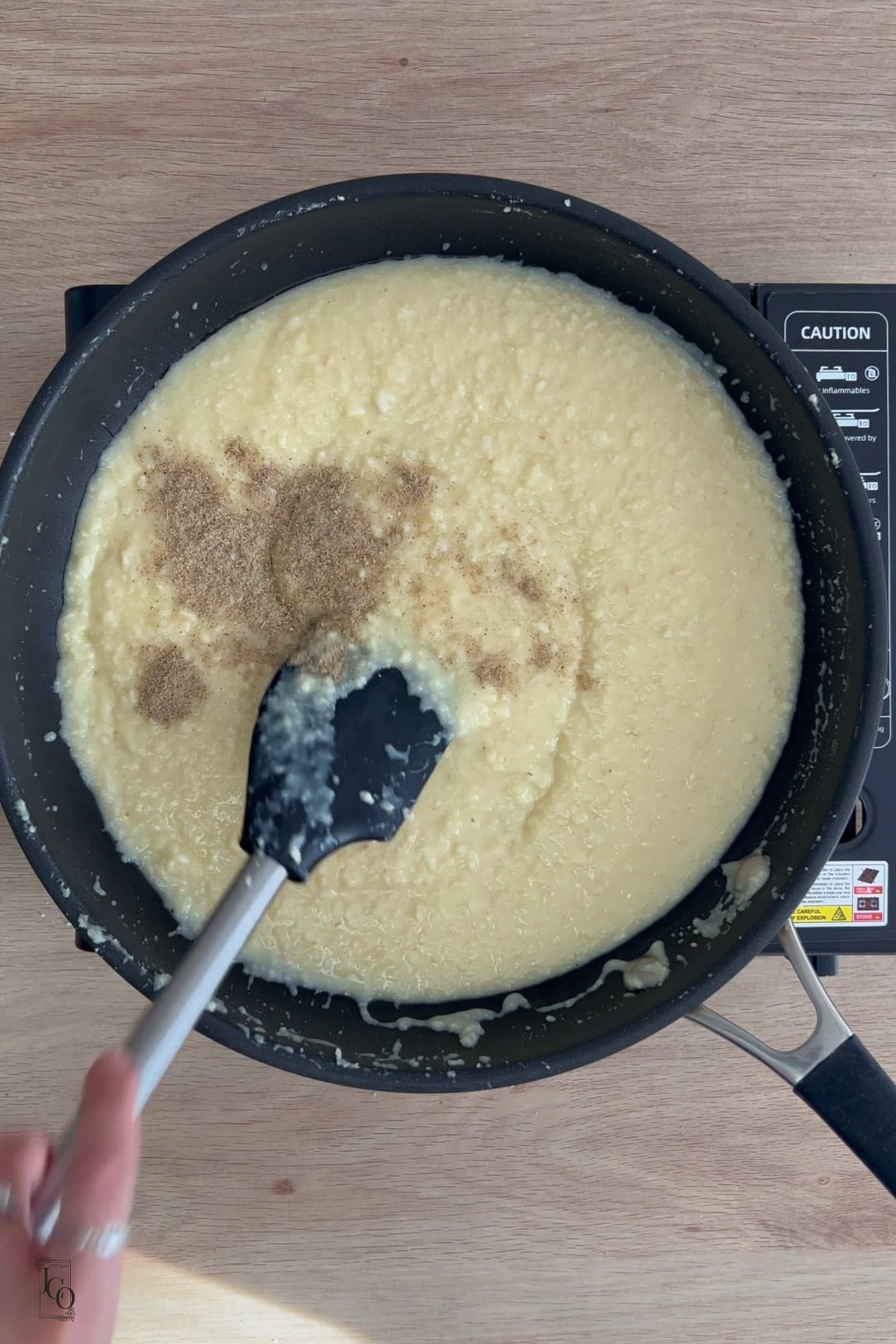
- Add the cardamom: Finish cooking until the mixture thickens and leaves the sides of the pan.
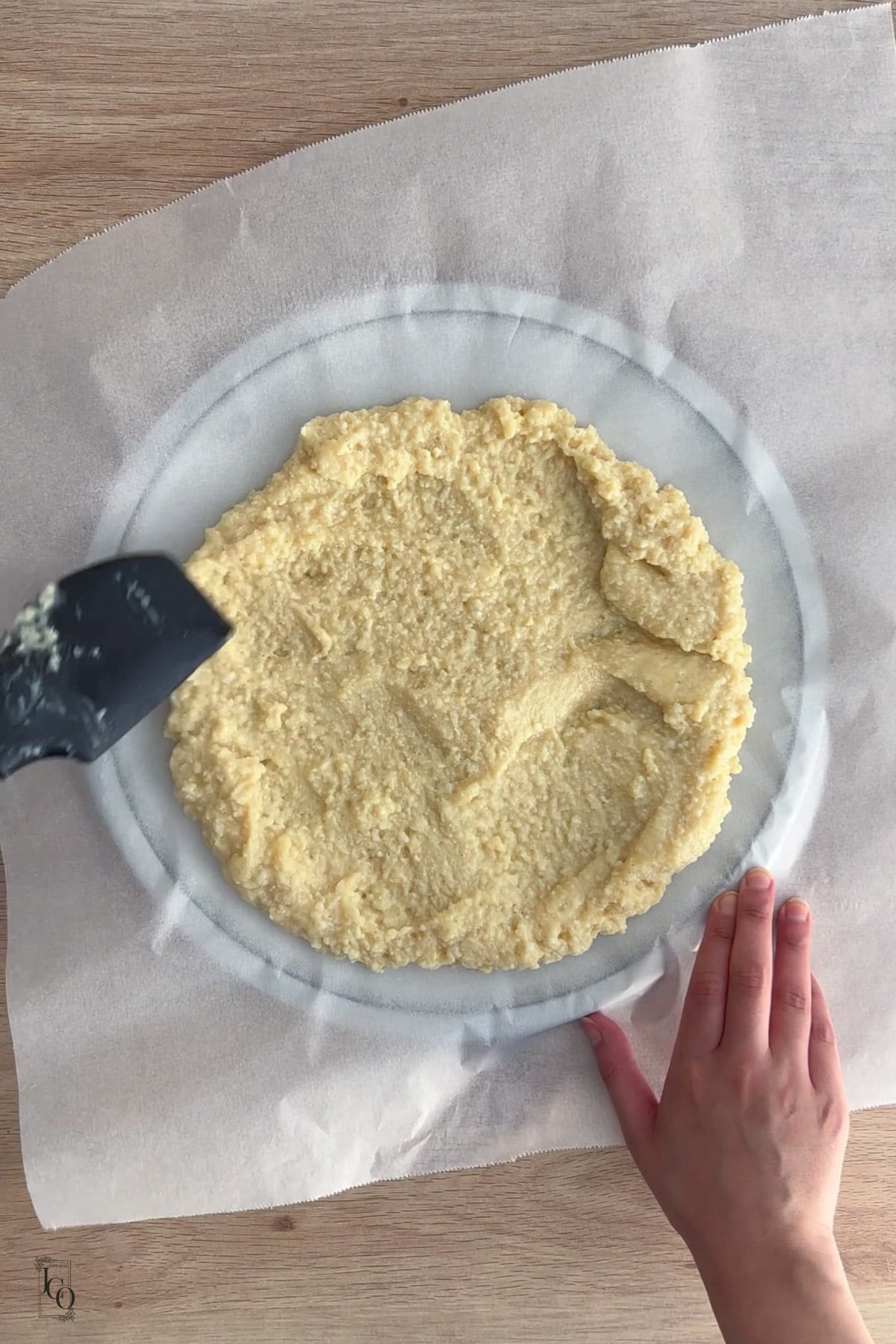
- Cool the mixture: Cool until comfortable to handle by hand.
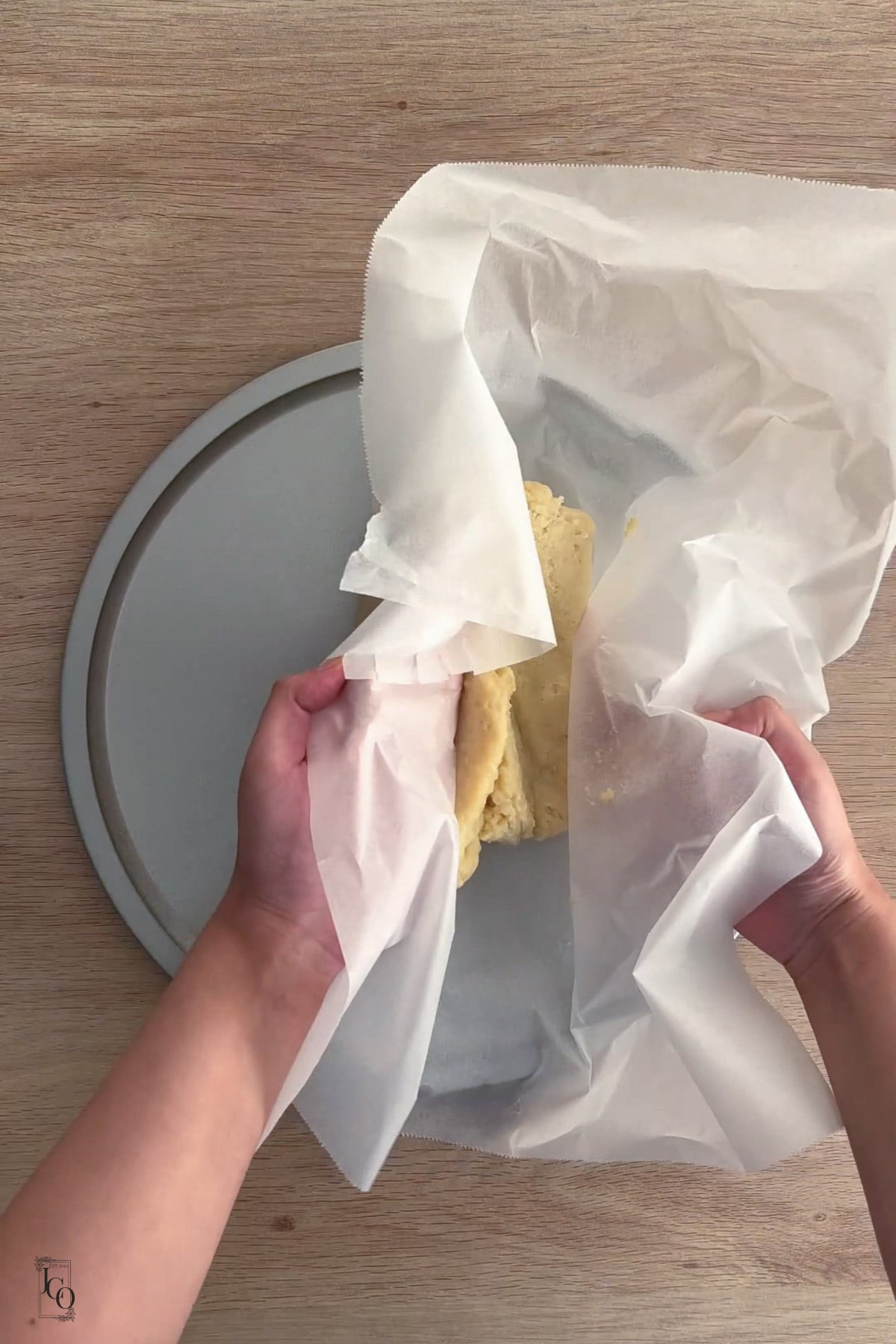
- Knead until smooth: This helps smooth out the graininess of the cooked ricotta.
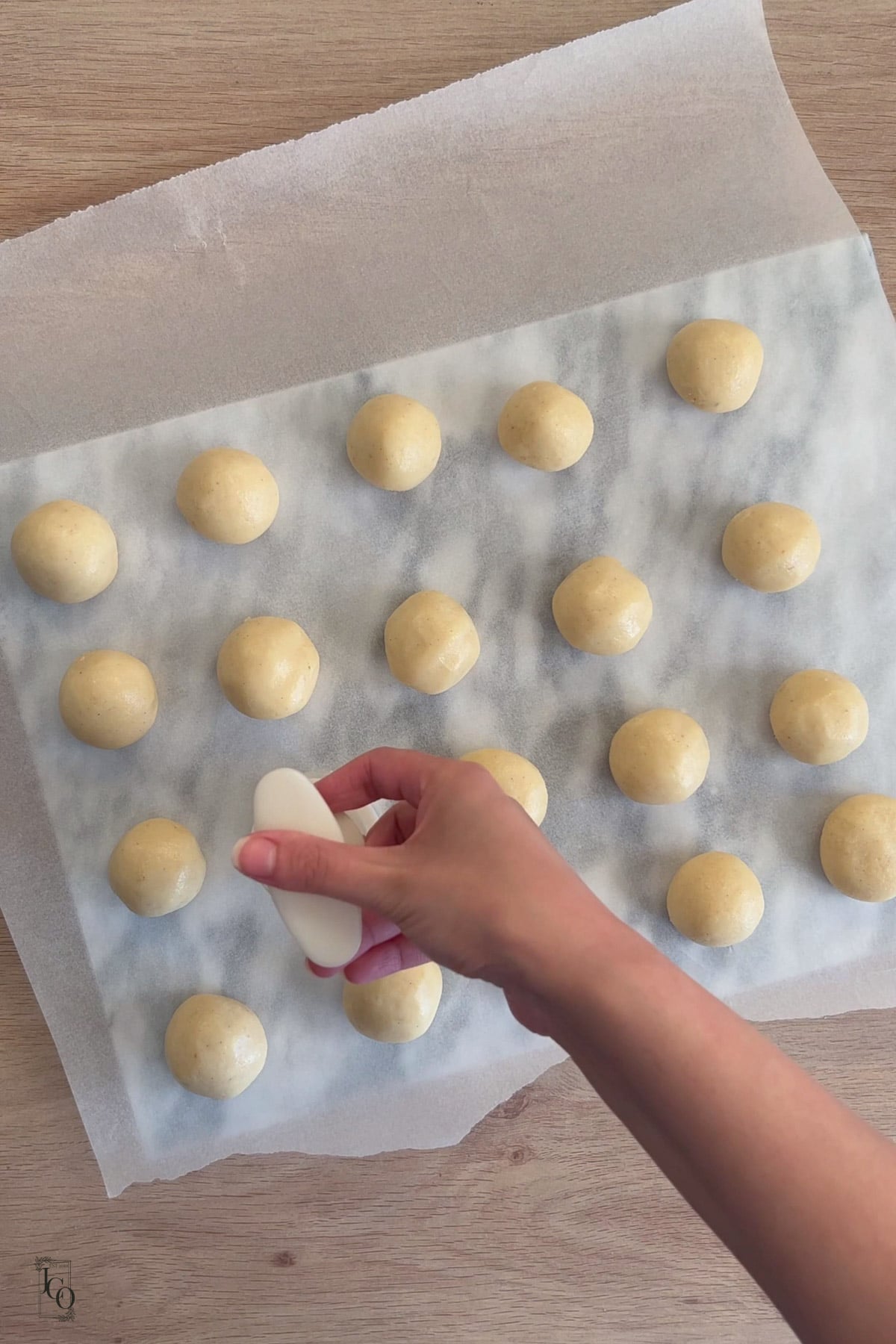
- Shape and decorate
Technique
The Trick To Soft, Smooth Ricotta Peda
Don't cook the mixture until it looks dry.
The correct peda dough should still be soft and moist when you take it off the heat. A small cooled portion should roll into a ball without sticking badly to your fingers.
The mixture firms up as it cools, so waiting until it looks completely dry in the pan will leave you with hard peda that crack when shaped.
The second trick is kneading.
Freshly cooked ricotta peda dough can look quite grainy. That's normal. Once it has cooled enough to handle, knead it for 3–5 minutes to smooth it out.
You're aiming for a mostly smooth dough with a little of that lovely ricotta grain remaining.

Storage Tips
Peda are best stored in an airtight container to prevent them from drying out and taste best at room temperature.
They can be kept at room temperature for 1 day, otherwise they are safer stored in the fridge (I find they quickly loose taste and texture though).
Peda freeze well for 2-3 months. To defrost, allow to thaw at room temperature.
Ricotta Peda FAQs
Can I use any ricotta cheese?
I recommend fresh, full-fat supermarket ricotta. Drier varieties behave differently and may need more milk.
Do I have to add all 60ml of milk?
No. The amount depends on the moisture content of your ricotta. Add a little at a time and stop once the mixture reaches the correct consistency.
Why is my peda dough grainy?
Ricotta is naturally a little grainy, and the mixture can look especially grainy straight after cooking. Kneading the cooled dough for 3–5 minutes makes it much smoother.
How do I know when to stop cooking?
A small cooled portion should roll into a soft ball without sticking badly to your fingers. The dough should still feel moist, not dry.
What can I do if my peda are too soft to shape?
The mixture has likely not been cooked enough. You can add a little milk powder to thicken the dough and then knead again. Heating further on the stove can lead the peda to become chewy.
Why are my peda cracking?
They may have been overcooked. The dough firms as it cools, so don't wait for it to become dry in the pan. Kneading also helps smooth the surface before shaping.
Can I make these without condensed milk?
Yes. This recipe uses ricotta, milk powder and sugar instead.
Can I add saffron?
Yes. Cardamom is my classic flavour, but saffron can also be added if you fancy a different version.

Other Peda Recipes


As always if you make this recipe, be sure to leave me a comment, rate this recipe and tag me on Instagram @jcookingodyssey or #jcookingodyssey. I love seeing all your photos of my recipe recreations!
Don’t forget to follow me on social media using the buttons below – I can't wait to see you all there!
📖 Recipe

Ricotta Cheese Peda
Equipment
- 1 peda press
Ingredients
- 250 grams ricotta cheese
- 200 grams milk powder full fat/full cream
- 200 grams sugar
- 2 tablespoon ghee
- 4 tablespoon cream optional - single/double/heavy
- ½ teaspoon cardamom powder
- 60 millilitres whole milk as needed
Instructions
- In a wide heavy bottom or non-stick pan heat 2 tablespoon ghee on medium heat.
- Turn the flame low and carefully add 250 grams ricotta cheese, break up the cheese by pressing with a spatula.
- Keep stirring all the time and cook the cheese for 5-7 minutes or until the moisture dries up.
- Then add 200 grams milk powder and 4 tablespoon cream, and stir continuously.
- Cook the mixture for 2-3 minutes. Add 60 millilitres whole milk little by little if the mixture appears too dry.
- Add 200 grams sugar. Continue to keep a low flame.
- Keep mixing until the mixture comes together as one mass and leaves sides of the pan. To check the right consistency, take a small portion of the mixture in between your fingers. You should be able to roll into a ball without it sticking.
- Turn off the flame and add ½ teaspoon cardamom. Remove from the heat.
- Working fast, remove the peda mixture on to a greased plate or parchment paper.
- Allow to cool completely. Then knead the mixture with the heel of your hand for 3-5 minutes to smooth out the peda dough.
- Divide the dough into equal portions and roll them into a smooth ball.
- Shape them either by using your palms or a peda mold.
Video
Notes
- Ricotta: Use fresh, full-fat, creamy supermarket ricotta. Its moisture content varies between brands.
- Milk: Add gradually, only if needed. You may not need the full 60ml. The mixture should remain soft, not dry or stiff.
- Cream: Use all 4 tablespoons for the best creamy texture.
- Cooking cue: Stop when a small cooled portion rolls into a soft ball without sticking. The mixture should still feel moist, as it firms up while cooling.
- Don't overcook: Dry peda dough will crack when shaped and produce hard peda.
- Knead the dough: Once cool enough to handle, knead for 3–5 minutes. This smooths out the graininess of the cooked ricotta.
Nutrition
PLEASE NOTE: Nutritional values are estimated by a computer and may vary based on ingredients and portion sizes. For personalised dietary advice, please consult a qualified healthcare professional.
Share on Facebook Pin This Recipe Share by Text

Unknown says
Delicious and tempting peda...nice presentation.
Sumi says
very nice peda's..never knew could make it with Ricotta