
Gulab Jamun is quite possibly the most classic Indian sweet that is known throughout the world. You can find a bowl of these melt-in-the-mouth treats at weddings, parties and almost all Indian restaurant menus!
Want to make best gulab jamun recipe but never found the perfect recipe? This post will answer all of your khoya gulab jamun woes so that you can achieve the best results every single time. Makes perfect jamuns that are just like those found in mithai shops – soft + spongy for days, moist in the middle with an even colour all over.

Soft gulab jamuns are particularly special in our household and our love for them goes way back!
My grandma would without a doubt make a batch of beautiful gulab jamun every single Diwali along with other Diwali sweets and savouries. They were also served at my parents’ wedding for dessert. They were then made for my Mum’s 21st birthday – her first birthday celebrated in the UK. Even on my 1st birthday – you guessed it, we had classic indian dessert, Gulab Jamun – shame I was probably too young to enjoy them then!
This classic South Asian dessert is made from milk-solid balls of dough which are deep-fried and then soaked in a rose-scented warm sugar syrup. The result are intensely sweet soft and spongy doughnuts, sweet balls, that can be served warm or at room temperature.
You can readily buy instant gulab jamun mix in a packet in indian store and supermarkets if you are pushed for time. We once made a Gulab Jamun Mix Cake which turned out to be an absolute show stopper.
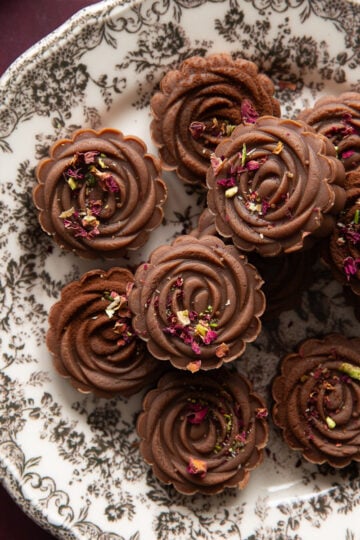
Use leftover Gulab Jamun to make No Bake Gulab Jamun Cheesecake or these Gulab Jamun Truffles

Kala Jamun vs Gulab Jamun
The traditional Gulab Jamun recipe is similar to Kala Jamun but has key differences. Kala Jamun are darker on the outside (hence kala meaning black). They are typically made from paneer or chenna. They are less spongy and more dense. The surface is also a little firmer rather than soft gulab jamun.
See our Kala Jamun post here, or for something a little bit different, try Peanut Butter and Chocolate Kala Jamun
Ingredients
The dough
Traditional recipe of the Gulab Jamun dough is made with khoya (or khoa, mawa). Khoya is essentially a milk solids that is made by simmering whole or full cream milk until the moisture evaporates and reduces.
You can make homemade khoya at home using just three ingredients – milk powder, milk and ghee.
Adding chikna khoya to gulab jamun makes them more rich and gives them the restaurant or halwai style taste and flavour.
You can also find khoya ready made in South Asian or Indian grocery stores – just check the chilled section where paneer would be kept.
Flour is needed to bind the ingredients to form a dough. Plain white flour or all purpose flour is the flour of choice here.
Baking powder is also added to the dough. The baking powder activates during the frying process.
If using baking soda instead of baking powder you will only need a pinch of it as it is much more potent than baking powder!
To bind all of the ingredients together, we have used whole milk which also has a second use – the fat helps keep the center of the jamun moist and soft.
A small pinch of cardamom powder in the dough, enhances the taste of homemade gulab jamuns.
We have made flavour variations to the dough and made Kesar Gulab Jamun also.
The sugar syrup
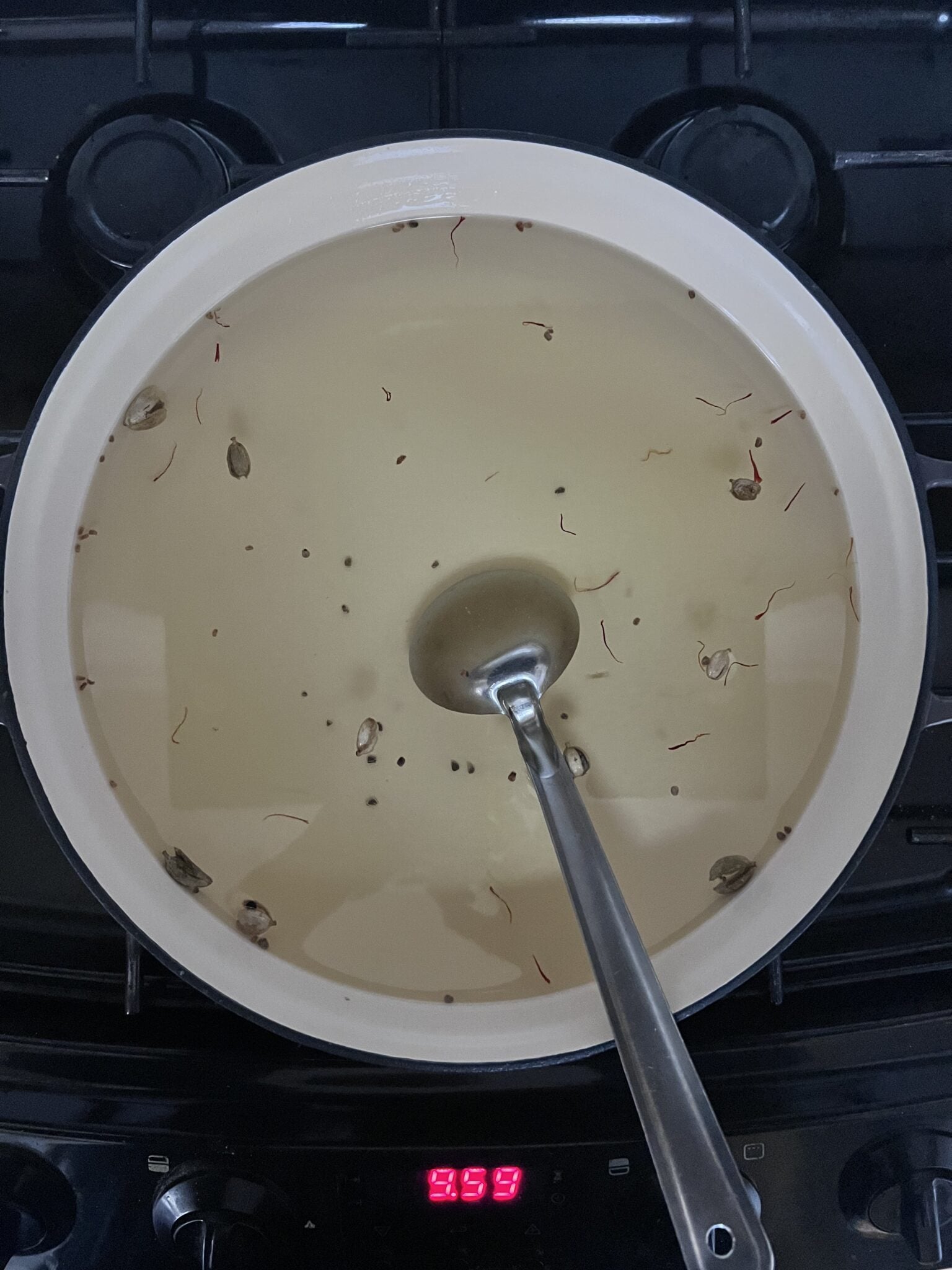
Once the dough balls are fried, they are then left to soak in sugary syrup. In gulab jamuns, the syrup is flavoured with rose, saffron strands and green cardamom. The saffron and crushed cardamom pods can be added as the syrup cooks. The rose flavour comes through adding rose water or rose essence. This should be added after the syrup is cooked.
We have used 8 cups of sugar with 7 cups of water so this should give you an idea of the ratio we are looking for.
A few drops of lemon juice are also added to the syrup to prevent the syrup from crystallising as it cools so it can remain a liquid.
Frying ingredients
Typically the jamuns are fried in either a neutral flavoured oil or ghee.
I prefer oil when deep frying because ghee tends to solidify at room temperature (especially here in chilly UK)! The gulab jamuns may crust over slightly and have a white-ish appearance.
We have used vegetable oil here.
How to make the best Gulab Jamun
The perfect Gulab Jamun dough
The first step we need to do is knead the khoya by hand to ensure it is grain-free and smooth. This will take around 10 minutes. Use the heels of your palm and you will find this process much easier. Take small bits of khoya at a time.
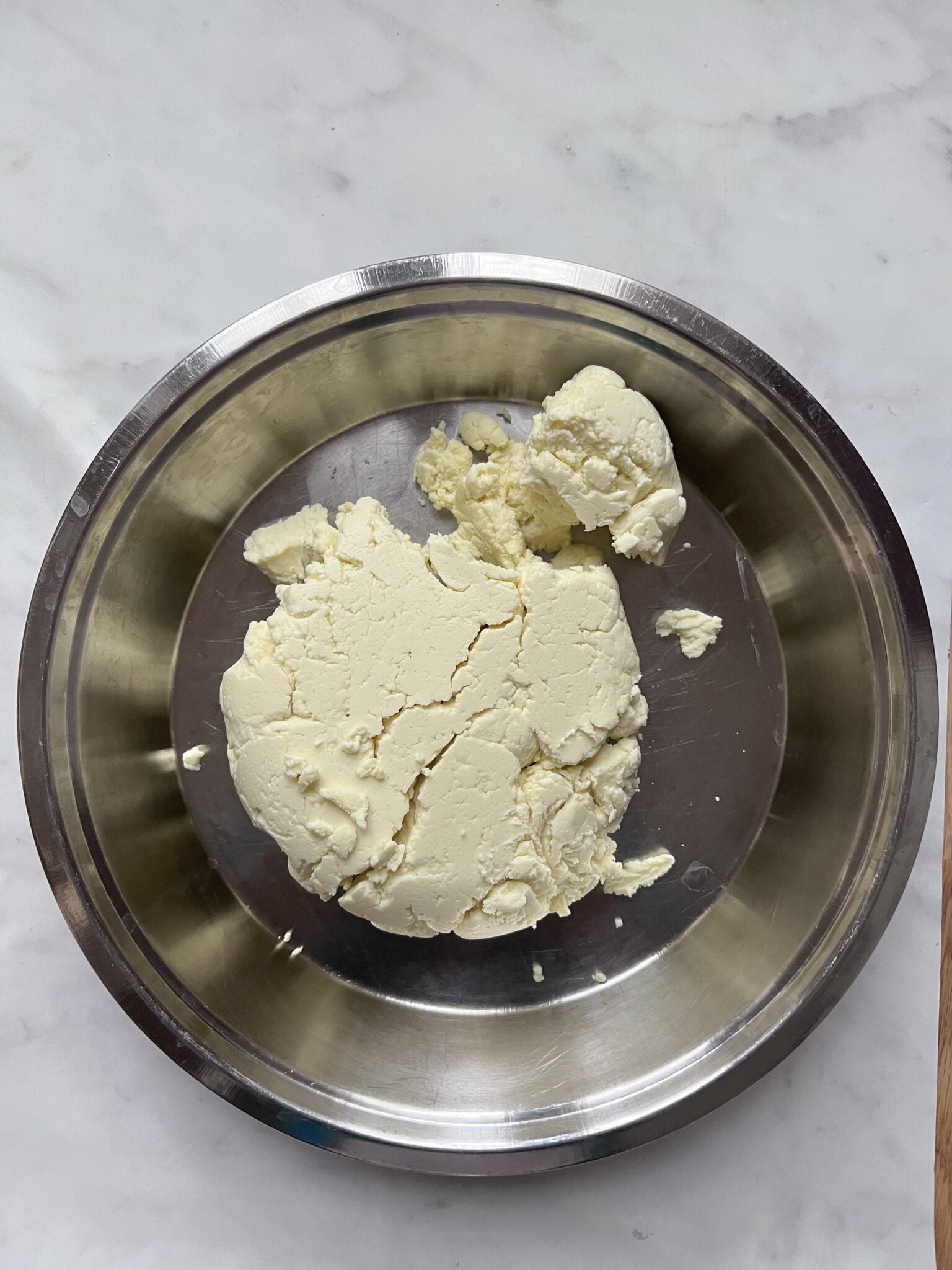
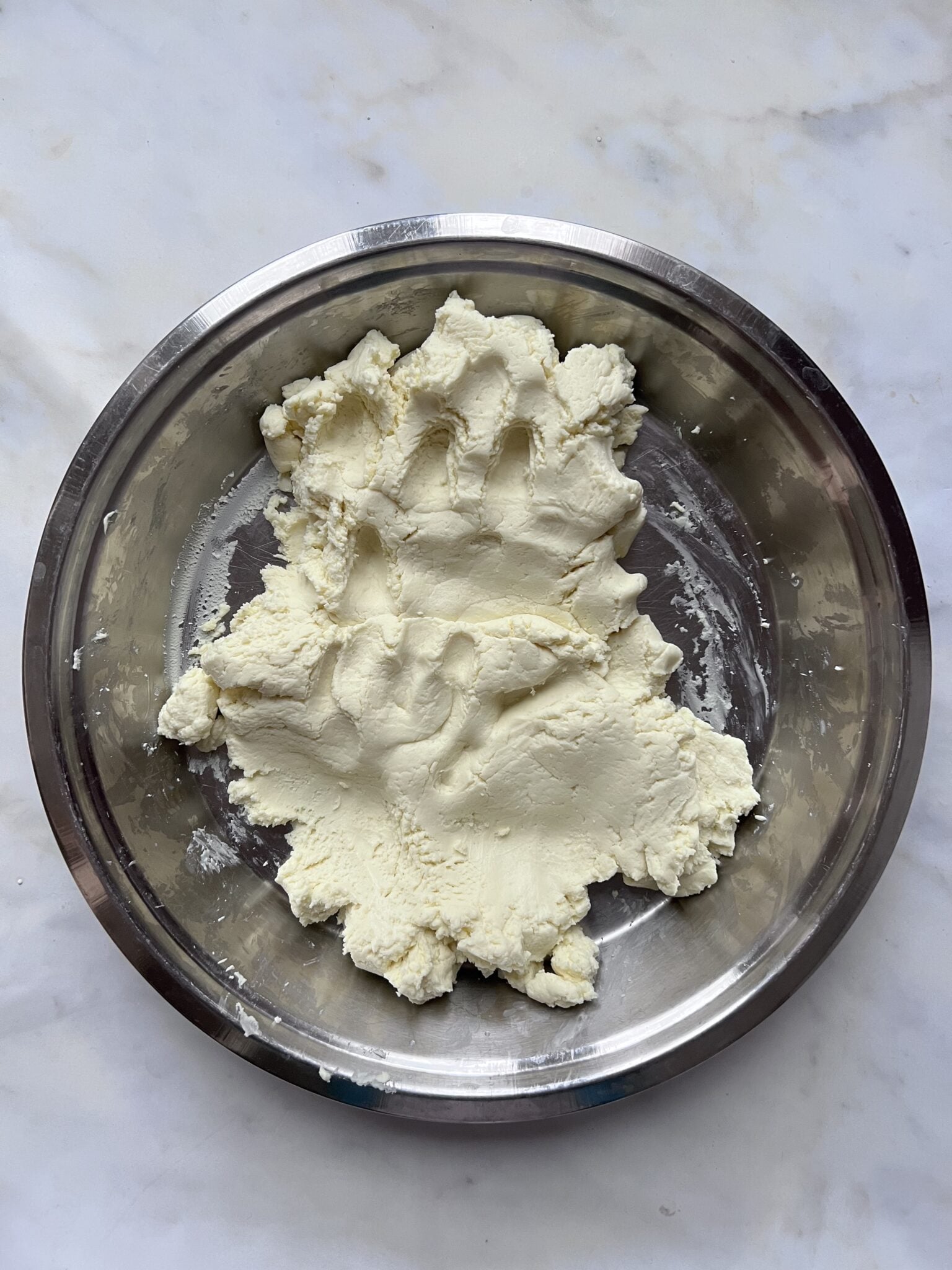
After the khoya is creamy and smooth, the baking powder and plain flour can be added.
Once the flour and baking powder is added to the khoya, do not over knead as this will cause gluten production. Gluten causes the jamuns to become hard and chewy. Add the flour little by little and have a feel of the dough. If the dough is not sticky, you do not need to add more flour.
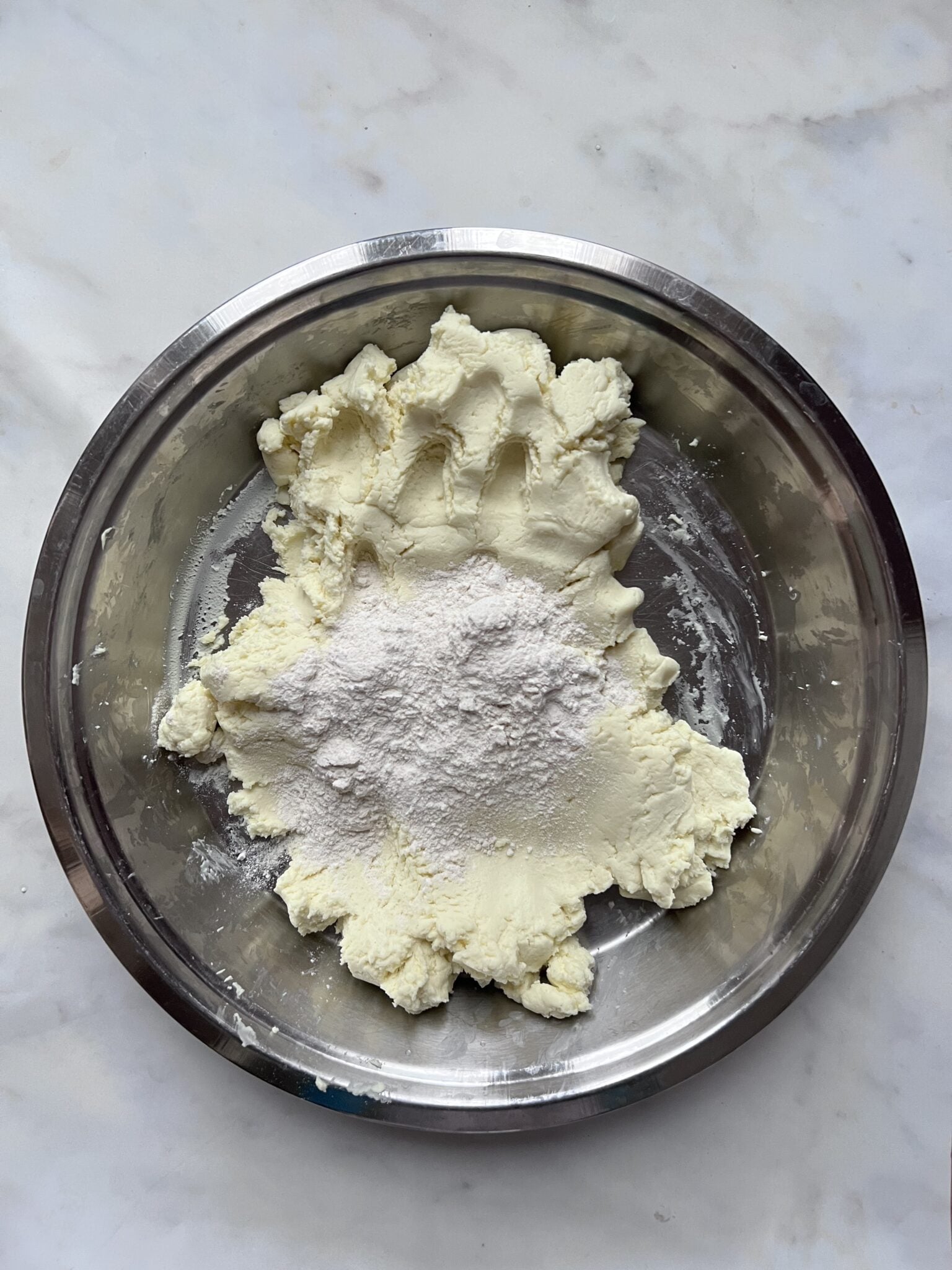
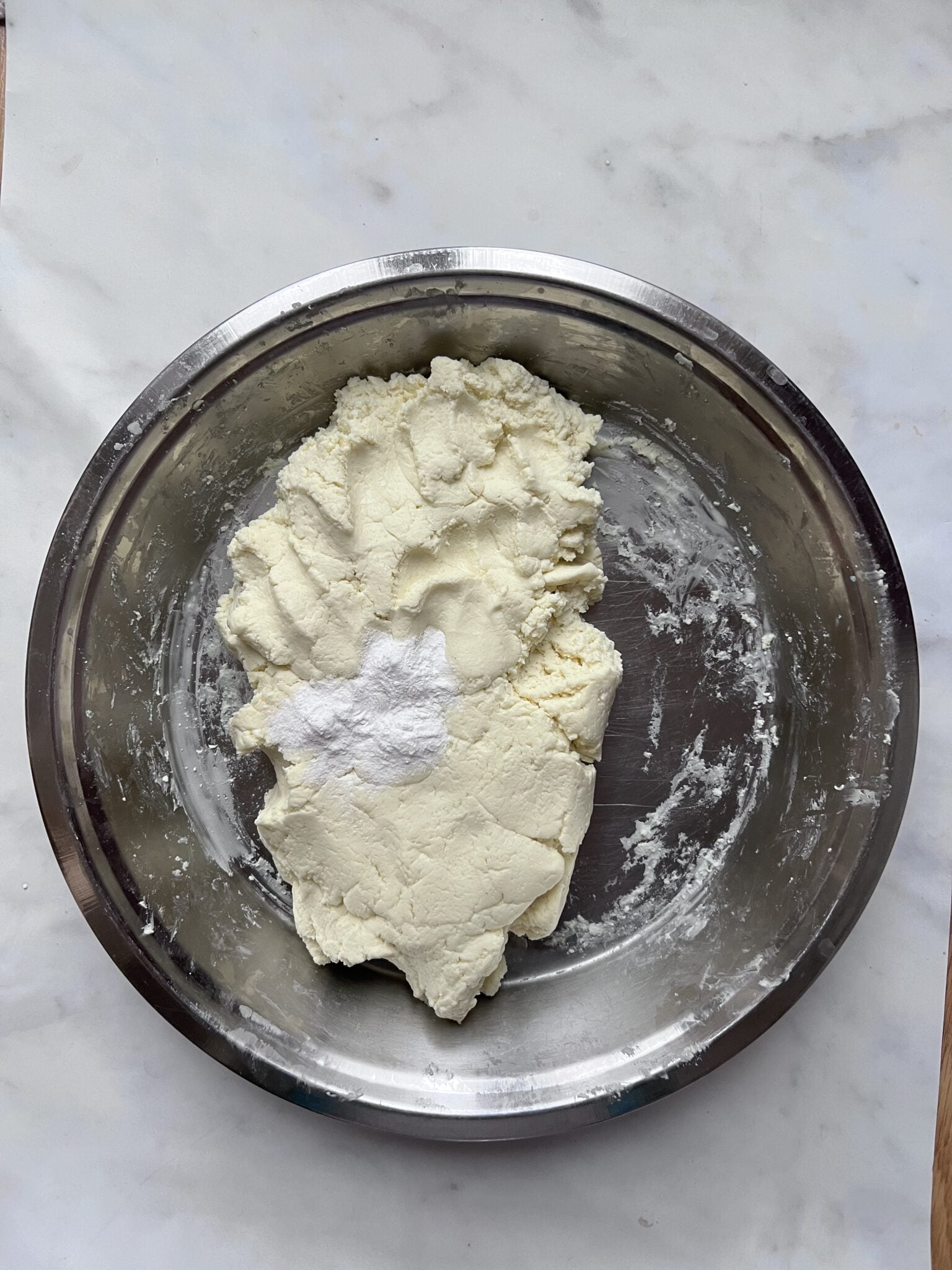
Milk is added here to bring the dough together. The dough should be a similar consistency to Gujarati chapati dough – it should be soft dough that by rolling in your hands it should not crack.
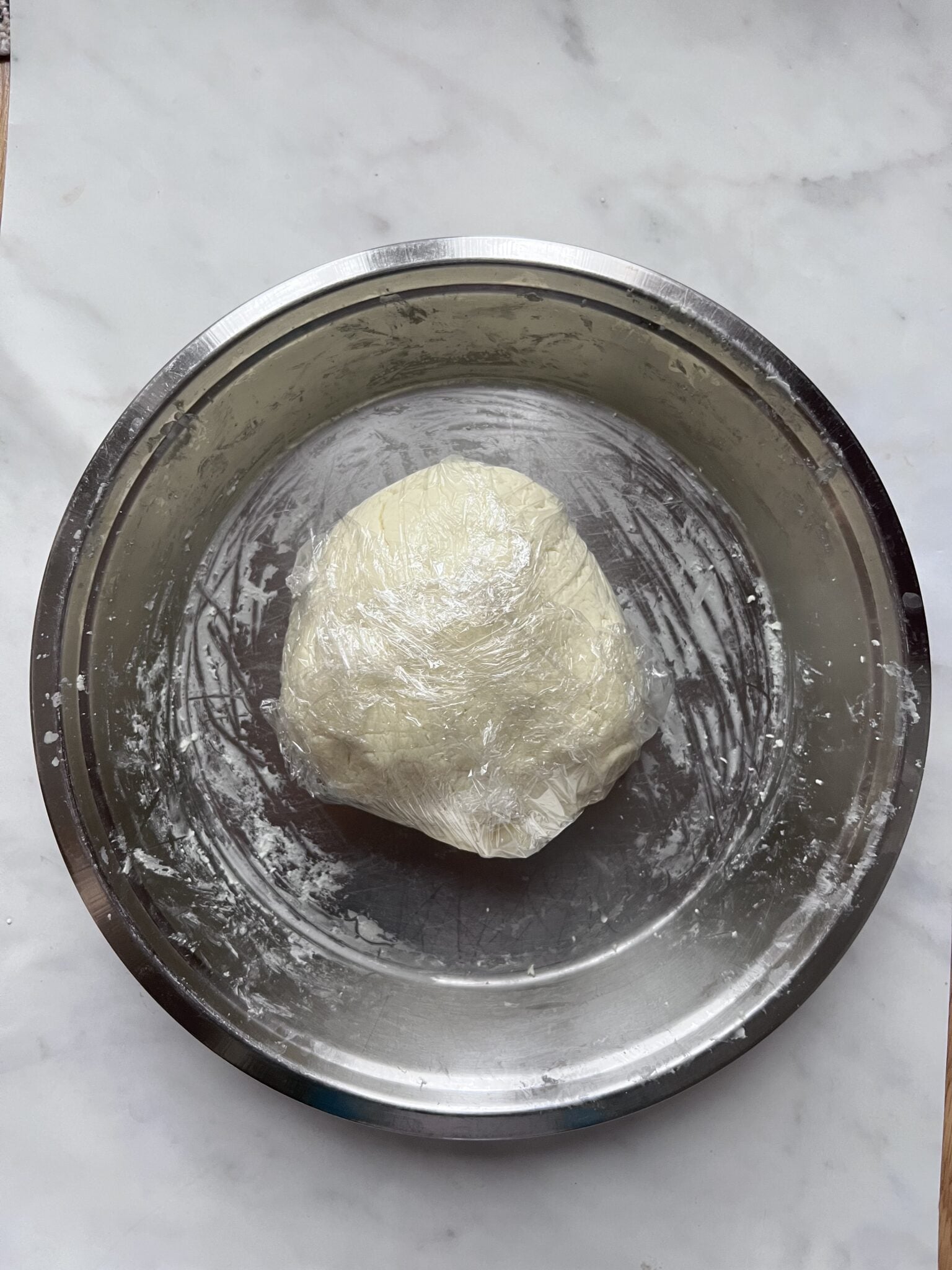
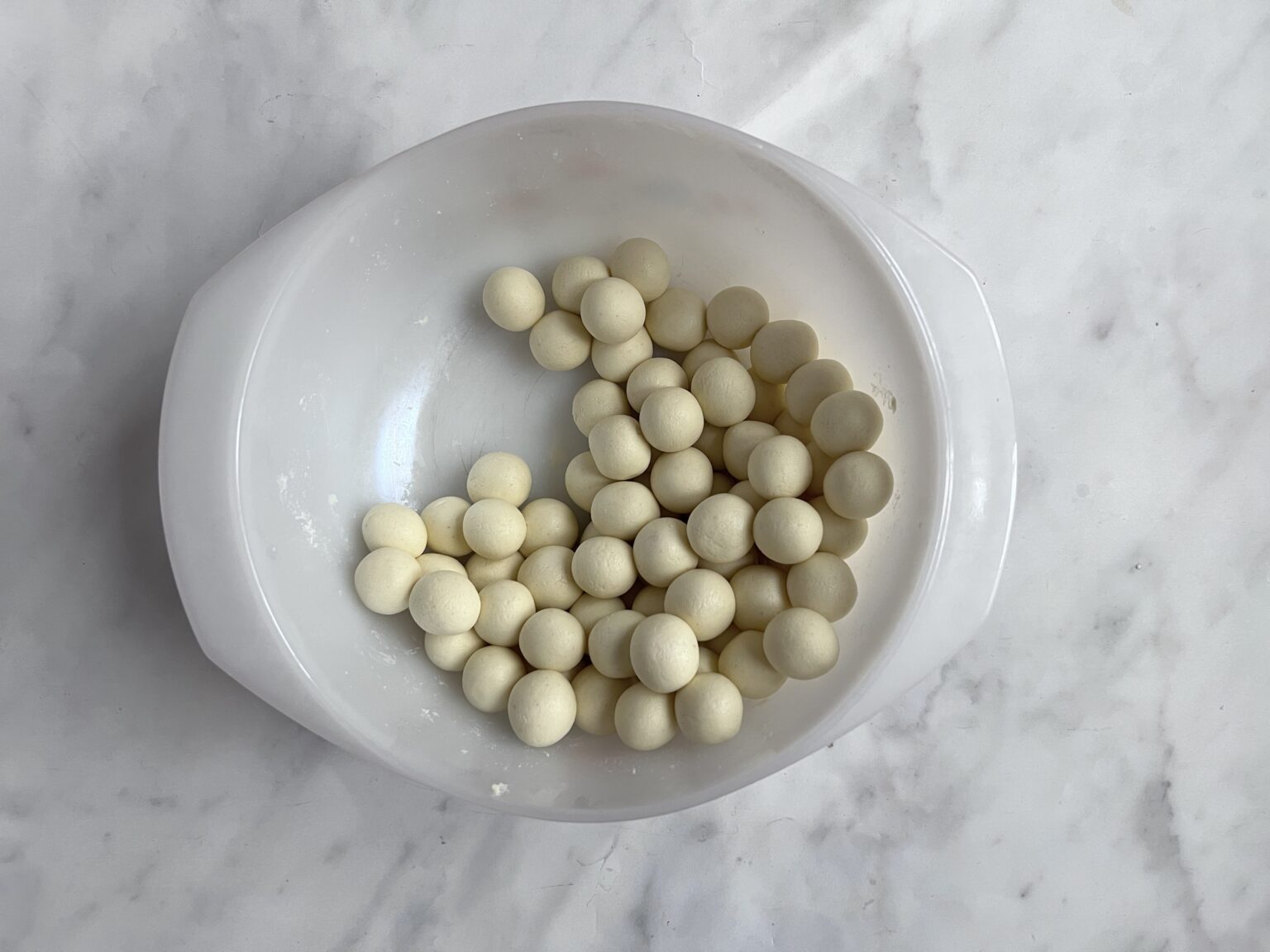
Allow the prepared dough to rest and keep covered so that it does not dry out. Divide the dough in to small portions then roll in to smooth balls.
To get perfectly similar size and evenly cooked pieces, I would either use a deep spoon or scales to measure out exact dough balls in equal parts. For Angoori GJ, we have measured each one as 8g, I would say normal sized small balls should be around 12g maximum.
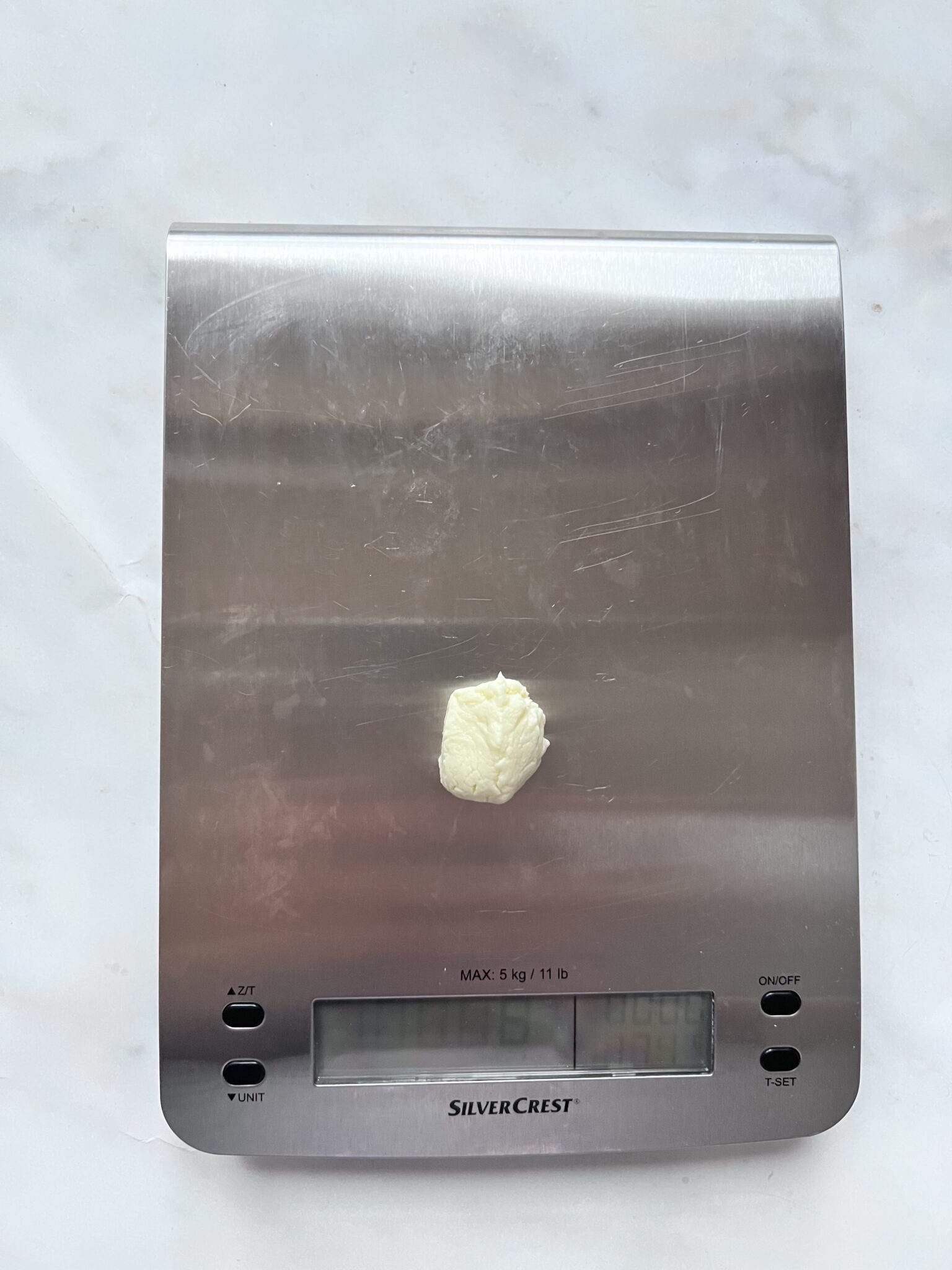
Don’t forget, the balls may look small but once they fry and get soaked in the sugar syrup they will be much larger!
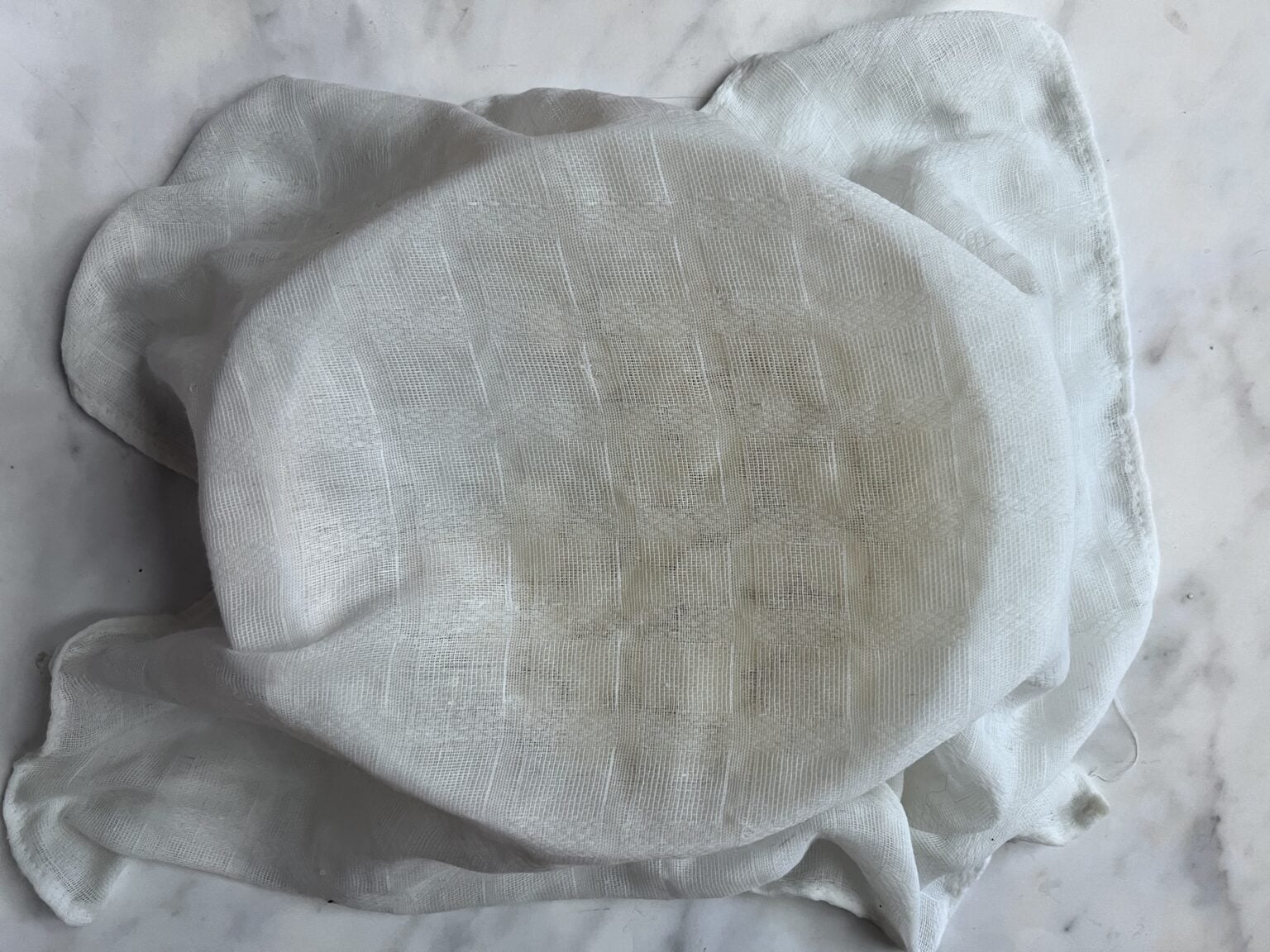
As you are shaping the balls, keep the remainder of the dough covered so that it does not dry out and crack.
If the dough does crack then go back and add more milk a few drops at a time to achieve a smooth dough again.
The sugar syrup
As mentioned above, the sugar syrup should be thin as only thin sugar syrup will be absorbed by the balls. However if the syrup is too thin and watery it will cause them to disintegrate.
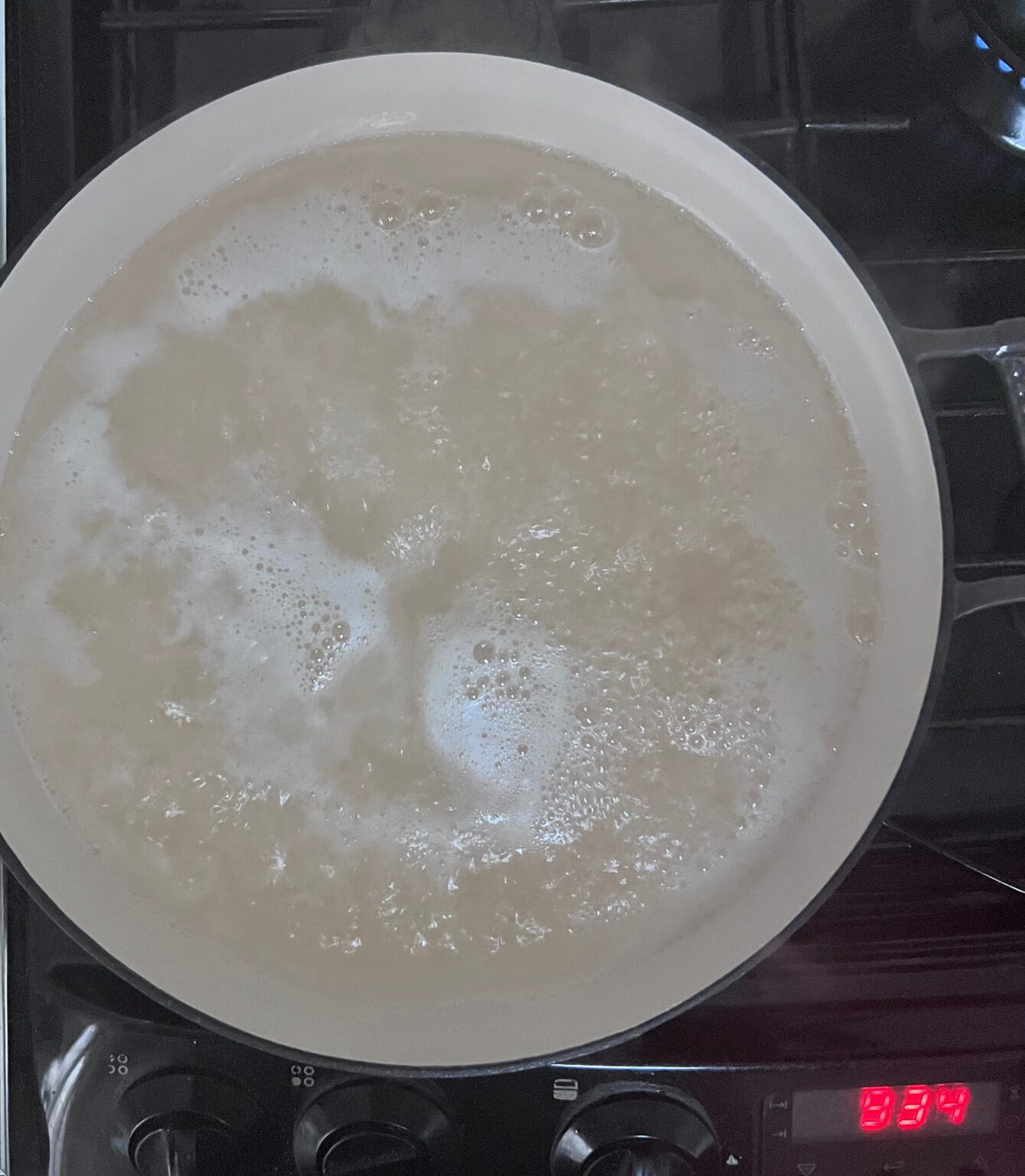
To ensure the balls stay soft, the sugar syrup should be kept thin. We are not looking for a “thread” consistency as this is too thick. You will only need to boil the syrup for around 2-3 minutes, no longer.
The gulab jamun should be dunked into the sugar syrup as they are taken out of the hot oil.
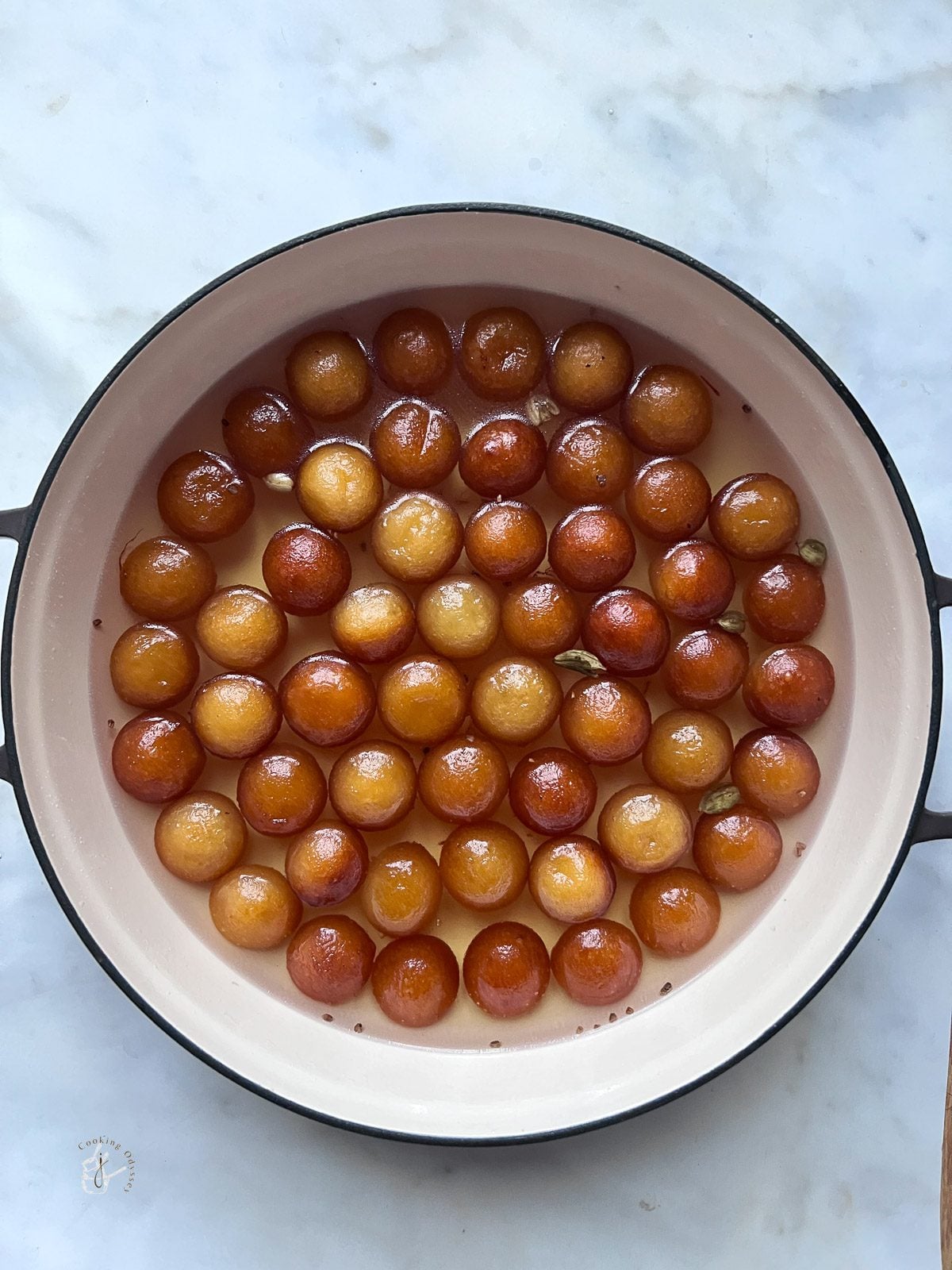
The jamun should be soaked in the sugar syrup for at least 4 hours prior to serving. They are fine to be soaked at room temperature and do not need to go in the fridge.
When you are ready to serve, heat in a microwave proof bowl with a few spoons of the syrup. They will only need about 20 seconds as they heat up really fast!
Frying
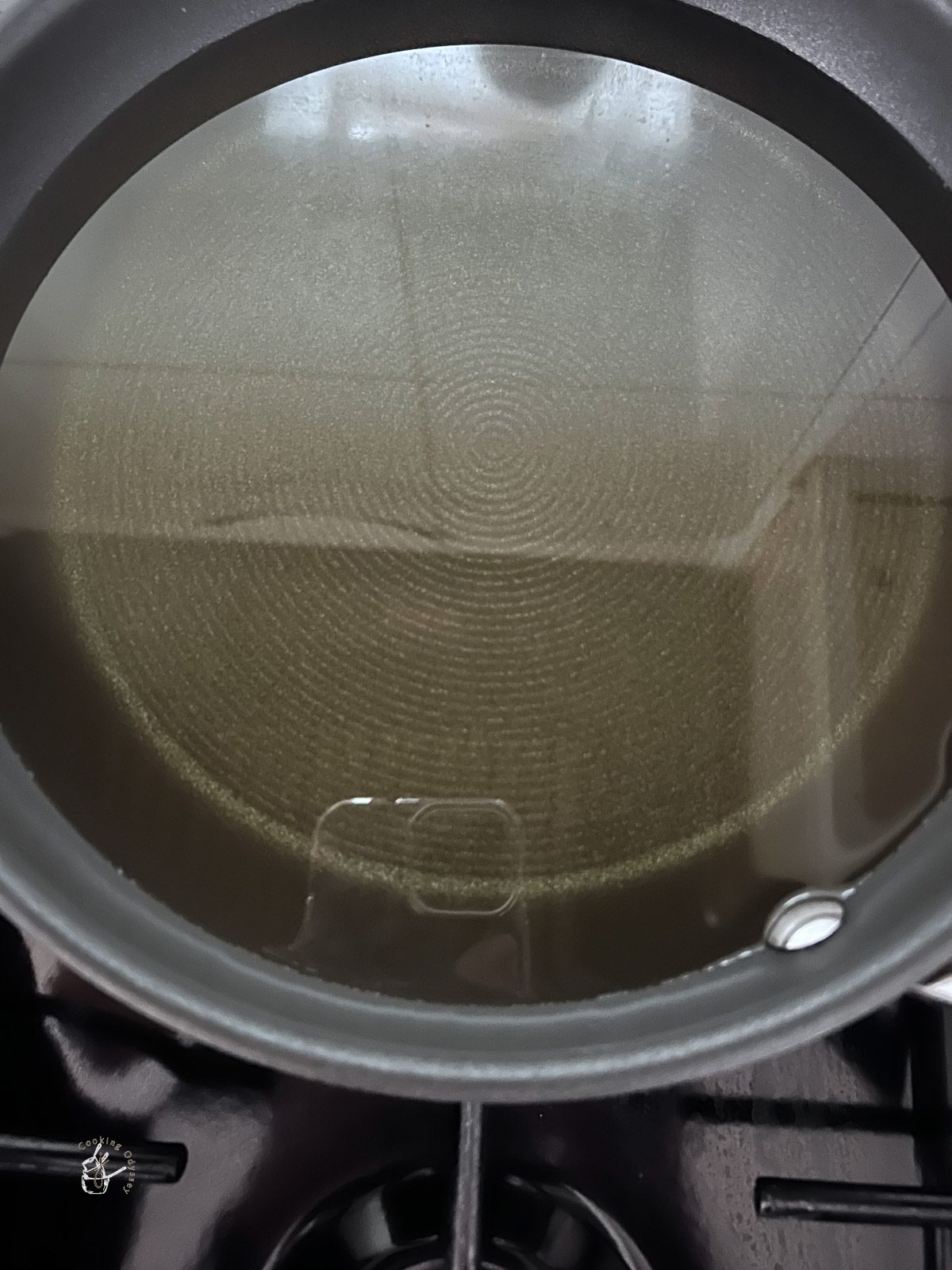
Give yourself room and use a large heavy bottom kadai or pan to make your GJ. The level of oil should be deep enough that the GJ are not touching the bottom of the pan.
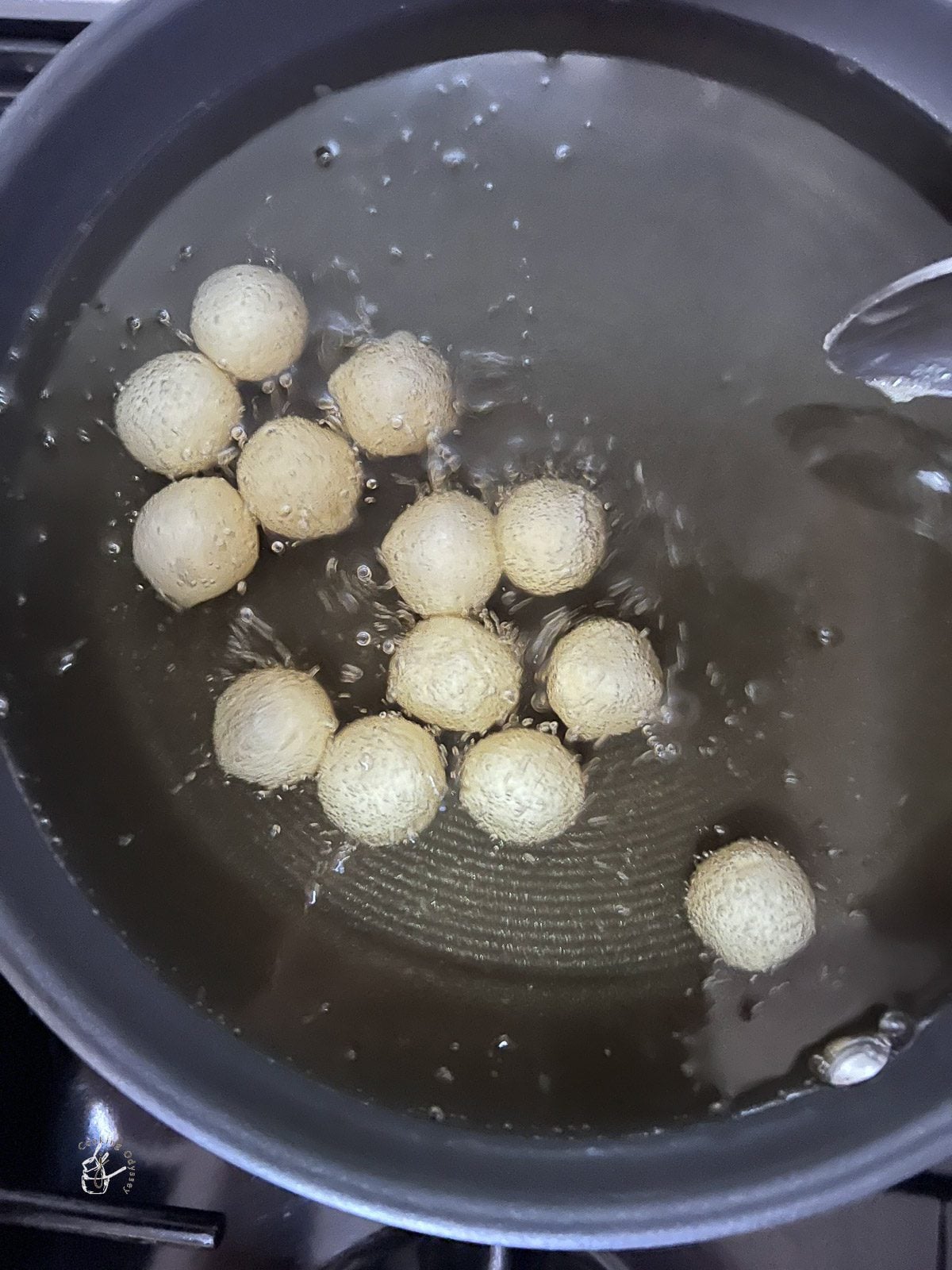
To check whether the oil is hot enough, place a small piece of dough into the oil. It will probably drop to the bottom with some bubbles around it. It should then float to the surface but not change colour immediately. The oil is then ready and at the correct temperature.
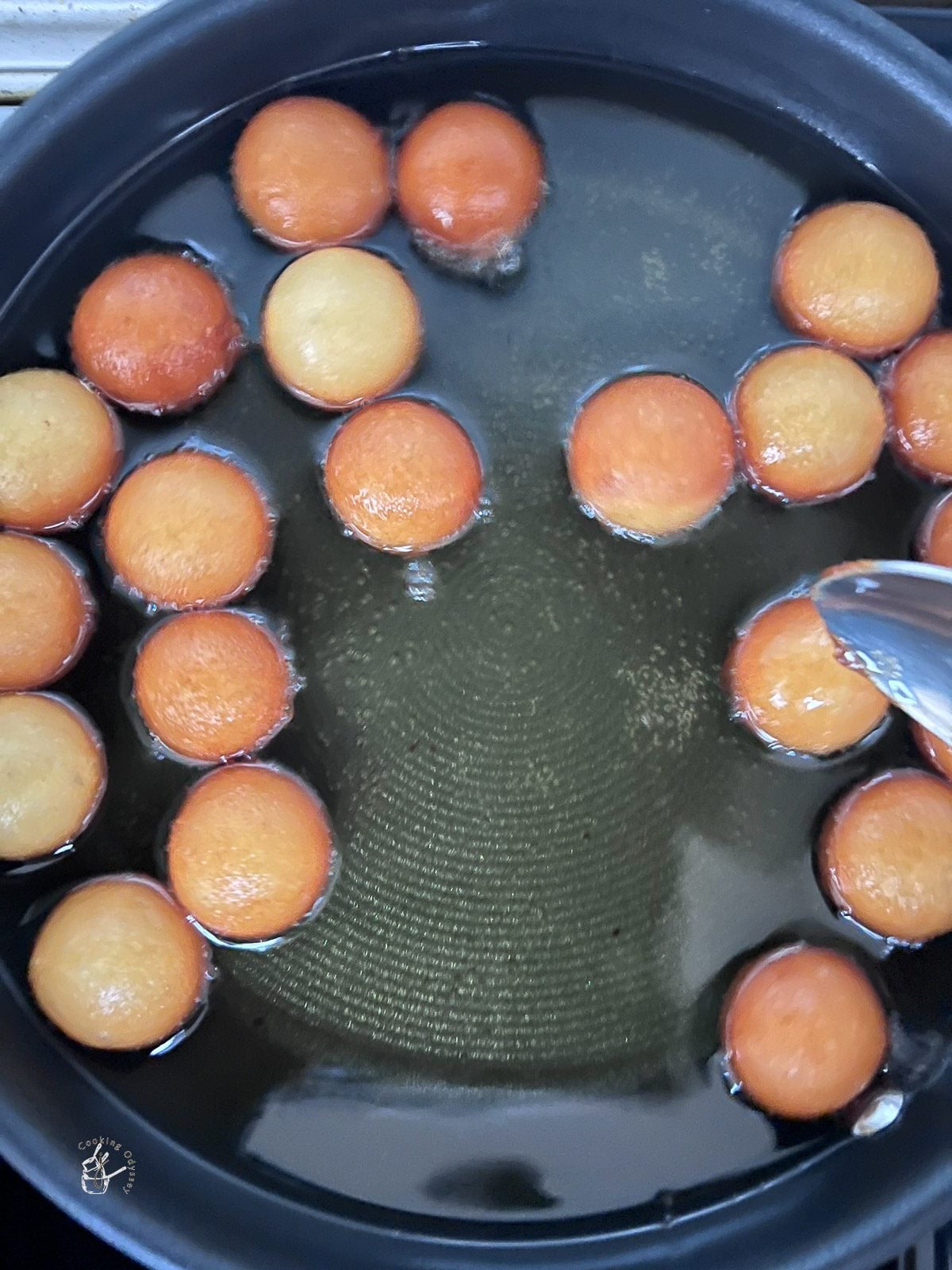
The best jamun will be light in colour. Gulab Jamun should not be dark brown but a light brown. Dark jamun means that the outside has been burnt. The outside “skin” should be soft to the bite and the inside spongy. Also overcooking the jamun means that the outside becomes thick and the sugar syrup will not be able to penetrate into the middle.
Frying technique
To achieve an even colour throughout and to prevent dark spots on the jamun, keep the oil moving gently as the jamun are frying. Use a small spoon that has a long handle for this. A large spoon or slotted spoon may cause the GJ to break.
Continue to fry on a low heat – we want the GJ to cook all the way through without going dark outside. Once they have achieved a golden brown colour, remove from the oil and place straight into the lukewarm sugar syrup.
Sometimes, Gulab Jamun can sink. This is usually because the jamun have not been fried for long enough.
Adding the fried jamuns immediately ensures that the syrup soaks into the jamun. Adding the jamun once they are cooled may mean that they remain dry inside.

Other Indian sweets for festivals and celebrations
As always if you make this recipe, be sure to leave me a comment, rate this recipe and tag me on Instagram @jcookingodyssey or #jcookingodyssey. I love seeing all your photos of my recipe recreations!
Don’t forget to follow me on social media using the buttons below – I can't wait to see you all there!
📖 Recipe

Gulab Jamun
Equipment
- Wide plate
- 2 Wide pan/kadai
- Slotted spoon
Ingredients
Sugar syrup
- 8 cup sugar
- 7 cup water tap
- 2 tablespoon rose water
- 6 crushed cardamom pods
- 18 strands saffron
- ⅛ teaspoon lemon juice you only need a few drops
Gulab Jamun
- 2 ½ cup soft khoya at room temperature
- 8 tablespoon plain flour maida
- 1 teaspoon baking powder
- 3 tablespoon milk at room temperature
- 3 cup oil to deep fry the gulab jamun balls
Instructions
Sugar Syrup
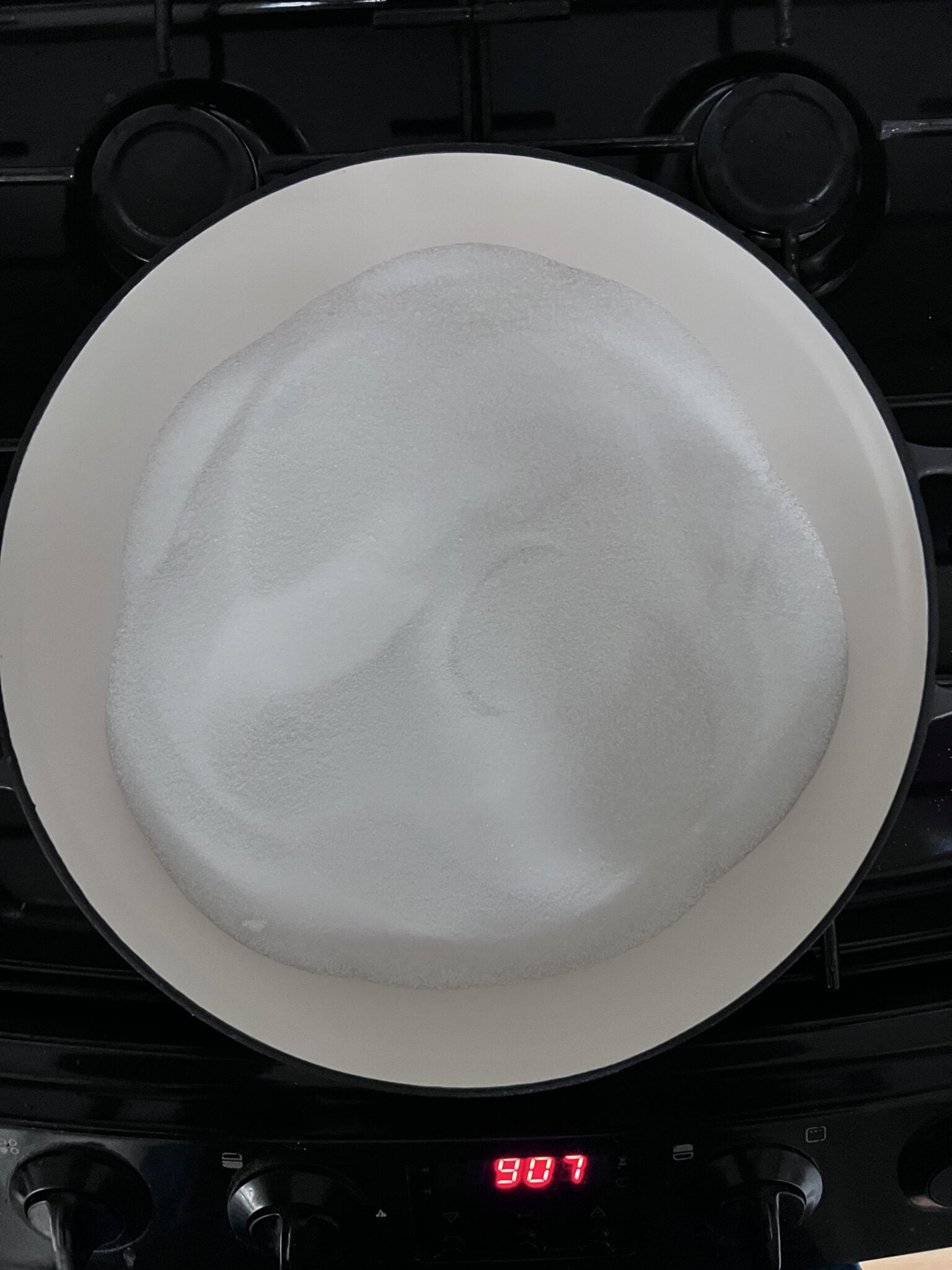
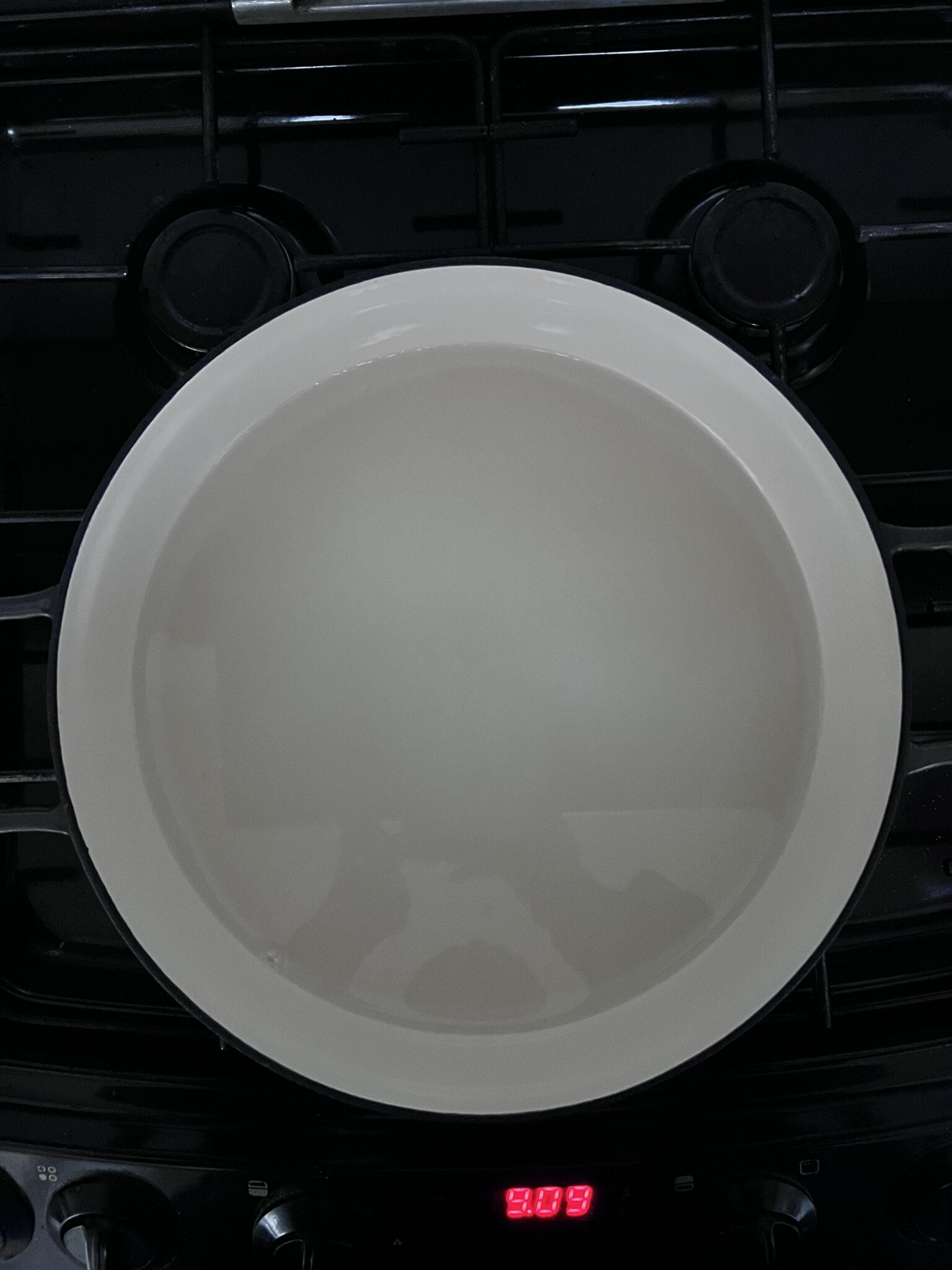
- In a wide pan/kadai mix7 cup water and 8 cup sugar on medium heat.

- Bring it to a boil, let the sugar dissolves and let the syrup cook for 3 minutes or until it reaches to sticky consistency.

- Turn off the heat, add 6 crushed cardamom pods and 18 strands saffron

- Once it cools down, add 2 tablespoon rose and ⅛ teaspoon lemon juice

- Stir the syrup and leave it aside for later use.
Gulab Jamun
- In a wide plate take 2 ½ cup soft khoya or mawa.

- First mash it up using your hands to remove any large lumps. Alternatively, grate it.
- To reduce grainy texture of khoya, rub the khoya using your heels of your palm against the plate.
- It will take roughly 8-10 minutes.
- Once the khoya is soft, grain free and creamy add 1 teaspoon baking powderand 8 tablespoon plain flour or purpose flour little by little.

- Keep mixing, add flour and bring the dough together.
- Add little milk if the dough is hard and bring it together to form soft dough.
- Do not knead the dough much, just bring it together and ensure there are no lumps

- Cover the dough with cling film and let the dough rest for 10-12 minutes.
- Divide the dough into equal portions. I used a weighing scale and kept each portion 8g.

- Keep the dough covered using clean and damp kitchen napkin all the time to prevent it drying out.
- Take one portion, and using heels of your palm make a round and smooth ball. Ensure there are no cracks on the surface of the ball. Keep them covered.
- Heat oil or ghee in a wide pan/kadai on medium heat. Do not overheat the oil.

- Take a spoon and gently stir the oil in a circular motion. Be careful, not to stir vigorously.
- Reduce the heat to low.
- Whilst stirring the oil, add gulab jamun balls one by one into the oil. Do not overcrowd the pan.
- Keep stirring the oil, after adding the balls and cook them until all the balls are fried light golden brown all over and cooked from inside too. We don't want to dark brown fried jamuns.

- Whilst frying the gulab jamuns, ensure sugar syrup is slightly warm or lukewarm. If it is cooled down, heat it again for 1-2 minutes.
- Once gulab jamuns are perfectly fried, remove them using slotted spoon and add directly into the lukewarm sugar syrup.

- Fry remaining gulab jamun balls and add all them in the sugar syrup.
- Soak the jamuns in the syrup for at least 4 hours or until they are double in size.

- Serve hot gulab jamun with ice cream, rabdi or serve warm at room temperature on its own.
Video
Notes
Nutrition
PLEASE NOTE: Nutritional values are estimated by a computer and may vary based on ingredients and portion sizes. For personalised dietary advice, please consult a qualified healthcare professional.
Share on Facebook Pin This RecipeNote – This recipe has been updated from our recipe archives with new images and content, but the recipe remains the same. First time published in June 2010.

Panchpakwan says
Lovely desserts..Amazing presentation.
Congarts on your milestone..Keep on rocking.
Love to see many more joyful recipes 🙂
Raks says
Kulfi,gulab jamun,both looks great,love the jamun the best,really killing me !
Padmajha says
Congrats on the century Jagruti.Wishing u many more days and posts of happy blogging.Both the desserts are perfect for the celebration..Very tempting clicks
Valarmathi Sanjeev says
Congrats on your 100th post. Keep rocking. Beautiful and yummy desserts.
Nivedita Thadani says
Hi Jagruti,
I am little absent minded. I thought of wishing you on the other day and I forgot it totally.
Sorry dear.
Congratulations on your 100th post.
And you got a lot of patience.
Beautiful clicks and detailed writing. Very tempting in this cold season also(here in our place)
Keep up the work,
Wish many more hundreds in your blog.
I am sorry once again for wishing you so late.
Nithu says
Thanks for submitting your recipe for our Sizzling Summer contest. Please add the contest banner to your post. Thanks...
Pari Vasisht says
Hi Jags, congrats on hitting the century, way to go girl. I love both the items as a matter of fact as a combo too. Enjoy ur vacation and peep in whenever time permits.
GayathriRaj says
Hey wow yaar...what a colorful pics....and i could nt taske my eyes off....really very tempting....
Congrts for a milestone and keep rocking....and wow i love and die for icecream i can say...and urs is making me drool.....
Too good one....
My Kitchen Antics says
congrats jagruti...
the gulab jamun is making my mouth water
jayasree says
Jags, Congrats on hitting a milestone. May your blog hit many more hundreds.
What a delightful virtual treat, you have given us. Gorgeous pics made me drool.
Enjoy your vacation.
Mythreyi Dilip says
My hearty congratulations on ur 100th post dear and wish u many more success to come!!!
Both Kulfi and Jamun looks excellent:)
Nitha says
Perfect ones.. both looks yumm....
Madhu says
Jagruti, I love the way you present recipes. Kulfi looks so nice, mouth watering.
Priya Suresh says
Wat a fabulous dishes, two mouthwatering dishes, irresistible jamuns and refreshing kulfi, i want both now,drooling here..Congrats on ur 100th post, keep on rocking Jagruti..
Aruna Manikandan says
Congratulations on ur first century and wishing u many more centuries 🙂
Both the desserts look perfect and delicious...