
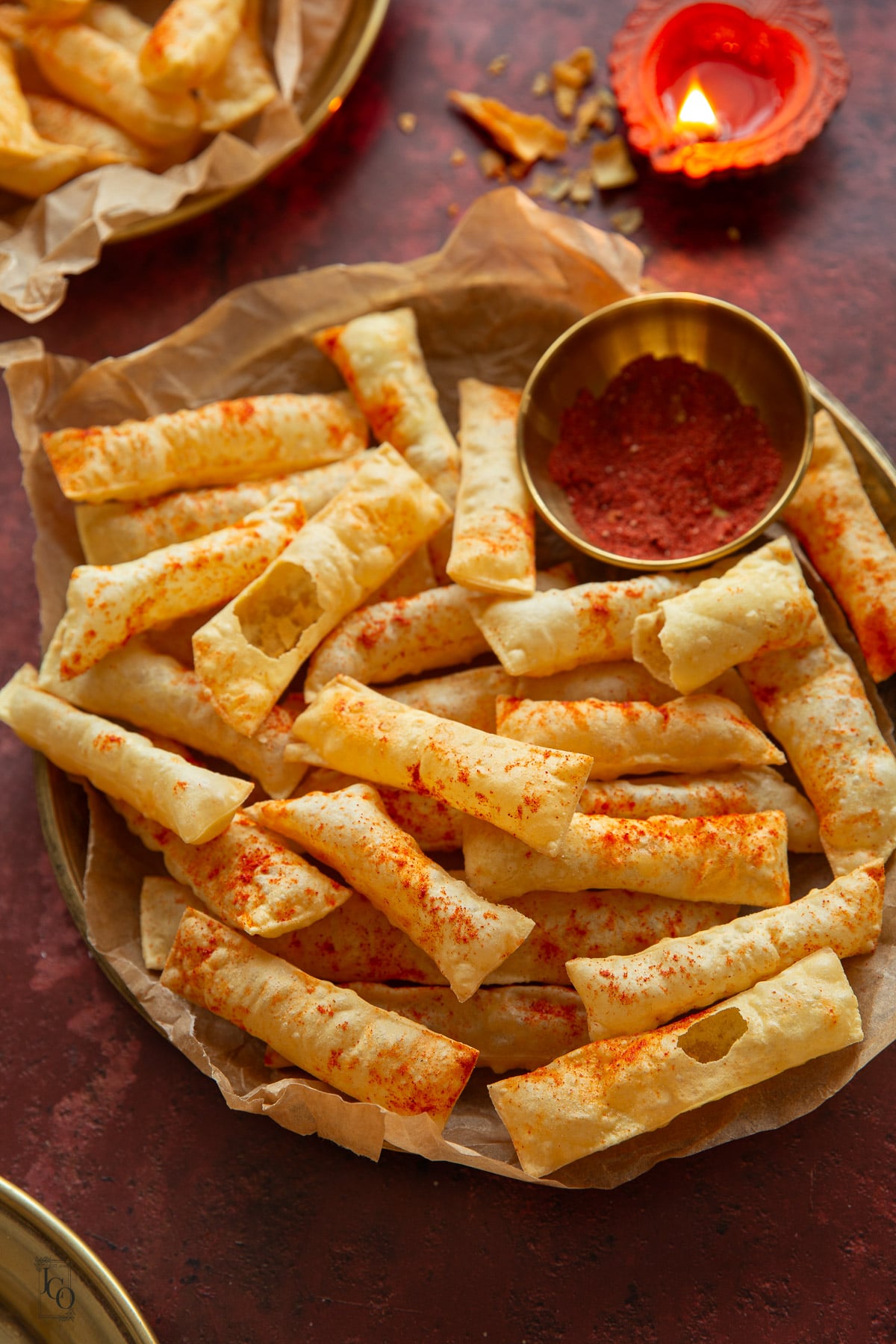
Chorafali is a traditional Gujarati Diwali snack made with gram flour and urad dal flour. These light, crispy strips puff up beautifully when fried, creating large, airy bubbles. They're finished with a sprinkling of red chilli powder and black salt, and taste wonderful with besan kadhi chutney.
Jump to:
Hayley's Notes
This recipe has been passed down through three generations of our family, from my grandma to my mum and then to me. One thing that hasn't changed is the traditional method of beating the dough. My mum remembers being given this job when she was just seven years old, although I got away with it until my teenage years!
It's a little hard work, but it's worth it. Beating the dough until it's pale and stretchy, then rolling it incredibly thin, is the secret to getting that characteristic puff and crisp texture.
Chorafali (also known as choraphali or choraphari) is a traditional Gujarati savoury snack, particularly popular during Diwali. It's made by rolling a firm dough into thin strips and deep-frying them until they puff up and become light and crisp.
Although chorafali is sometimes confused with fafda, they're two different snacks. Chorafali contains both gram flour (besan) and urad dal flour, giving it its characteristic puffed appearance. Fafda is traditionally made with gram flour and has a flatter, denser texture.
Ingredients Notes
You only need a few ingredients to make chorafali, but I've learnt that using the right flour makes a real difference to the results.
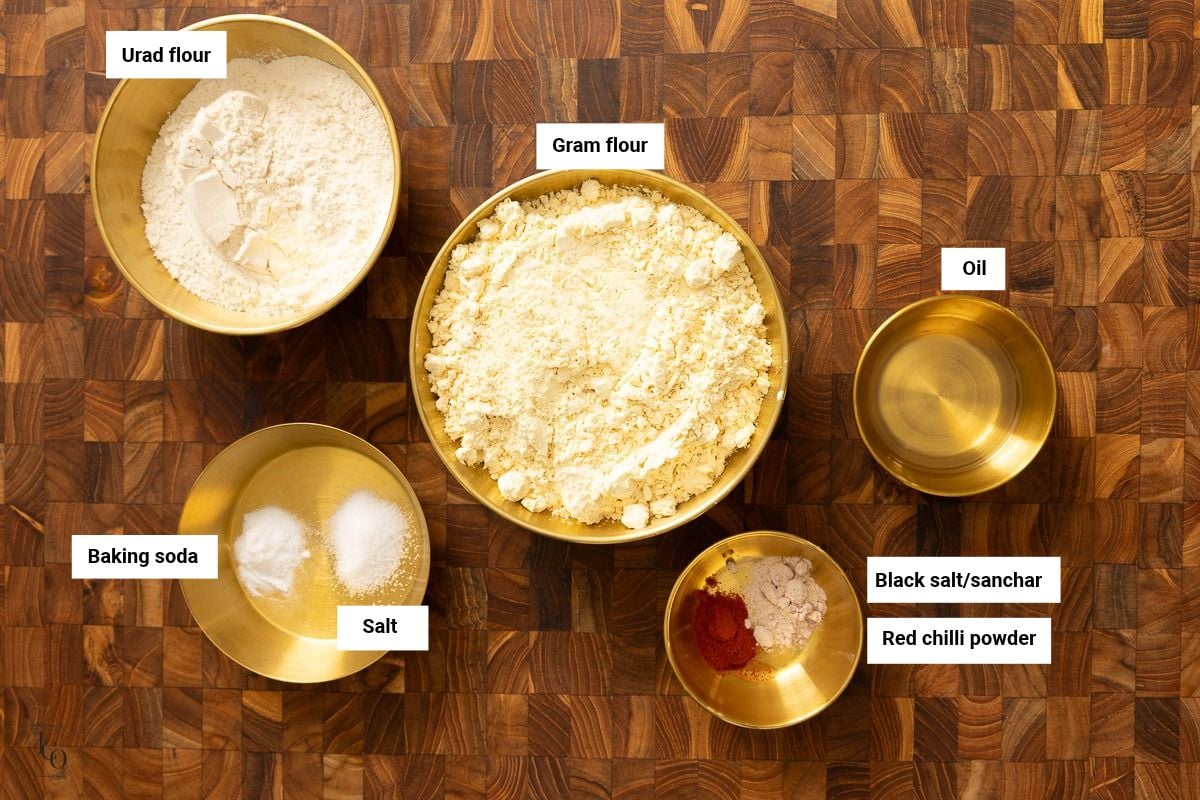
- Gram flour (besan) – I use finely ground besan for the base of the dough.
- Urad dal flour – I always use finely milled, shop-bought urad flour. We once tried grinding our own urad dal when we couldn't find the flour, but it didn't work nearly as well. I'd definitely recommend buying the ready-made flour for this recipe.
- Bicarbonate of soda – A small amount helps give the chorafali its light texture.
- Salt – Just a little to season the dough.
- Oil – I use oil in the dough and for deep-frying the chorafali.
- Red chilli powder and black salt (sanchar) – This is how we've always seasoned chorafali in our family. A simple sprinkling of both is all it needs.
- Rice flour – I prefer using a little rice flour to dust the work surface when rolling. Be sparing with it, though, as any excess will end up in the frying oil.
Let's Make Chorafali Together
Find a full video, useful tips and storage information in the recipe card below.
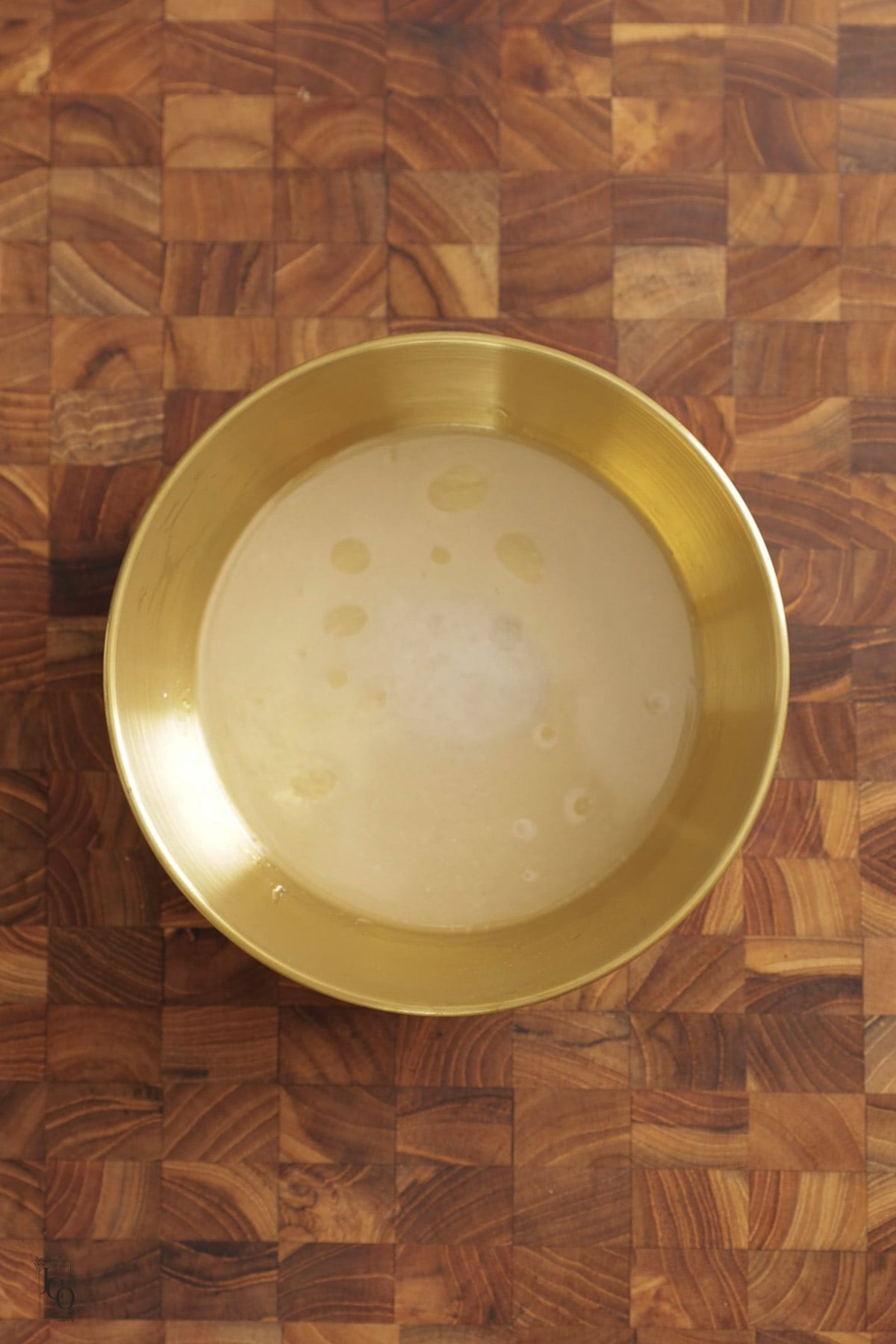
- Prepare the water: Combine water, oil, salt and bicarbonate of soda in a bowl and whisk well. Doing this step rather than adding it separately helps to incorporate the soda and salt better in the dough.
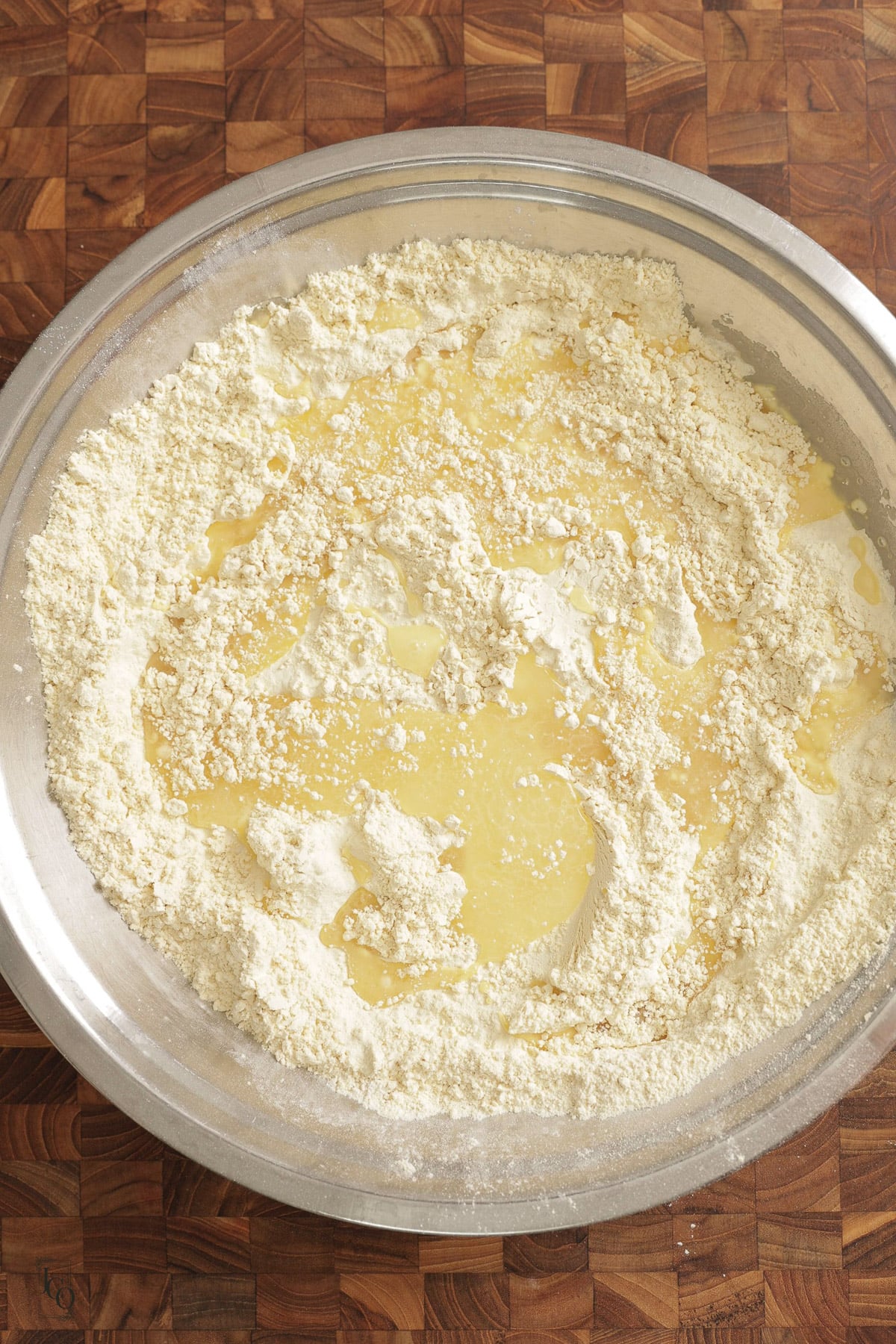
- Prepare the dough: Sift the flours then add the prepared water mixture.
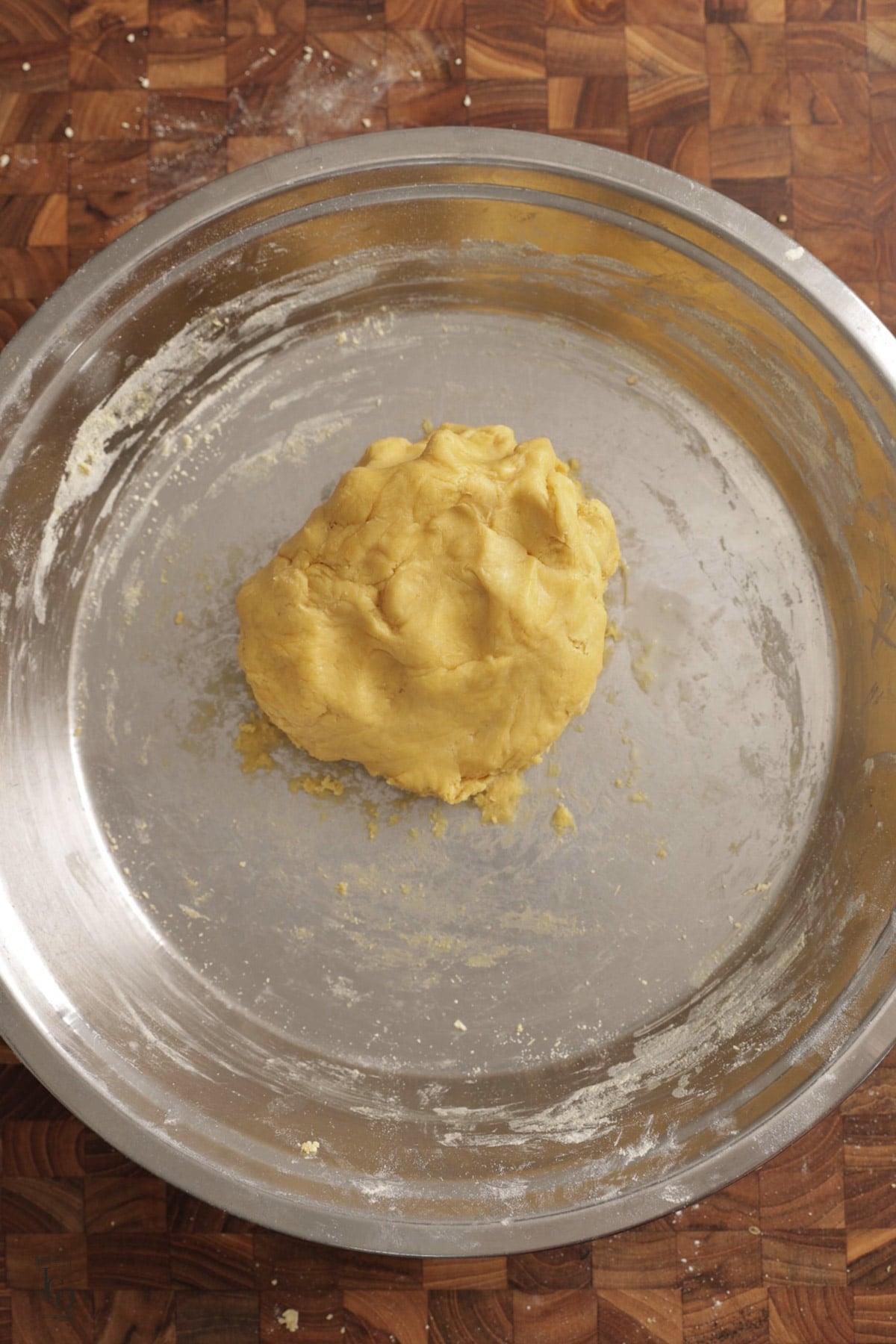
- Form a stiff dough: form a stiff dough (stiffer than puri dough).
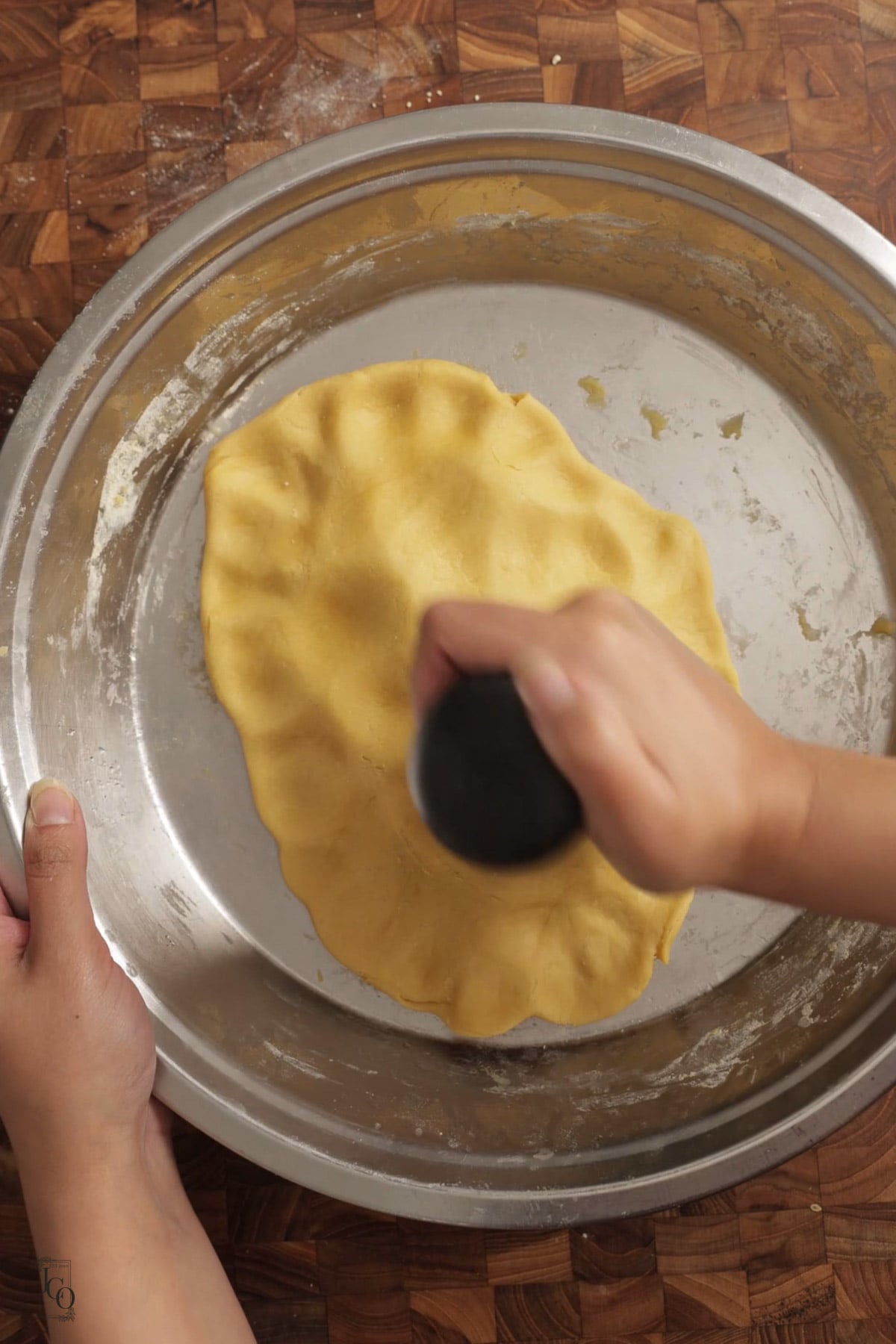
- Beat the dough: Repeatedly beat the dough. This can take more than 10 minutes, so I find it easier to divide the dough into smaller portions and work on one at a time. Keep going until the dough becomes noticeably paler, lighter and more stretchy. You should be able to turn and stretch it without it breaking easily.
Technique
Don't rush the beating
This is what makes the biggest difference. Beat the dough until it's pale and stretchy, even if it takes longer than 10 minutes. If your first few strips don't puff, go back and beat the remaining dough some more. I've rescued a batch this way!
Roll it really thin
You should almost be able to see the work surface through the dough. I tried making thicker chorafali, but they stayed uncooked inside rather than becoming light and crispy.
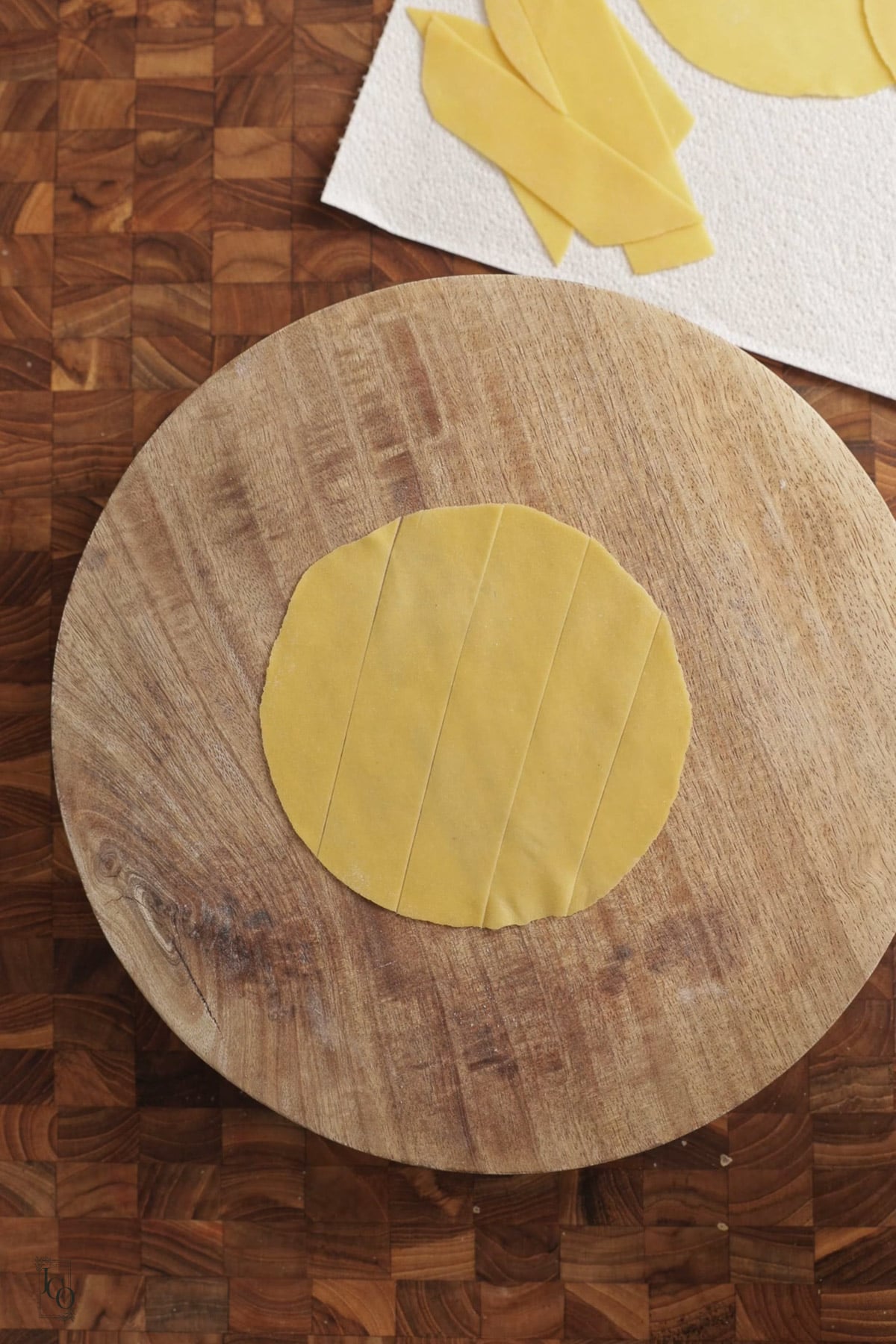
- Roll very thin and cut into strips: Divide the dough into small equal size balls, then roll each ball into a thin circle. Then cut into strips.
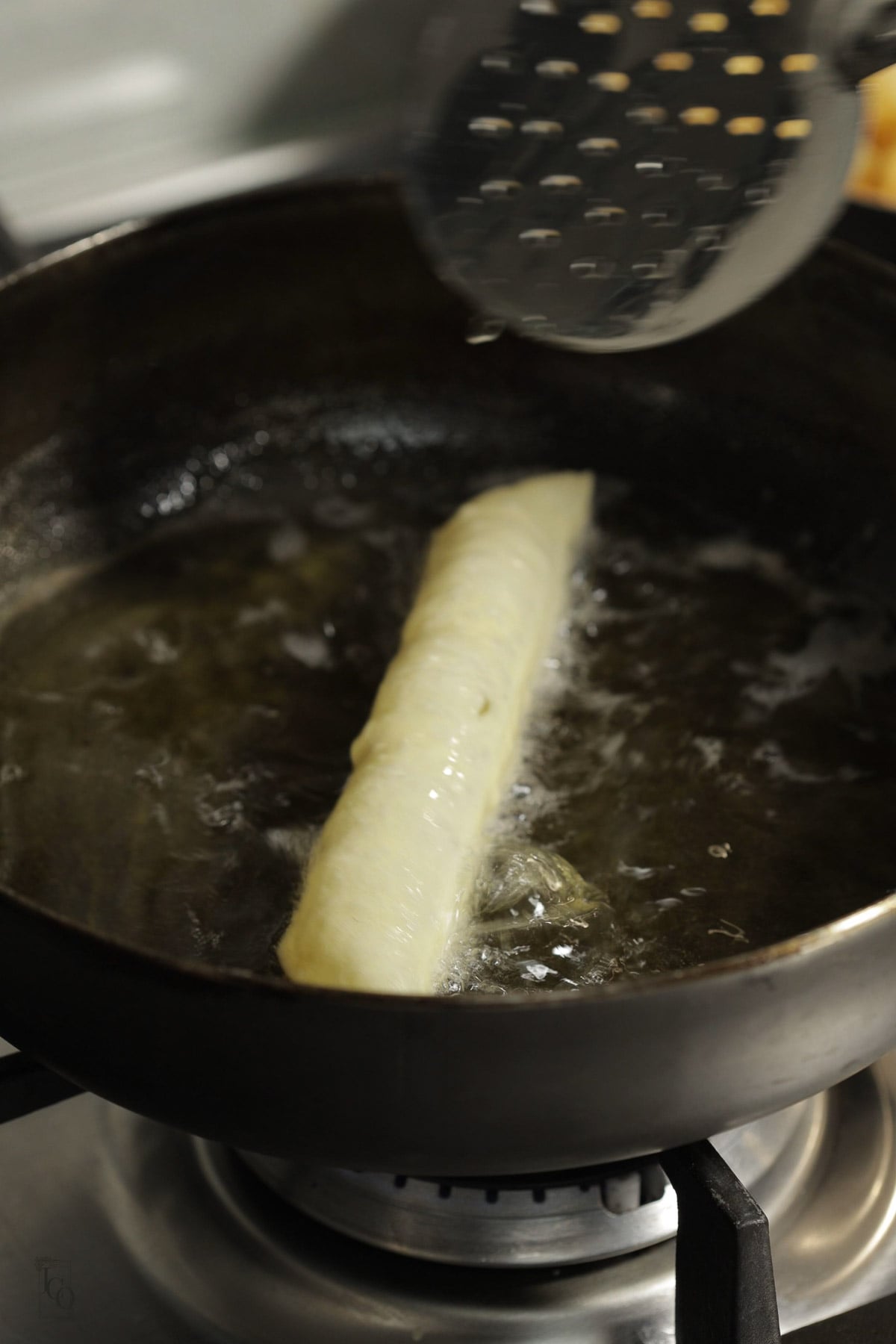
- Fry in hot oil: The chorafali should immediately puff.
Technique
Watch the oil temperature
Moderately hot oil worked best for me. The chorafali should puff as soon as they hit the oil. Keep an eye on the temperature between batches so they cook evenly without browning too quickly.
Serving & Storage
Chorafali is traditionally enjoyed during Diwali, but it's far too delicious to save for just one occasion!
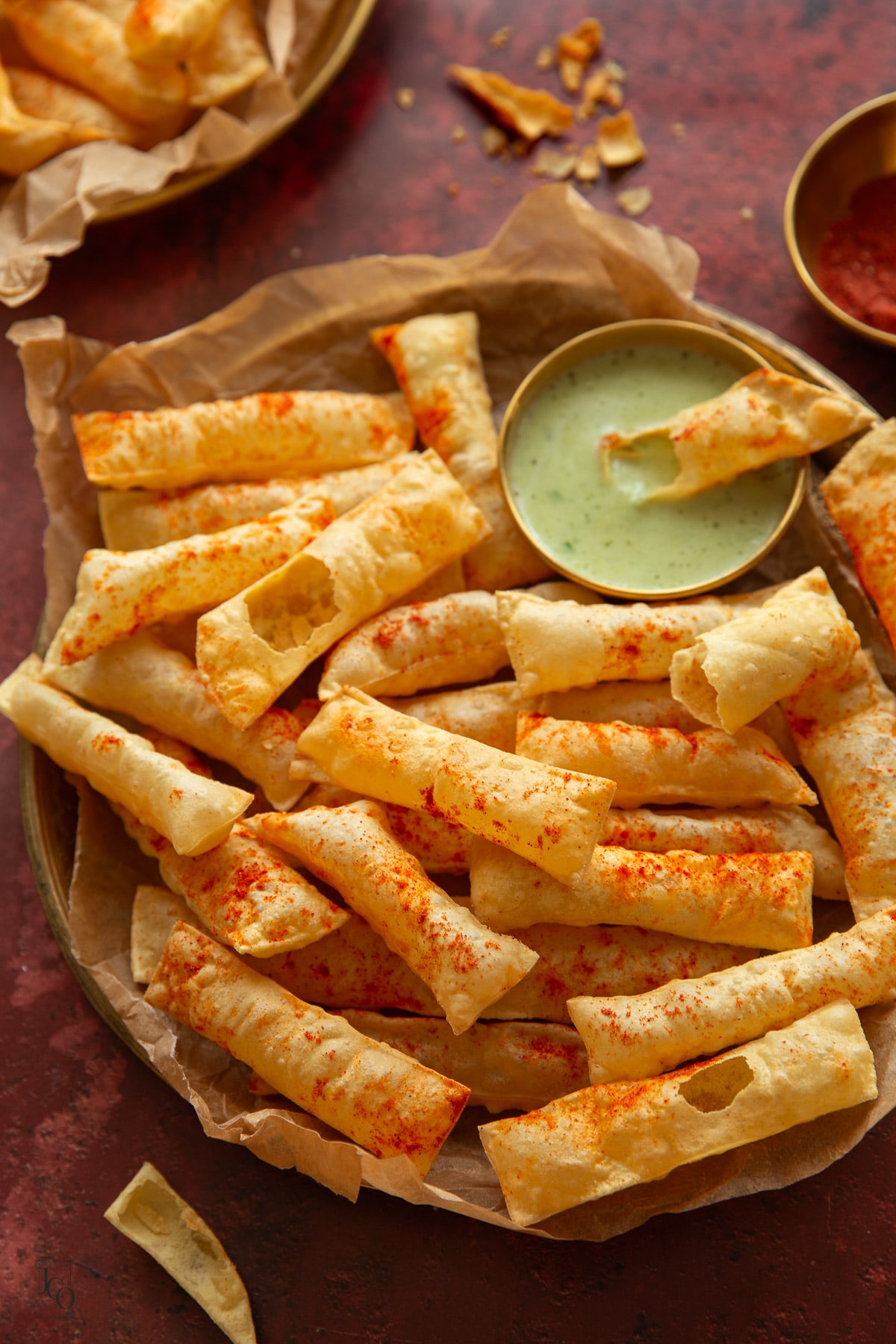
How to serve: We always sprinkle our freshly fried chorafali with red chilli powder and black salt (sanchar). I love serving it with a chorafali chutney, the same tangy chutney we enjoy with Gujarati fafda. It's a lovely combination of crispy, spicy and tangy flavours.
Every Diwali, we usually have chevdo - my latest craze is this colourful panchratna boondi chevdo! We always add in a few sweets too - this suvari (sweet Gujarati farsi puri) is gorgeously melt in the mouth.
You can browse my full list of Diwali sweets and snacks for more inspiration!
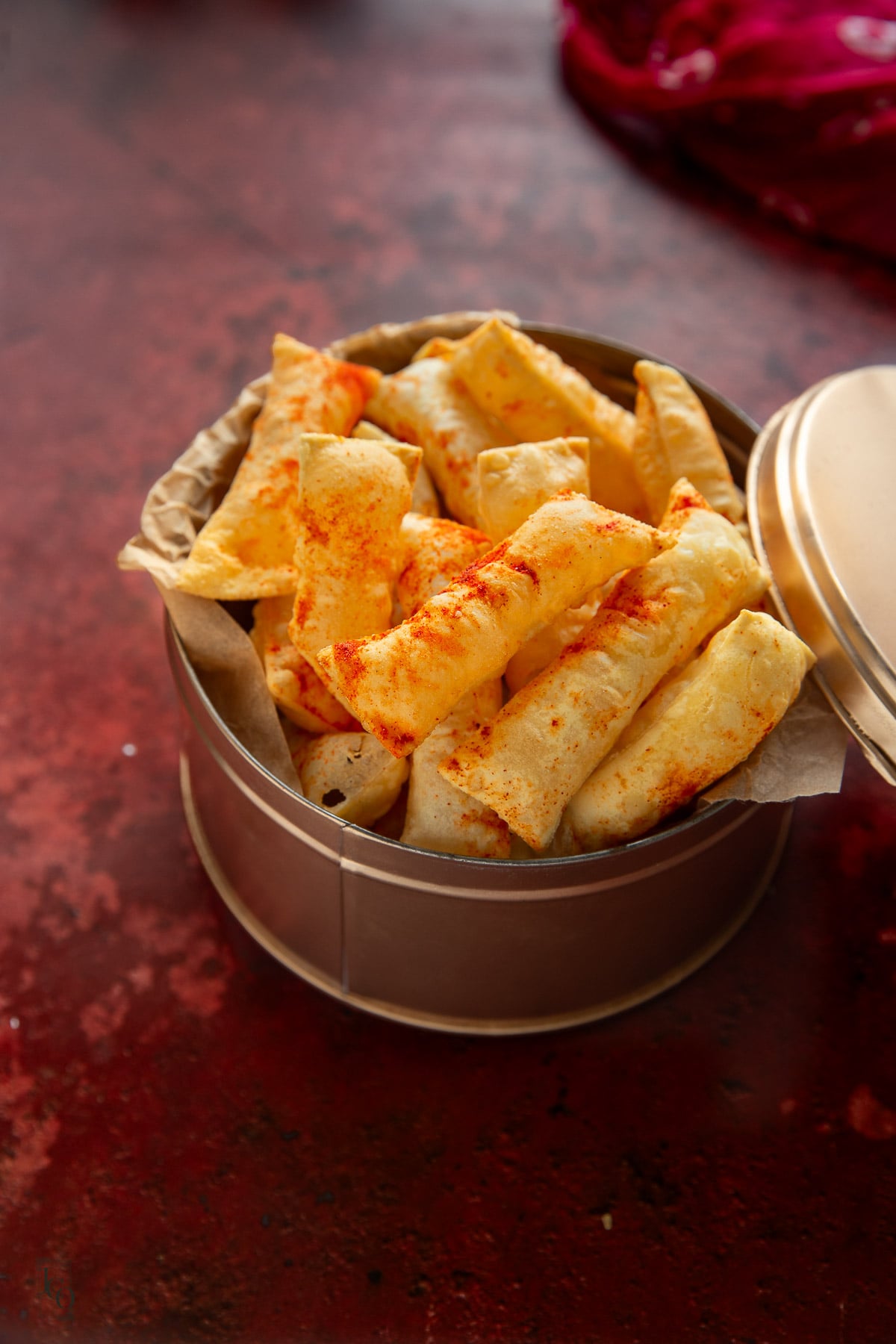
How to store: Allow the chorafali to cool completely before transferring it to an airtight container. It will stay crisp for up to two weeks at room temperature, making it a great snack to prepare ahead of Diwali celebrations.
Chorafali FAQs
Why isn't my chorafali puffing up?
The dough may need more beating. This happened to me, and I found that going back and beating the remaining dough until it was paler and stretchier made all the difference. Also, check that you're rolling it thinly enough and that the oil is moderately hot.
Can I make chorafali without urad dal flour?
I wouldn't recommend leaving it out. Urad dal flour is an important ingredient in traditional chorafali and helps achieve its characteristic texture and flavour. We once tried grinding our own urad dal into flour, but it wasn't fine enough to give us the same results. I recommend using finely milled, shop-bought urad flour.
Can I make the dough in a food processor?
You can use a food processor to bring the dough together, but I still recommend beating it by hand afterwards. Chorafali dough is very firm, and I haven't tested whether a food processor can achieve the same results as the traditional beating technique.
Why is my chorafali hard or uncooked inside?
You may have rolled the dough too thickly. I tried making thicker strips, but they remained uncooked inside instead of becoming light and crispy. Roll the dough thin enough that you can almost see the work surface underneath.
Why is my chorafali red or too brown?
You may have added too much baking soda to the dough. This can also happen if the oil is too hot and they burn before they cook.
As always if you make this recipe, be sure to leave me a comment, rate this recipe and tag me on Instagram @jcookingodyssey or #jcookingodyssey. I love seeing all your photos of my recipe recreations!
Don’t forget to follow me on social media using the buttons below – I can't wait to see you all there!
📖 Recipe

Chorafali
Ingredients
- 200 grams gram flour
- 100 grams urad daal flour
- 125 millilitres water
- ½ teaspoon bicarbonate of soda
- ¾ teaspoon salt
- 2 tablespoon oil
- neutral oil for deep frying
- 1 teaspoon red chilli powder
- 1 teaspoon black salt sanchar powder
Instructions
- In a small bowl, whisk together 125 millilitres water , ½ teaspoon bicarbonate of soda, ¾ teaspoon salt and 2 tablespoon oil.
- Sift 200 grams gram flour and 100 grams urad daal flour into a large parat or mixing bowl. Add the oil-water mixture and knead into a very stiff dough. Add a further 1-2 tablespoon of water if the dough seems too tough or dry.
- Transfer the dough to a clean work surface or keep it in the parat. Add 1 tablespoon oil and beat repeatedly with a rolling pin or sturdy pestle, folding the dough between beats. Work in smaller portions if easier. Continue for at least 10 minutes, or until the dough becomes paler, smoother and stretchy without breaking easily.
- Divide into small balls. Roll each ball into a very thin circle, using a light dusting of rice flour if needed. The dough should be thin enough to see the work surface through it. Keep the remaining dough covered while working.
- Using a pastry wheel or sharp knife, cut the rolled dough into long strips and repeat for every circle before moving onto frying.
- Heat neutral oil in a kadai over a medium heat until moderately hot. Carefully add a few strips at a time. They should puff immediately on contact with the oil. Gently press them into the oil if needed, then turn to cook both sides until crisp. Remove and drain.
- Sprinkle the warm chorafali with a combination of 1 teaspoon red chilli powder and 1 teaspoon black salt (sanchar). Allow to cool completely before serving or storing in an airtight container.
Video
Notes
- Use finely milled urad flour: I recommend shop-bought urad dal flour. We tried grinding our own once, but it wasn't fine enough to give the same results.
- Beat the dough thoroughly: This is essential for puffing. The dough should become paler, smoother and stretchy. It may take longer than 10 minutes.
- Not puffing? Try beating the remaining dough some more. I've rescued a batch this way!
- Roll extremely thin: You should almost see the work surface through the dough. Thicker strips can remain uncooked inside rather than turning crispy.
- Watch the oil temperature: Moderately hot oil works best. The strips should puff immediately without browning too quickly.
- Dust sparingly: I use a little rice flour for rolling, but too much will fall into the frying oil.
- Storage: Once completely cool, store in an airtight container at room temperature for up to 2 weeks.
Nutrition
PLEASE NOTE: Nutritional values are estimated by a computer and may vary based on ingredients and portion sizes. For personalised dietary advice, please consult a qualified healthcare professional.
Share on Facebook Pin This Recipe


Hayley Dhanecha says
This is my grandma's chorafali recipe, passed down through three generations of our family. The secret to those lovely airy puffs is all in the dough beating! Have you tried making chorafali at home? I'd love to hear how yours turned out!
Mayuri Patel says
Jagruti, you're so right, the old Diwali charm is not there. People don't want to have oily snacks or make them at home. I remember helping both my mum and mother in law to make huge tinful of choraphali and mathias. Love the way yours have puffed up.
Unknown says
I am so intrigued by this unique recipe. I have to try this.
Anonymous says
Wow love it... so nicely elaborated the recipe. Superb captures..
jayashree says
This is so good, I love savoury snacks.
Unknown says
First by looks I thought it was some kind if complicated stuffed roll.. but after reading your write up i realized how simple the recipe is. Looks delicious 😋
Simplyfood says
These look delicious and would be perfect with a cup of hot masala tea.
Avin says
Feeling nostalgic. Nowadays Diwali celebrations are not the same like they used to be. Lovely post. Is this and faphara same?
jcookingodyssey says
Well, kind of but tastes and texture is different than fafda.
cookingwithsapana says
This is new to me but it looks delicious and perfect to try this Diwali.
jcookingodyssey says
You would fine these in Most of the Gujarati households 🙂
Priya Suresh says
Omg, they came out extremely puffy and quite addictive.
jcookingodyssey says
These are quite addictive 🙂 especially when eaten with chutney 🙂
Javelin Warrior says
I love the texture of these, Jagruti! They're so marvelously crispy... And such a simple list of ingredients!
jcookingodyssey says
Exactly..you don't need so many expensive or exotic ingredients to prepare delicious dishes.
Unknown says
Gram flour puff looks crunchy and yummy snacks.
jcookingodyssey says
Thank you!