
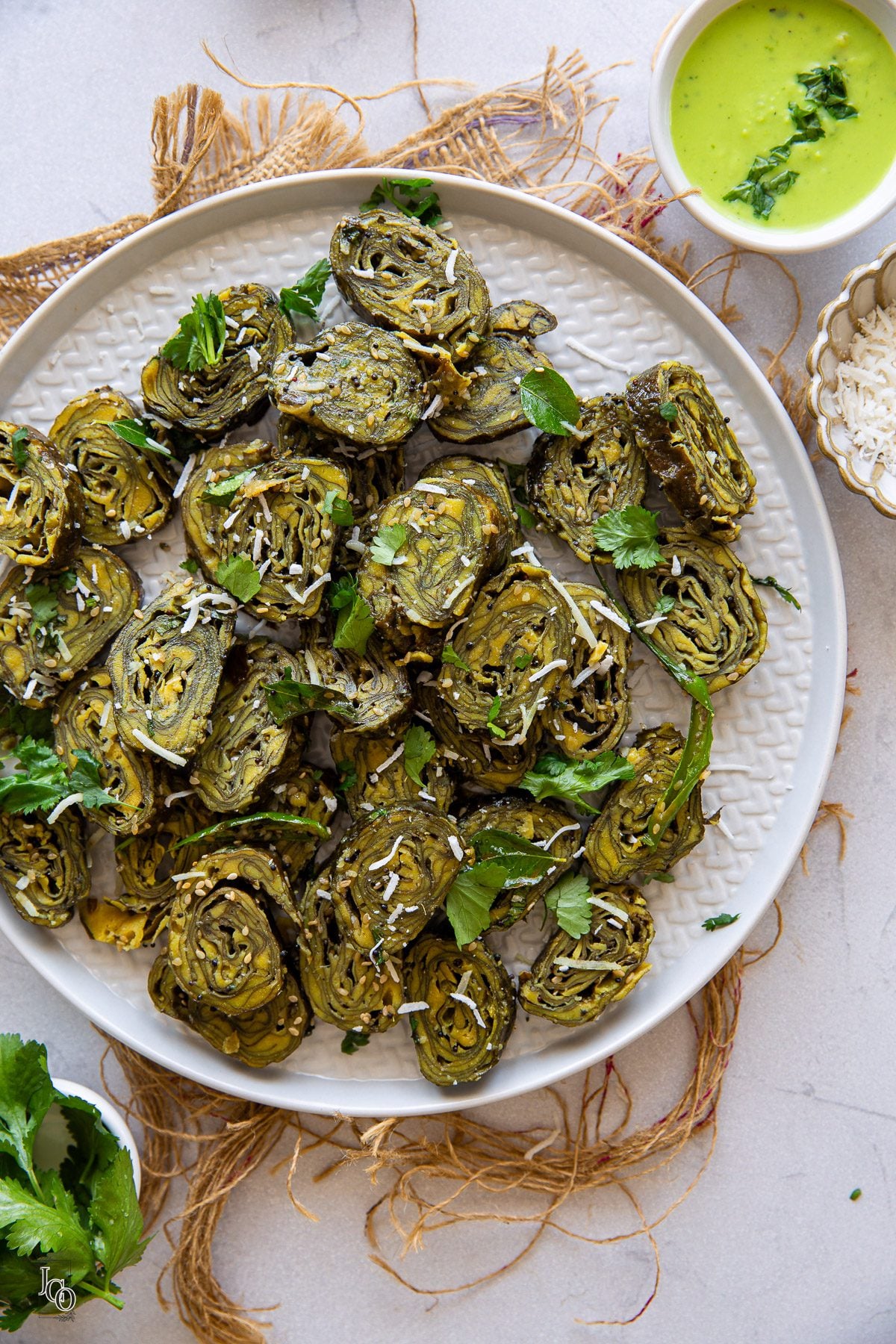
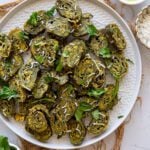
Here are my moist and glossy Patra made by rolling colocasia leaves with a sweet and sour gram flour mix. The rolls are steamed then I like to temper the cut pieces in oil and water, not deep fry. They're always the most popular part of my Gujarati thali!
Note – This recipe has been updated from our recipe archives with new images and helpful content. The tried and tested recipe remains the same. First published 4th February 2010.
Depending on the region, patra are known by different names - in Maharastra, they're alu vadi, in Karnataka, they're patrode and in Gujarat, they're patra. My Dad calls them timpa as he's from East Africa.
The Perfect Recipe for Patra is Right Here!
Green and golden pinwheels of pure delicious-ness! These patra are typically Gujarati in flavour - sweet and sour and just a bit spicy.
I like to have them warm as they are or with a kadhi chutney. If it's a full plate of snacks, we'll usually add soft and fluffy nylon khaman. Make a wedding thali with rasawalu bateta nu shaak, this rich vaal nu shaak and Gujarati lagan daal. Patra is incomplete without a bowl of creamy shrikhand.
Instead of deep frying, the sliced patra are gently tempered in mustard seeds and curry leaves, then finished with a splash of water so they soak up all that flavour. They're specifically known as ras patra.
They turn soft, slightly melt-in-the-mouth, and beautifully coated in that sweet, tangy masala, while still holding their shape. It’s the kind of patra you’ll spot in Gujarati snack shops, not dry or crispy, but moist, glossy, and incredibly moreish.
Hayley x
Important Ingredients notes
Be sure to check out the full recipe and exact ingredient list below in the recipe card.
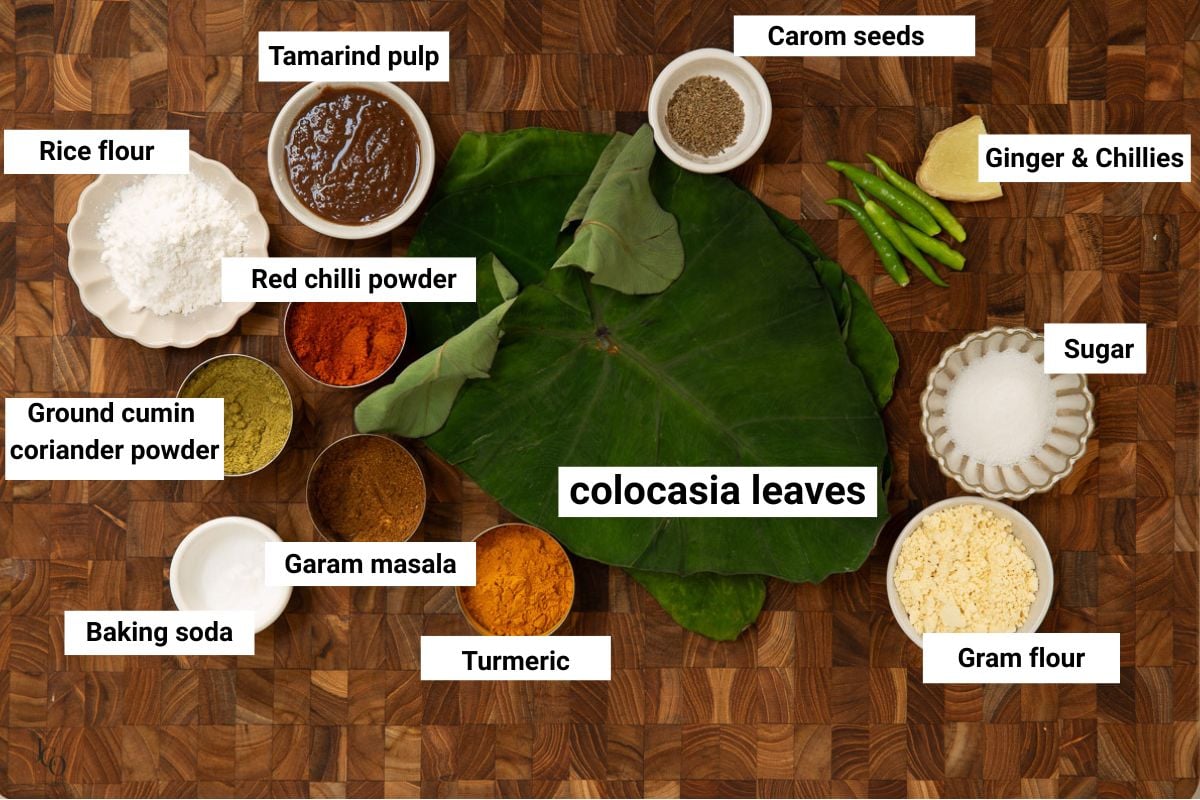
Colocasia leaf - this heart-shaped leaf is the most important part of getting patra right. They're available in most Indian supermarkets throughout the year often sold as arbi ke patte.
The batter:
The base of the batter is made with besan and rice flour. The heat comes from crushed green chillies and ginger. After that, it's the usual Indian spice powders.
The "sour" flavour comes from tamarind. I like to soak tamarind in water to make a pulp but lemon juice works here too.
I add sugar for sweetness but grated jaggery works equally well. If you find they are not sweet enough after steaming, you can also add sugar to the tempering water.
The tempering:
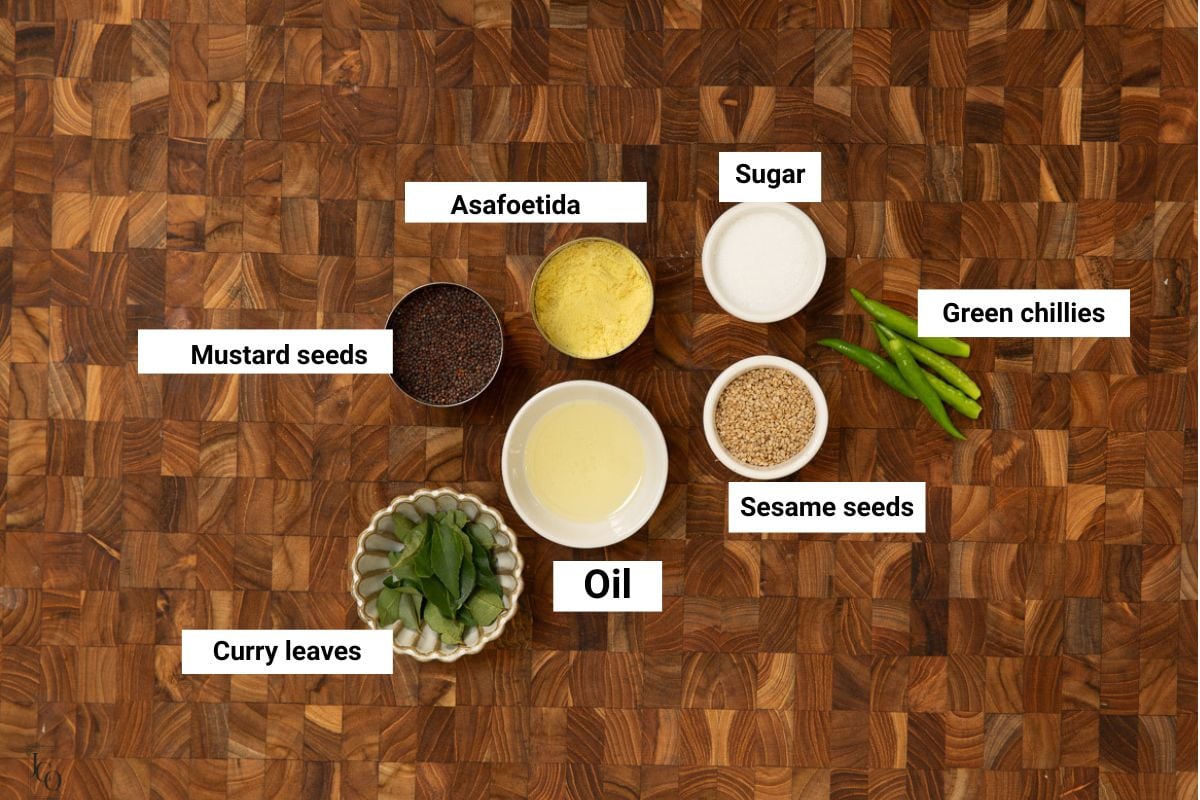
I like to make the tempering sweet, tart and spicy even though the flavours have already been added to the paste. I've found that steaming the patra reduces the flavour so I like to add it back in through the tempering water which the patra will abosrb. I use mustard seeds, hing, curry leaves, slit green chillies and sesame seeds. The extra sweetness comes from sugar and lemon juice that's added to the water.
They're then finished with desiccated coconut and lots of chopped coriander. Bliss!
How to make patra step by step
Follow the step by step pictures below and check out the recipe video below.
TL:DR
- Make smooth spiced besan paste
- Spread thinly on colocasia leaves
- Layer, roll tightly
- Steam until firm
- Slice, temper, and serve
Preparing the patra leaves
Rinse each leaf a few times under running water and pat dry with a clean kitchen towel.
Slice the stalk from the base of each leaf. I also like to remove the large middle vein as this makes the patra easier to roll. You can also try using a rolling pin to squash the veins, but I prefer cutting them off.
Gather the leaves into similar sized groups of 4.
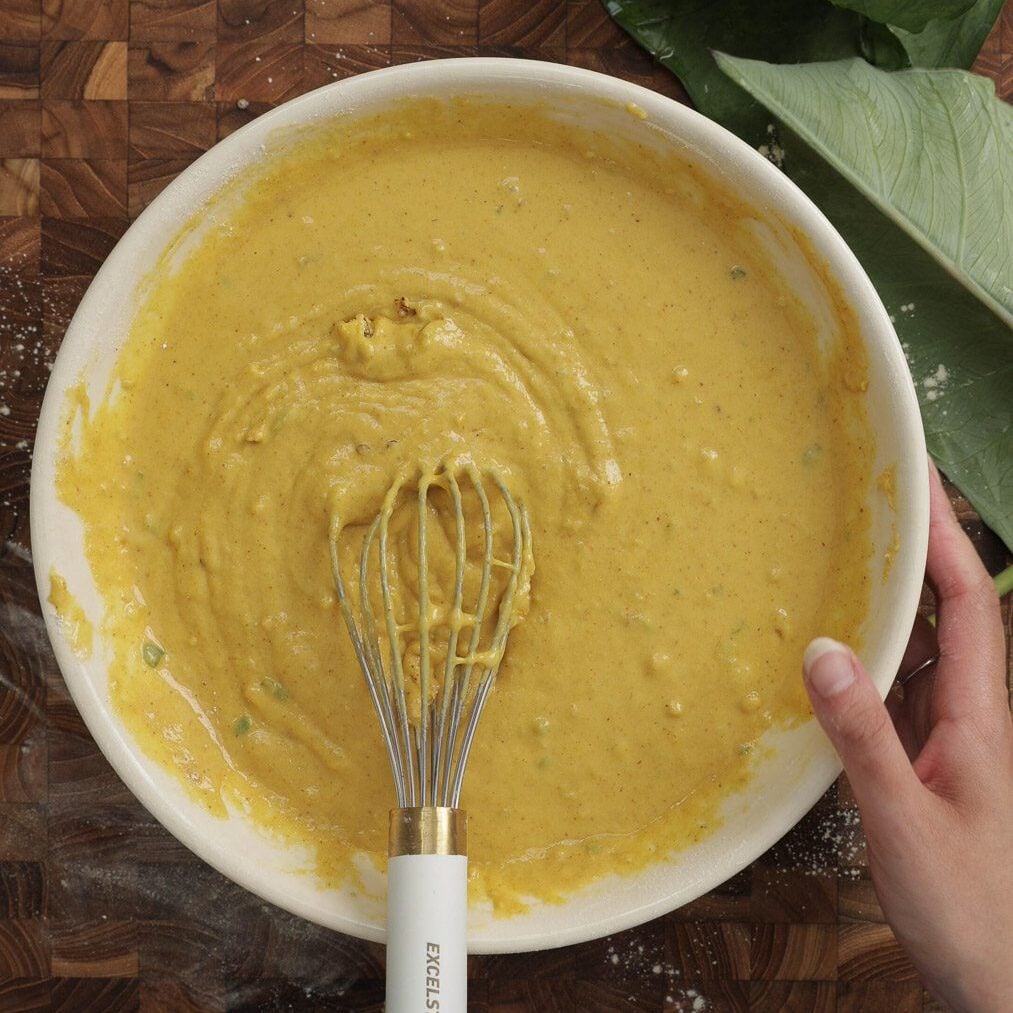
- Step 1: Prepare a thick batter.
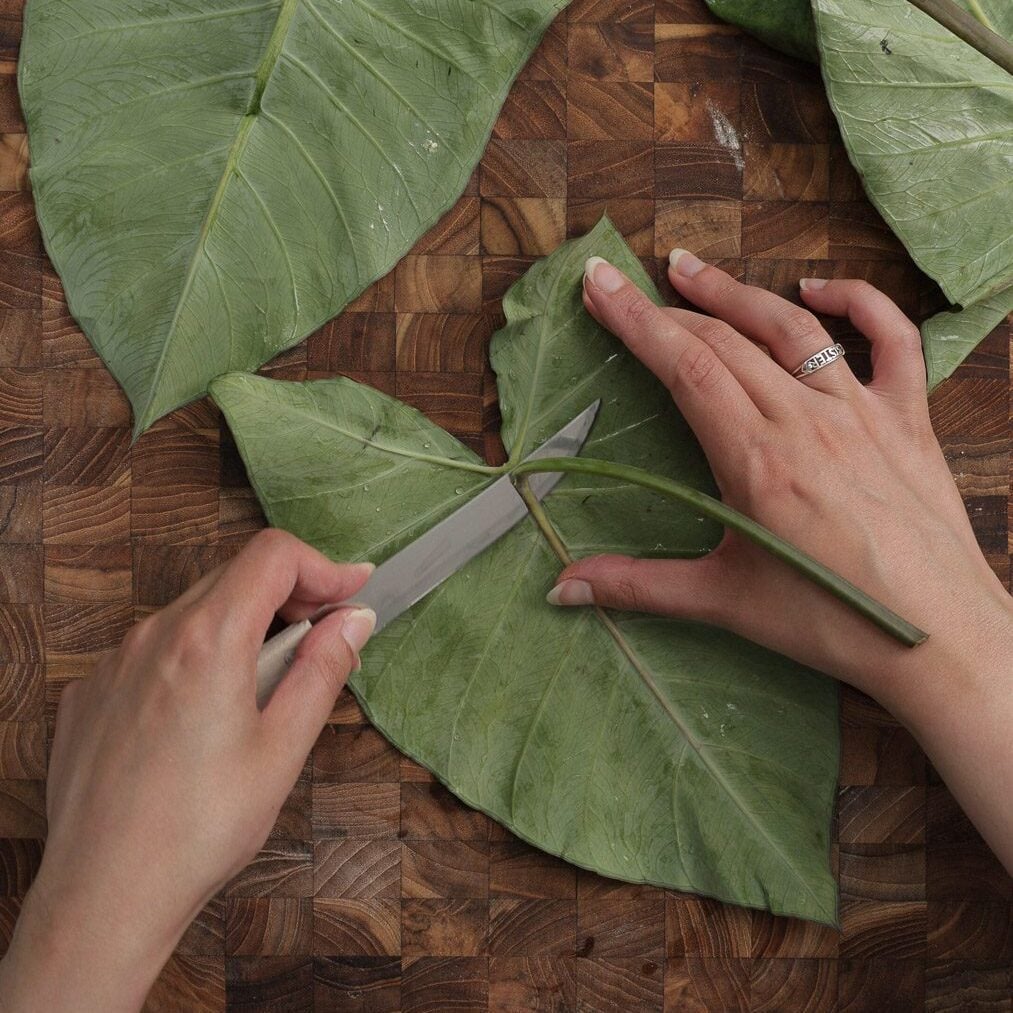
- Step 2: Remove the vein.
Assembling and making the patra rolls
Now work on a large clean surface.
Place the largest leaf in a group with the vein side facing you. Apply a thin layer of the batter evenly over the whole leaf, covering the edges too.
Place the next largest size on top (vein still facing up) but turned the opposite way. I find placing the patra in opposite directions helps to roll easily later.
Again spread over a thin layer of the mixture.
Repeat with the remaining two leaves, going in opposite directions and with the smallest leaf on top.
Now fold both edges of your stack inwards which helps prevent the paste leaking out the sides. Apply a little paste if needed to secure it down.
Starting from the side nearest to you, roll the patra leaves tightly to make a cylinder. Keep the folded side underneath to prevent unravelling as you work withe remainder of the patra.
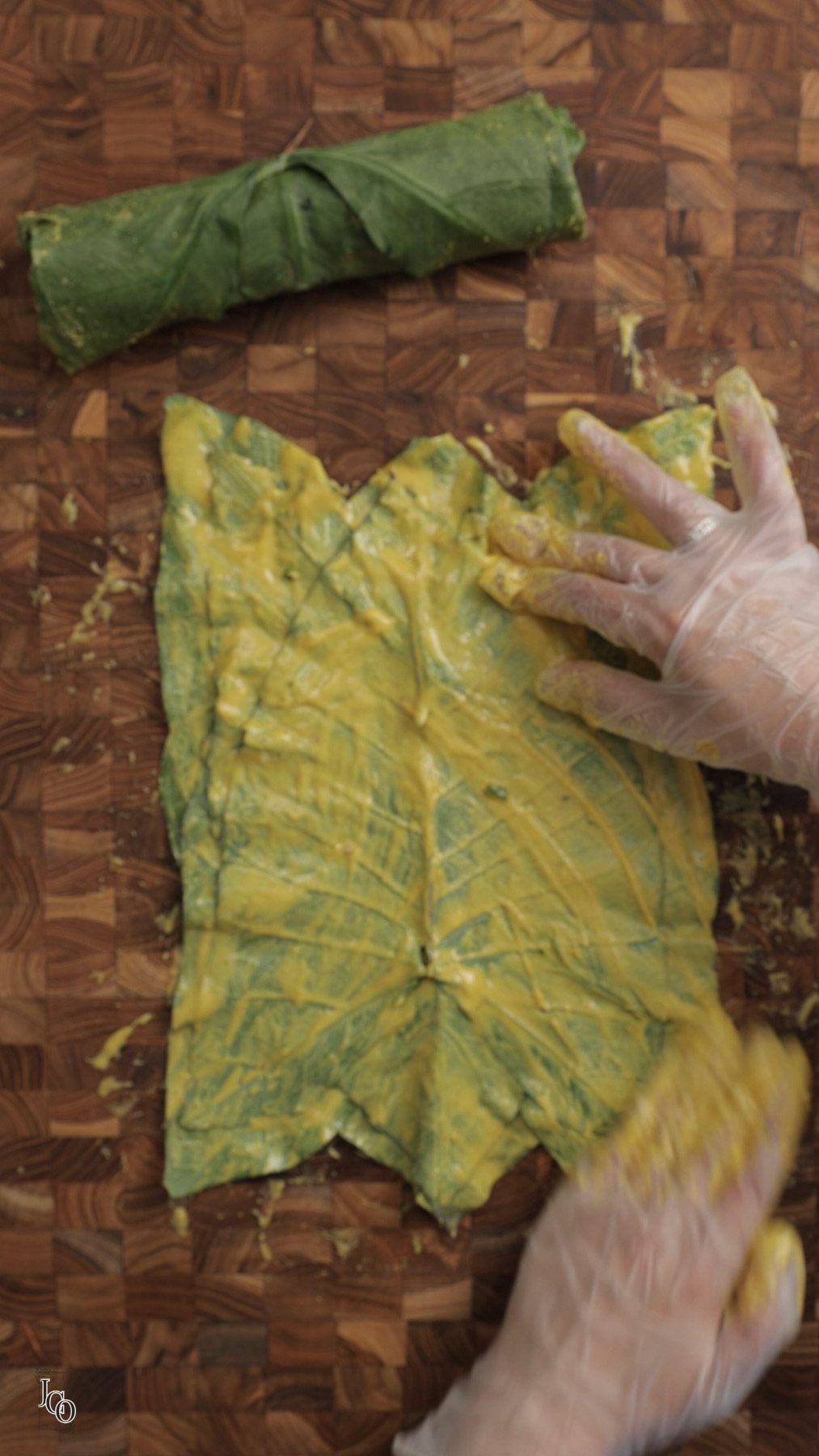
- Step 3: Spread the paste over the first leaf, place a second leaf on top and repeat. Layer 4 leaves in total.
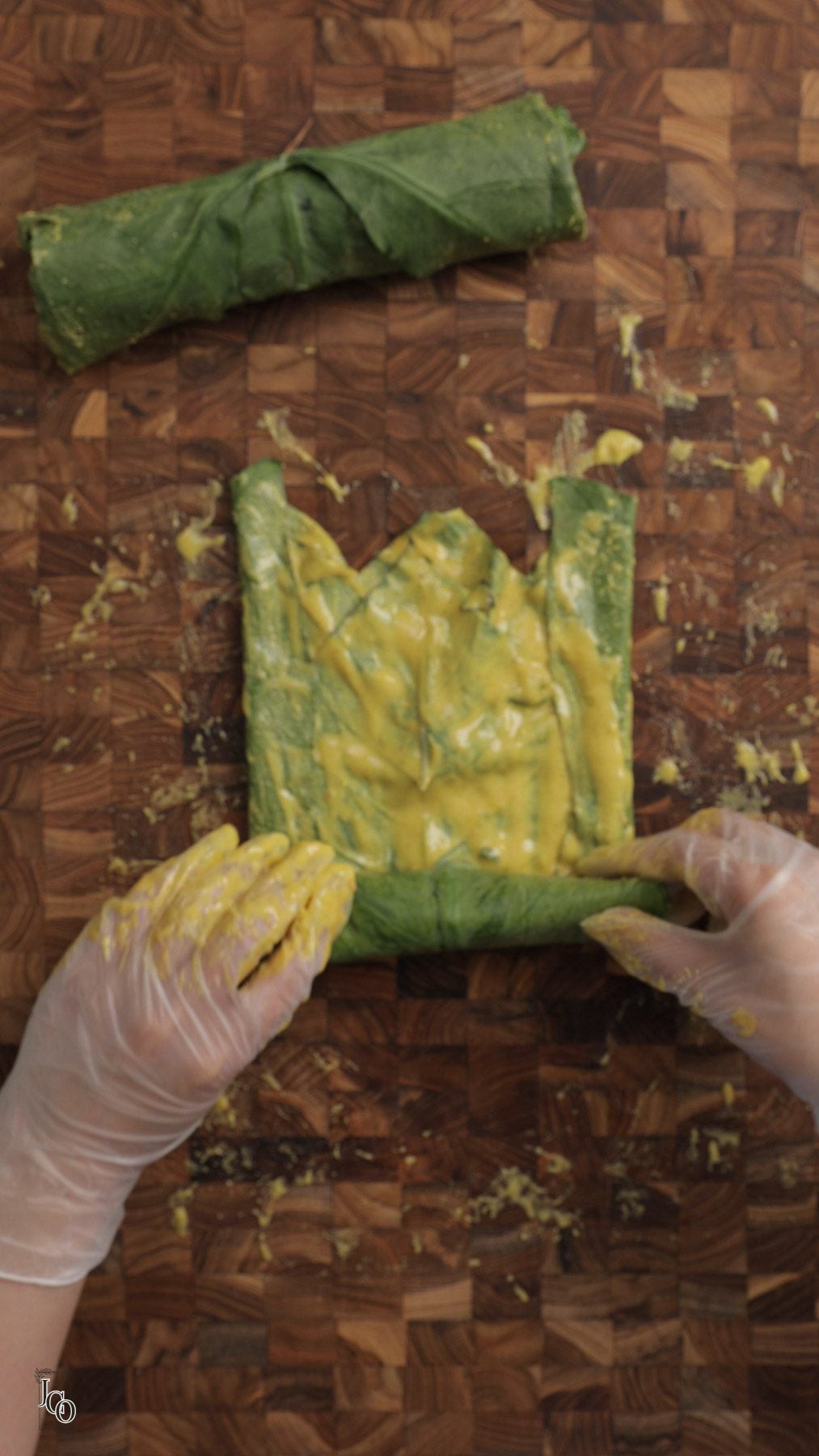
- Step 4: Roll into a cylinder.
Steam the patra rolls
Place these rolls in a greased steamer pan.
Steam for 20 to 25 minutes in a steamer on medium heat. To check they are done, pierce with a knife which should come out clean. The rolls should hold their shape as the mixture has firmed up as it cooked.
Allow to cool slightly before attempting to remove from the steamer pan.
Then cut the patra into half an inch thick pieces.
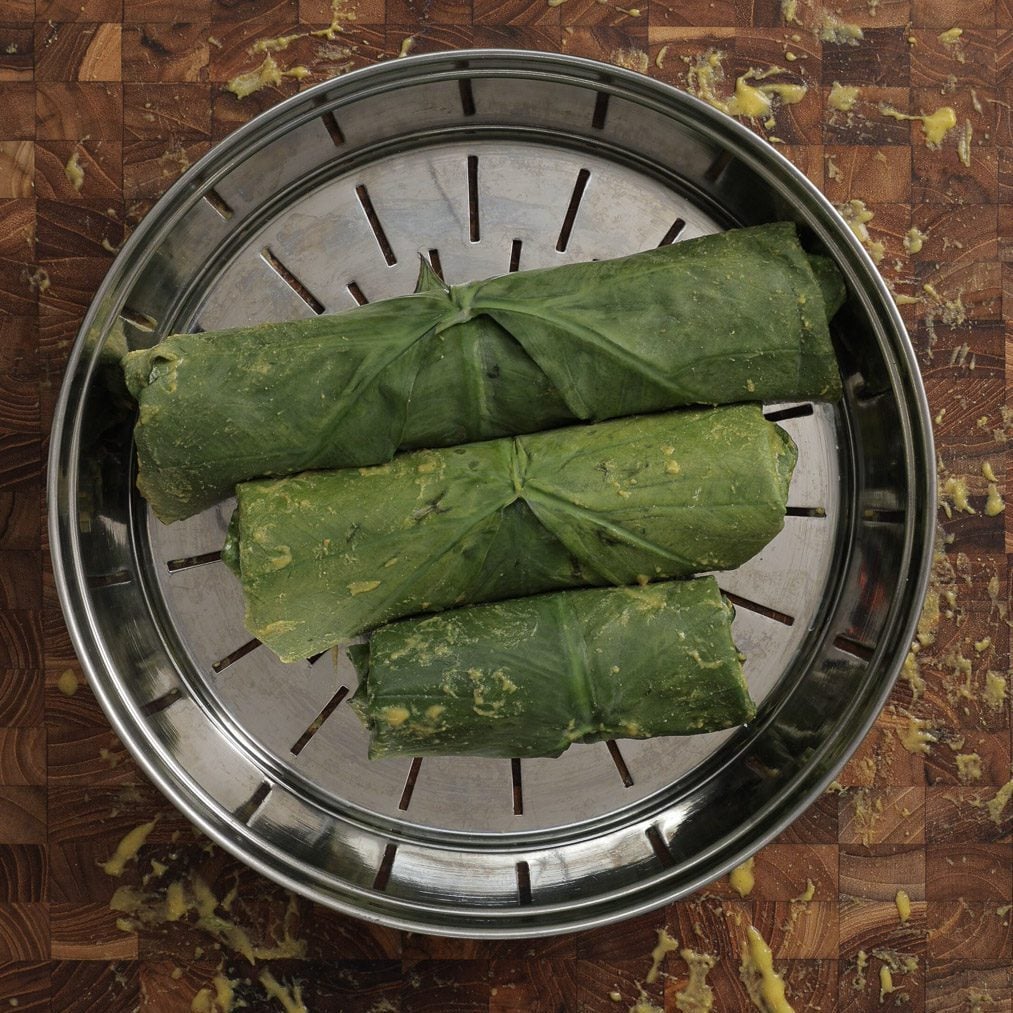
- Step 5: Steam in the steamer.
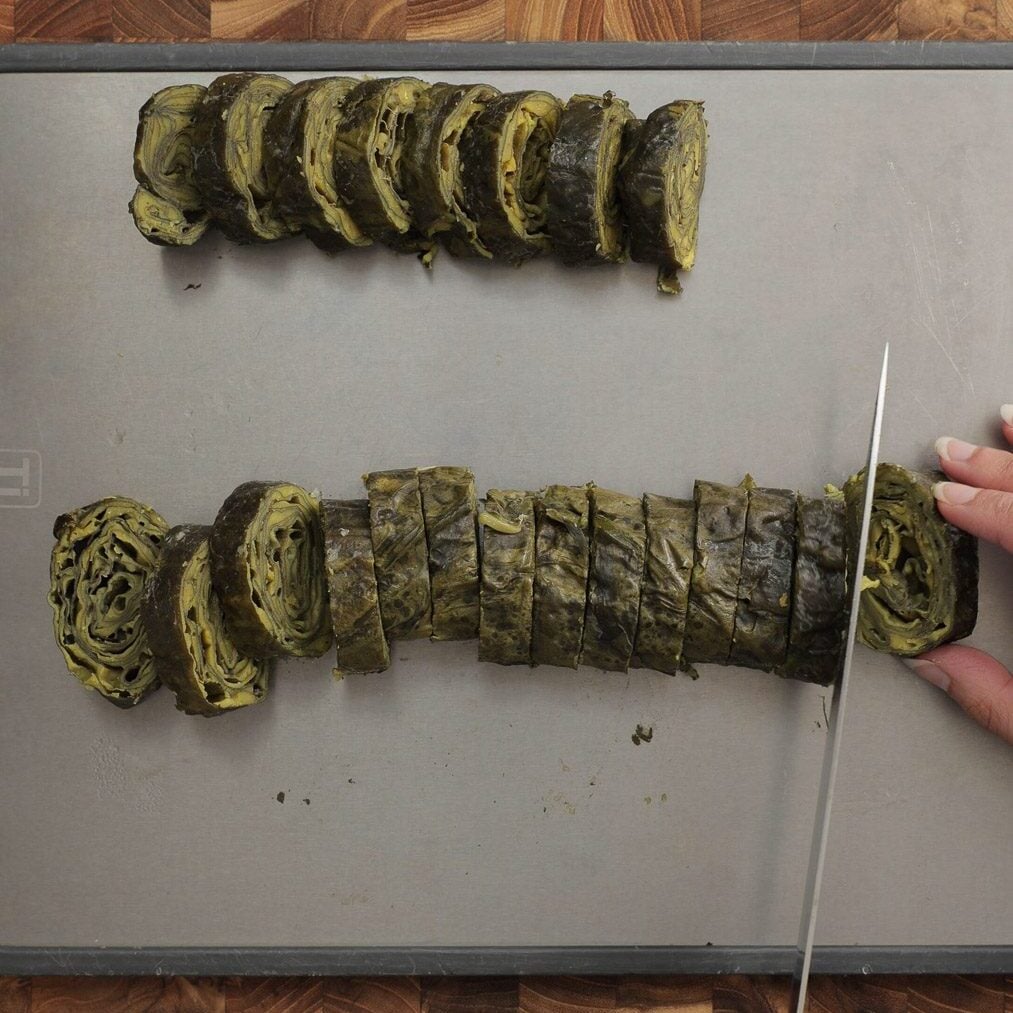
- Step 6: Allow to cool then cut into slices.
Make Tempering
Heat oil in a pan and add mustard seeds. As they crackle, add hing, curry leaves, white sesame seeds and slit green chillies.
Fry for few seconds until the sesame seeds crackle and the curry leaves become crisp.
The pour in the water and optionally add more lemon juice and sugar to give the patra an extra boost of flavour.
Now add in the sliced colocasia rolls and sauté on low heat for few minutes turning as needed.
Once the patra are moist and the water has been absorbed, switch off the heat. Garnish with coconut and finely chopped coriander.
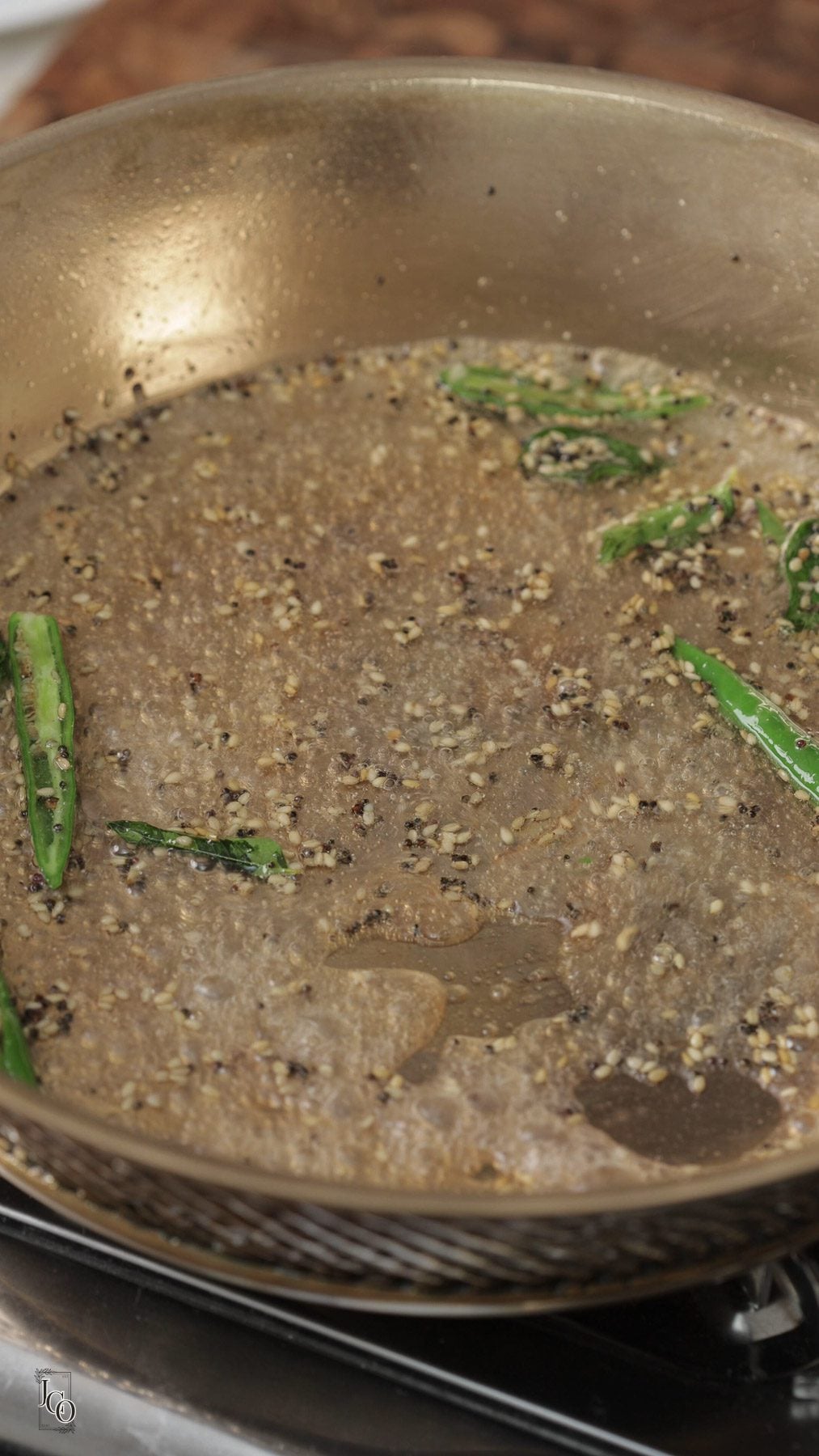
- Step 7: Prepare the tempering.
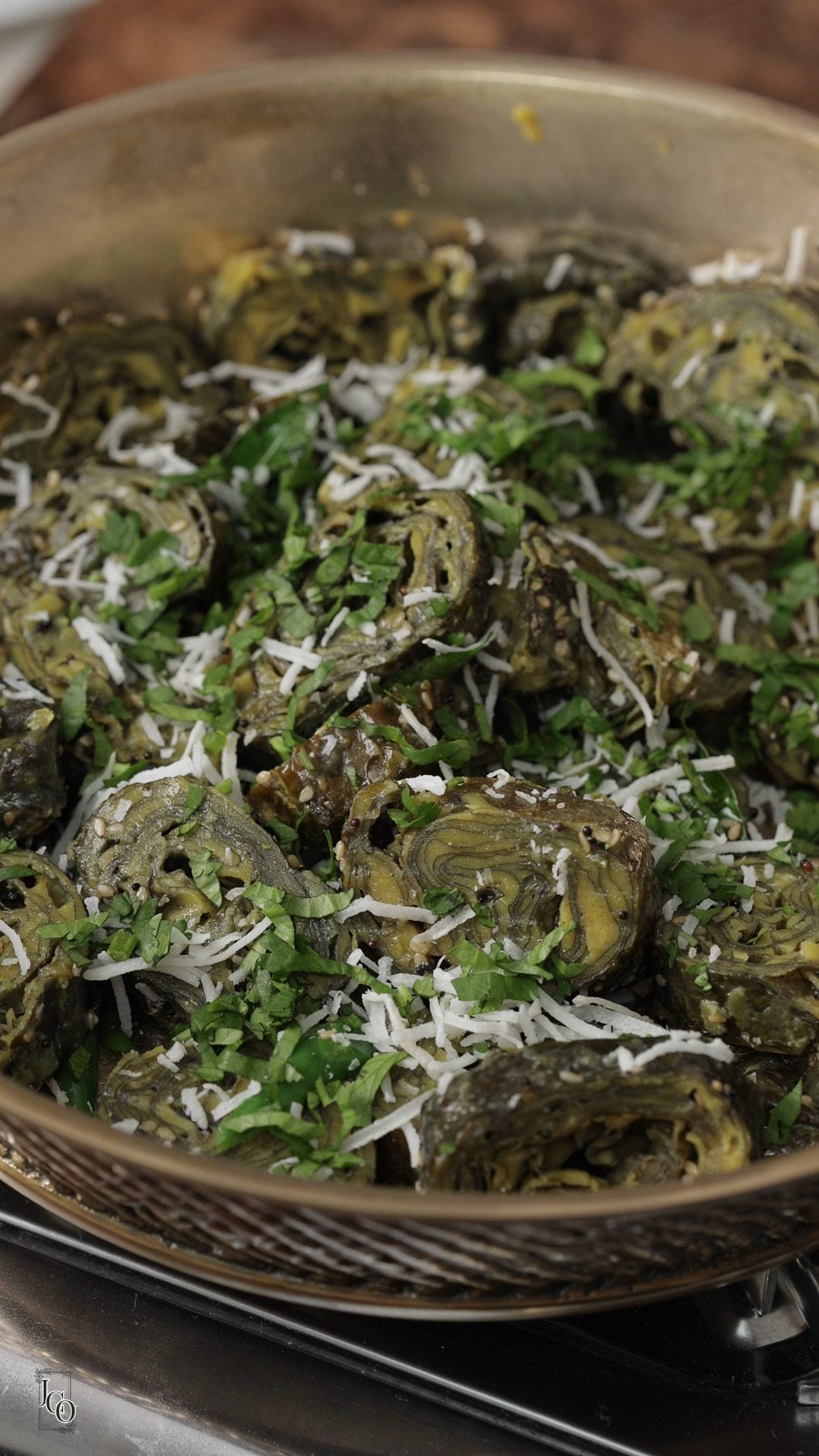
- Step 8: Add patra and garnish.
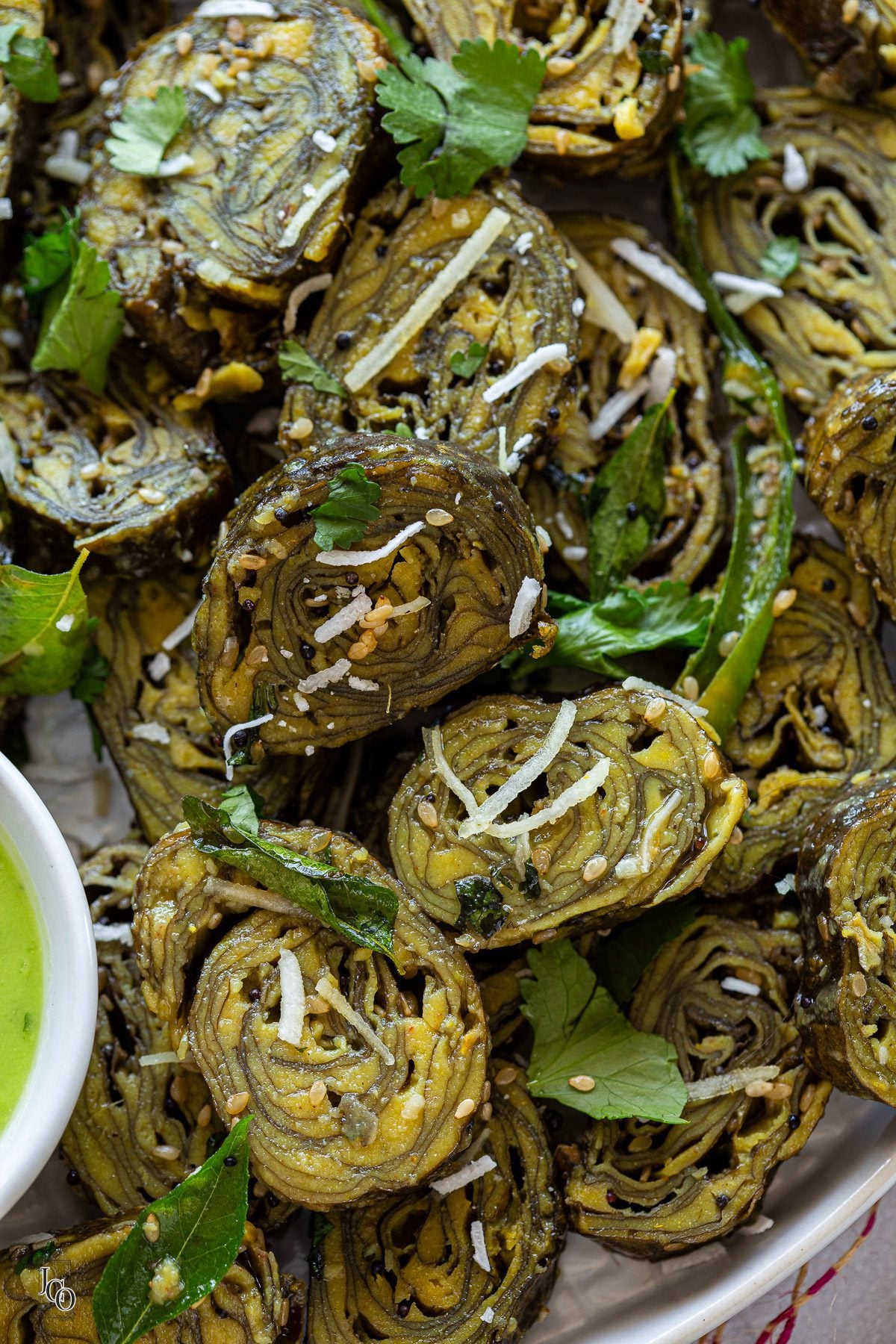
As always if you make this recipe, be sure to leave me a comment, rate this recipe and tag me on Instagram @jcookingodyssey or #jcookingodyssey. I love seeing all your photos of my recipe recreations!
Don’t forget to follow me on social media using the buttons below – I can't wait to see you all there!
📖 Recipe
Patra
Equipment
- Steamer
Ingredients
- 16 colocasia leaves taro leaves (arbi leaves), about 12–16 medium leaves
For the paste (batter)
- 250 grams besan
- 100 grams rice flour
- 1 teaspoon bicarbonate of soda
- 3 teaspoons green chilli and ginger paste
- 2 teaspoons red chilli powder
- 1 teaspoon turmeric powder
- 2 teaspoons dhana jeera powder
- 1 teaspoon garam masala powder
- 4 tablespoons sugar or jaggery
- 3 tablespoons tamarind paste or lemon juice
- 1 teaspoon carom seeds ajwain, crushed
- fresh coriander finely chopped
- salt to taste
For the tempering (vaghar/tadka)
- 4 tablespoons oil
- 1 tablespoon mustard seeds
- ½ teaspoon asafoetida hing
- 1 sprig curry leaves
- 3 chillies slit
- 3 tablespoons sesame seeds
- 1 tablespoon sugar
- 1 tablespoon lemon juice
- ½ cup water
For garnishing
- fresh coriander finely chopped
- grated coconut
Instructions
- Rinse the 16 colocasia leaves thoroughly under running water and pat dry with a clean kitchen towel. Trim the stalk from the base of each leaf. If the central vein is thick, carefully remove it to make rolling easier.
- In a large bowl, combine the 250 grams besan, 100 grams rice flour, 1 teaspoon bicarbonate of soda, salt, 3 teaspoons green chilli and ginger paste, 2 teaspoons red chilli powder, 2 teaspoons dhana jeera powder, 1 teaspoon garam masala powder, 4 tablespoons sugar or jaggery, 3 tablespoons tamarind paste or lemon juice, crushed 1 teaspoon carom seeds, and fresh coriander. Add a little water at a time and mix to form a smooth, lump-free, spreadable paste. Set aside.
- Arrange the leaves into groups of four, sorted by size. Place the largest leaf on a clean work surface with the vein side facing up. Spread a thin, even layer of the paste over the entire leaf, right to the edges.
- Place the next leaf on top, facing the opposite direction, and spread another thin layer of paste. Repeat with the remaining two leaves, alternating directions and finishing with the smallest leaf on top.
- Fold the sides of the stacked leaves slightly inwards. Starting from the end closest to you, roll tightly into a cylinder, keeping the seam side underneath. Place the rolls in a lightly greased steamer tray. Repeat with the remaining leaves.
- Steam on medium heat for 20–25 minutes, or until the rolls are firm and cooked through. A knife inserted into the centre should come out clean. Allow the rolls to cool slightly, then slice into pieces about ½ inch thick.
- Heat4 tablespoons oil in a pan over medium heat. Add 1 tablespoon mustard seeds and allow them to crackle, then add ½ teaspoon asafoetida, 1 sprig curry leaves, 3 tablespoons sesame seeds, and slit green 3 chillies. Cook briefly until the sesame seeds begin to crackle.
- Add ½ cup water to the pan with 1 tablespoon sugar and 1 tablespoon lemon juice. Bring it to first boil, then add the sliced patra. Toss gently and cook on low heat for a few minutes, allowing the patra to absorb the flavours and the water to evaporate.
- Once heated through and slightly moist, remove from the heat. Garnish with fresh coriander and grated coconut before serving.
Video
Nutrition
PLEASE NOTE: Nutritional values are estimated by a computer and may vary based on ingredients and portion sizes. For personalised dietary advice, please consult a qualified healthcare professional.
Share on Facebook Pin This Recipe Share by Text


Hayley Dhanecha says
I always enjoy making patra for gatherings because it looks impressive once sliced and is guaranteed to disappear quickly from the plate. I love the balance of sweet, spicy and tangy flavours in this version.
Nandinis food says
Wow! Healthy and very delicious rolls! Love to try your version when I get the leaves:)
sangeeta says
found it....wonderful ....it's little different from the one we make.
now that i have found all your gurati recipes , i know where i have to look whenever i want to make some.
sukhdi i love .....i make this one every winter spiked with some sonth.
jcookingodyssey says
Once again thank you to all of you !!!!