
This homemade khoya with milk powder is my quick way (just 5 mins!) to make smooth, soft chikna mawa without reducing milk for hours. I gently roast milk powder in ghee first, which gives some of the nutty flavour you would usually get from slow-cooked milk.
It is sticky, smooth and perfect for homemade mithai recipes where smoothness is essential, as well as rich savoury curries.

Recipe Summary: Milk Powder Mawa
- ✅ Recipe Name: Homemade mawa with milk powder, homemade khoya
- 🕒 Ready In: 5 minutes
- 👪 Serves: 10 (easy to scale)
- 🍽 Calories: 349 per serving
- 🥣 Main Ingredients: Milk powder, milk, ghee
- 📖 Dietary Info: Vegetarian, gluten-free
- ⭐ Why You'll Love It: It gives you homemade khoya in minutes using ingredients that are much easier to find in the UK. This milk powder mawa is smoother and stickier than ricotta mawa, so it works better in recipes where you need khoya to bind, knead or melt into the dish.
SUMMARIZE & SAVE THIS CONTENT ON
Jump to:
Why I Make This Milk Powder Mawa
Khoya, also called mawa, is cooked-down milk solids used in Indian sweets and rich festive dishes.
I make this milk powder version when I need a smooth, soft and sticky chikna khoya rather than a grainy mawa. It is especially useful for recipes where the khoya needs to bind, knead or melt into the mixture, such as smooth gulab jamun with khoya, indulgent kala jamun and soft microwave mawa peda.
The step I do not skip is gently roasting the milk powder in ghee before adding the milk. That short roast removes the raw milk powder taste and gives some of the nutty flavour you would usually get from slowly reducing milk for hours.
Freshly made, this khoya is soft, smooth and sticky. It is not firm enough to grate straight from the pan, and it is not grainy like danedar khoya. If you chill it, it naturally becomes firmer and drier, so you can either grate it into recipes or warm it with a splash of milk to loosen it again.
Milk Powder Mawa vs Ricotta Mawa
I use both homemade mawa methods on J Cooking Odyssey, but they are not the same.
This milk powder mawa is smoother, stickier and more interchangeable. It works well in recipes where the khoya needs to bind, knead, melt or become smooth.
Ricotta mawa is softer, crumbly and more grainy. I use it more for sweets where that grainier khoya texture is welcome.
When in doubt, milk powder mawa is usually the more flexible option.

3 Important Ingredients
Find measurements in the recipe card at the bottom of the post.

Milk powder
Use full-cream milk powder for the best flavour and texture.
The milk powder gives body to the khoya, but it needs to be cooked properly. For this, a short, gentle roast in ghee removes the raw taste and gives a nuttier flavour.
Do not brown the milk powder. It should smell lightly toasted and milky, but stay pale.
Ghee
Ghee adds flavour and helps the milk powder cook into a soft, glossy mawa.
I tend to use my homemade ghee from butter but any good shop-bought desi ghee works too.
Milk
Milk brings the roasted milk powder together into a soft mass.
Full-fat milk gives the richest result, but semi-skimmed can work too. Add it gradually and stir well because the mixture thickens quickly. I've also tested this recipe with single and double cream and they work equally well too. You'll end up with an even thicker and richer mawa.
Let's MaKe It Together

- Roast milk powder gently in ghee: Add ghee to a heavy-based pan and warm it gently over low heat. Tip in the milk powder and mix it into the ghee. Stir for a few minutes until the milk powder smells milky and lightly nutty. It should not change colour. Keep the heat low so it does not burn.
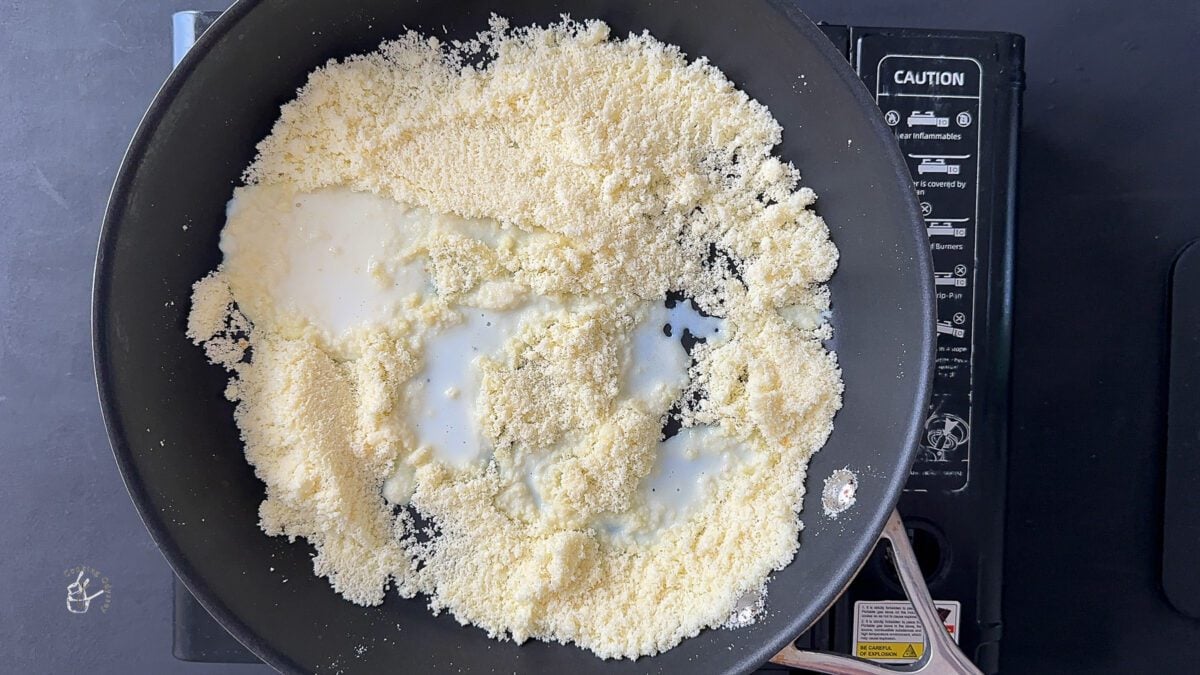
- Add the milk: Pour in the milk gradually and stir well.
Top Tip
Do not skip roasting the milk powder. That short roast is what makes this taste more like mawa and less like raw milk powder mixed with milk.

- It will clump together: The mixture will clump and thicken quite quickly.

- Cook until one mass forms: Keep stirring until the khoya comes together in one smooth, sticky, glossy mass. Take the khoya out of the hot pan so it stops cooking. Use straight away, or cool completely before storing.
Technique
How I Use Milk Powder Mawa
Milk powder khoya is the most flexible homemade mawa on my site.
Use it anywhere you need a smoother khoya that can bind, knead, melt or blend into a recipe.
It is my preferred homemade khoya for gulab jamun with khoya because the dough needs to be smooth, not grainy. It is also my choice for kala jamun, where the mawa and paneer dough should be soft, smooth and easy to shape.
For peda, milk powder mawa works beautifully in microwave mawa peda and kesar mawa na penda. In fact, for kesar mawa penda, I specifically prefer this smooth milk powder mawa because mawa made with ricotta can be too grainy.
You can also use it in sweets where mawa adds richness and body, such as mathura peda, slow roasted mawa peda, mawa kesar kopra pak and milk barfi.
For savoury dishes, milk powder khoya melts nicely into rich gravies.
Use it in khoya kaju or add a small amount to special-occasion curries such as paneer tikka masala, shahi paneer or punjabi matar paneer.
For savoury recipes, use it sparingly. Khoya should make the gravy richer, thicker and creamier, not sweet or heavy.
Homemade khoya storage
Let the khoya cool completely before storing.
Store in an airtight container in the fridge for up to 1 week.
It will firm up and dry slightly in the fridge. You can grate it straight into recipes, or warm it gently with a splash of milk if you need it softer again.
I have successfully frozen khoya for up to 3 months. You need to defrost in the fridge before using but I have noticed the texture hardens. In which case, again either grate or warm with milk to loosen it again.

Milk Powder Mawa FAQs
Is khoya the same as mawa?
Yes. Khoya and mawa are two names for cooked-down milk solids.
What type of khoya does this recipe make?
This recipe makes soft, smooth chikna khoya. It is sticky and smooth rather than grainy or hard.
Why do you roast the milk powder first?
Roasting the milk powder removes the raw taste and gives a nuttier flavour, closer to the flavour you get from slowly reducing milk.
Why did my khoya turn brown?
The heat was probably too high, or the milk powder was roasted for too long. Keep the heat low and do not let the milk powder change colour.
Why is my khoya too dry?
It may have been cooked too long, or it may have dried out in the fridge. Reheat gently with a splash of milk to loosen it.
Can I grate this khoya?
Freshly cooked milk powder khoya is usually too soft to grate. Chill it first, or cook it slightly longer if you need a firmer texture.
Can I use this instead of ricotta mawa?
Usually, yes. Milk powder mawa is more flexible. Ricotta mawa is better when you specifically want a softer, crumbly, grainier texture.
Can I use this in curries?
Yes. A small amount of khoya can enrich restaurant-style curries and special-occasion gravies.
As always if you make this recipe, be sure to leave me a comment, rate this recipe and tag me on Instagram @jcookingodyssey or #jcookingodyssey. I love seeing all your photos of my recipe recreations!
Don’t forget to follow me on social media using the buttons below – I can't wait to see you all there!
📖 Recipe

Homemade Khoya with Milk Powder
Ingredients
- 5 cup milk powder full-fat or full cream
- 2 tablespoon ghee
- ⅓ cup milk
Instructions
- Heat a heavy based pan on low heat and add 2 tablespoon ghee.
- Once the ghee is warm, tip in 5 cup milk powder and mix well.
- Keeping the heat low, continuously stir the milk powder until it is roasted - approximately 2-3 minutes. The milk powder should not change in colour.
- Add in ⅓ cup milk and cook until the mixture thickens to form a mass. It will be sticky and glistening with ghee.
- Remove the from the heat or take the mawa out of the pan to prevent it cooking further. Use directly in recipes or allow to cool completely before storing away.
Video
Notes
Yield can vary depending on the brand of milk powder and how firmly it is packed into the cup.Recipe tips:
- Use full-cream milk powder for the best flavour and texture.
- Roast the milk powder gently in ghee before adding milk. This removes the raw taste and gives a nuttier mawa flavour.
- Keep the heat low. The milk powder should stay pale and should not brown.
- Add the milk gradually and stir continuously because the mixture thickens quickly.
- The khoya is ready when it forms one soft, smooth, sticky, glossy mass.
- Remove the khoya from the hot pan once cooked so it does not dry out further.
- Freshly made milk powder khoya is soft and chikna. It becomes firmer and drier as it cools.
- If refrigerated khoya becomes too dry, reheat gently with a splash of milk to loosen it.
- If you need firm khoya for grating, cook it slightly longer or chill it first.
- Milk powder mawa is smoother and stickier than ricotta cheese mawa, so it works especially well for peda, gulab jamun, and recipes where khoya needs to bind or melt into the mixture.
Nutrition
PLEASE NOTE: Nutritional values are estimated by a computer and may vary based on ingredients and portion sizes. For personalised dietary advice, please consult a qualified healthcare professional.
Share on Facebook Pin This RecipeNote:- This post was originally posted on 1st of October 2015 but I have updated the post since with helpful content. The recipe remains the same.


Niloufer Riyaz says
hearing about chikna khoya for the first time... thank u for the recipe dear
Mayuri Patel says
I didn't know there are so many types of khoya. Good post and informative.
jcookingodyssey says
Thanks Mayuri...yep, in India ONLY you can get though, especial Mawa shops. I remember my mum buying different types of khoya.
Aruna Panangipally says
This is a very useful post as I dislike buying khoya. Thank you 🙂
jcookingodyssey says
Thank you Aruna. Totally with you, even in here in UK I dislike buying khoya from the shop 🙂