
Panchamrut is one of the simplest prasad recipes we make at home for pooja. It takes less than 5 minutes and almost anyone in the house can make it. Also known as Panchamrit, Panchamruth, Charnamrut or Charanamrit, it is made with five main ingredients: milk, yoghurt, ghee, honey and sugar.
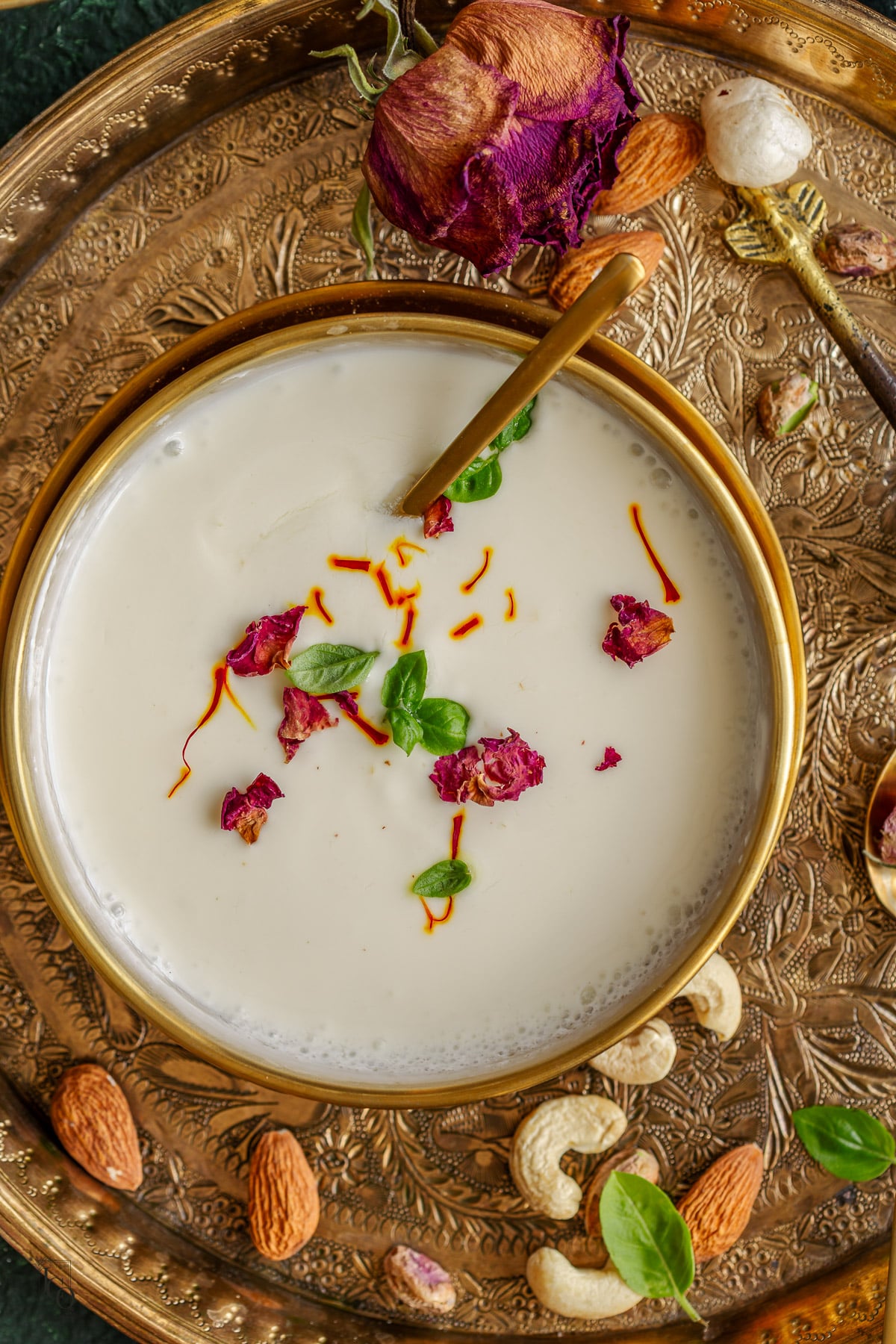
Recipe Summary: Panchamrut
- ✅ Recipe Name: Panchamrit
- 🕒 Ready In: 5 minutes or less
- 👪 Serves: 15 (easy to scale)
- 🍽 Calories: 16 per serving
- 🥣 Main Ingredients: Milk • Yoghurt • Ghee • Honey • Sugar
- 📖 Dietary Info: Vegetarian • No cook • Pooja prasad
- ⭐ Why You'll Love It: This simple Panchamrut is made with milk, yoghurt, ghee, honey and sugar for pooja and prasad.
SUMMARIZE & SAVE THIS CONTENT ON
Jump to:
What Is Panchamrut?
Panchamrut is a simple prasad made for pooja and Abhishek.
The name refers to five nectars or five main ingredients.
Different families may make it slightly differently, but the base is usually milk, yogurt, ghee, honey and sugar.
Some people call it Panchamrit. Some call it Charnamrut or Charanamrit, especially when it is offered during pooja and served as prasad afterwards.
In our home, we make it fresh, offer it during pooja, then serve it the same day.
Panchamrut Ingredients
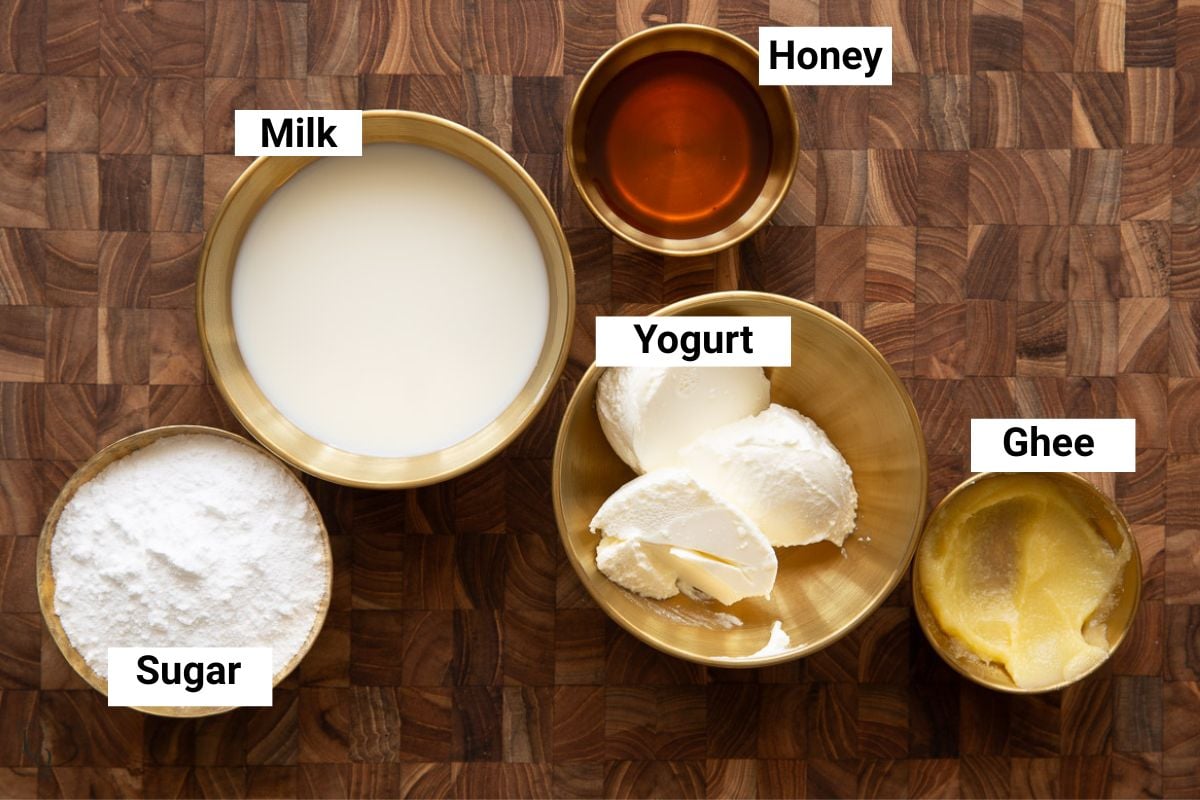
Yogurt
I like using homemade yogurt when we have it, but any plain yogurt works.
Whisk it smooth first so the Panchamrut has a slightly creamy texture rather than little lumps of yogurt.
Milk
Any milk works here. Use what you normally have at home.
Ghee
My go-to is homemade ghee for the best rich flavour but store bought works too.
It does not really matter whether the ghee is melted or soft. Once it mixes with cool yogurt and milk, it may naturally firm up slightly anyway.
Honey
I prefer using regular honey in this recipe that is easily available in any grocery store.
Sugar
I like to use regular granulated sugar which keeps white colour charnamrit.
Water
Traditionally, Gangajal may be used.
For a practical home version in the UK, I use spring water or mineral water.
Tulsi
We add fresh tulsi whenever we have the plant at home. If you cannot get fresh tulsi, simply leave it out.
Saffron
Saffron is optional, but it adds a lovely flavour and colour.
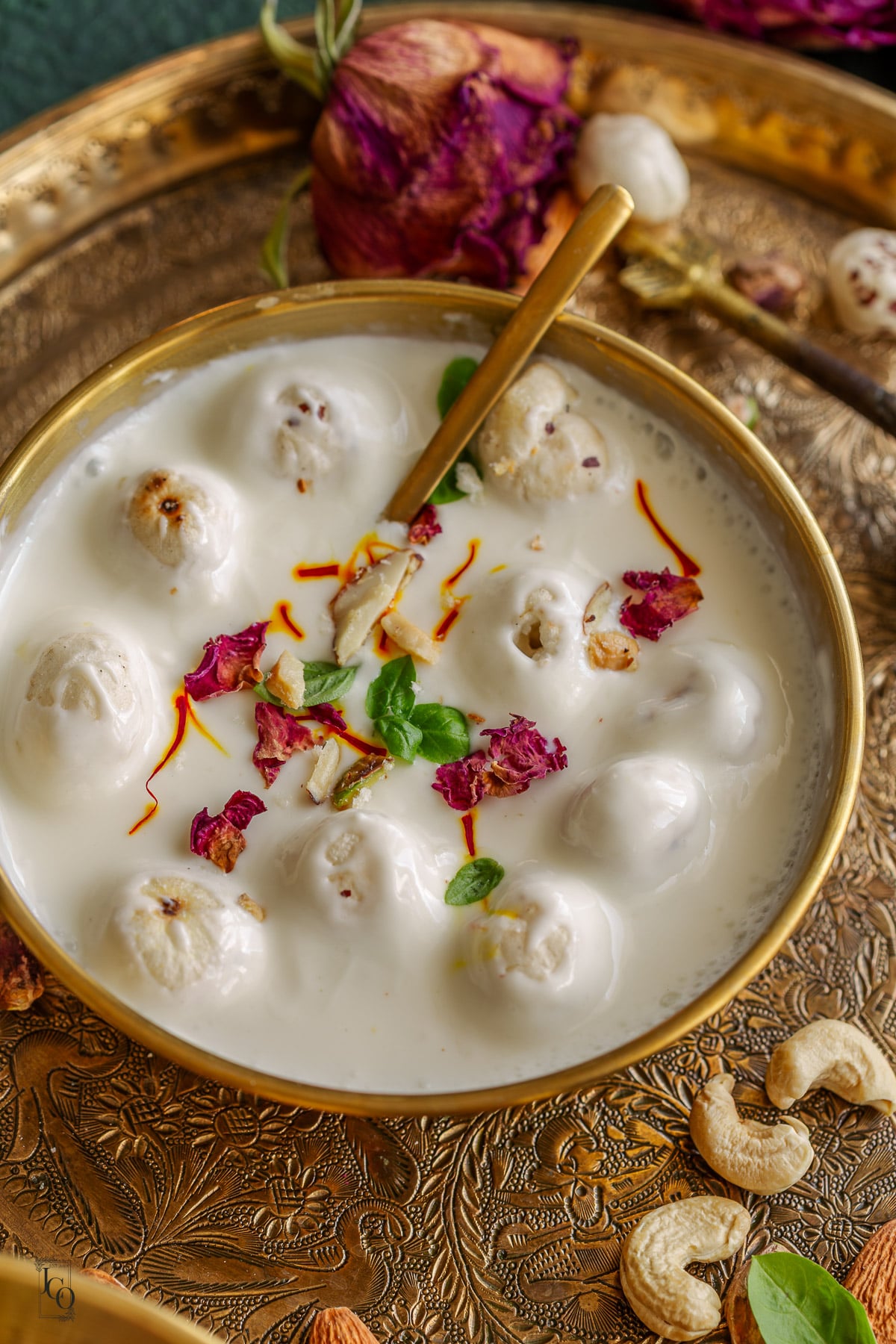
Some regional or temple-style Panchamrit recipes include makhana, nuts or fruit, but this is the straightforward version we make at home for pooja.
How To Make Panchamrut
I don’t follow a strict ritual sequence at home, but I always whisk the yoghurt first before adding the milk, honey, sugar, water and ghee. This keeps the Panchamrut smooth, slightly creamy and easy to drink. If your family follows a particular pooja tradition, use that order instead.
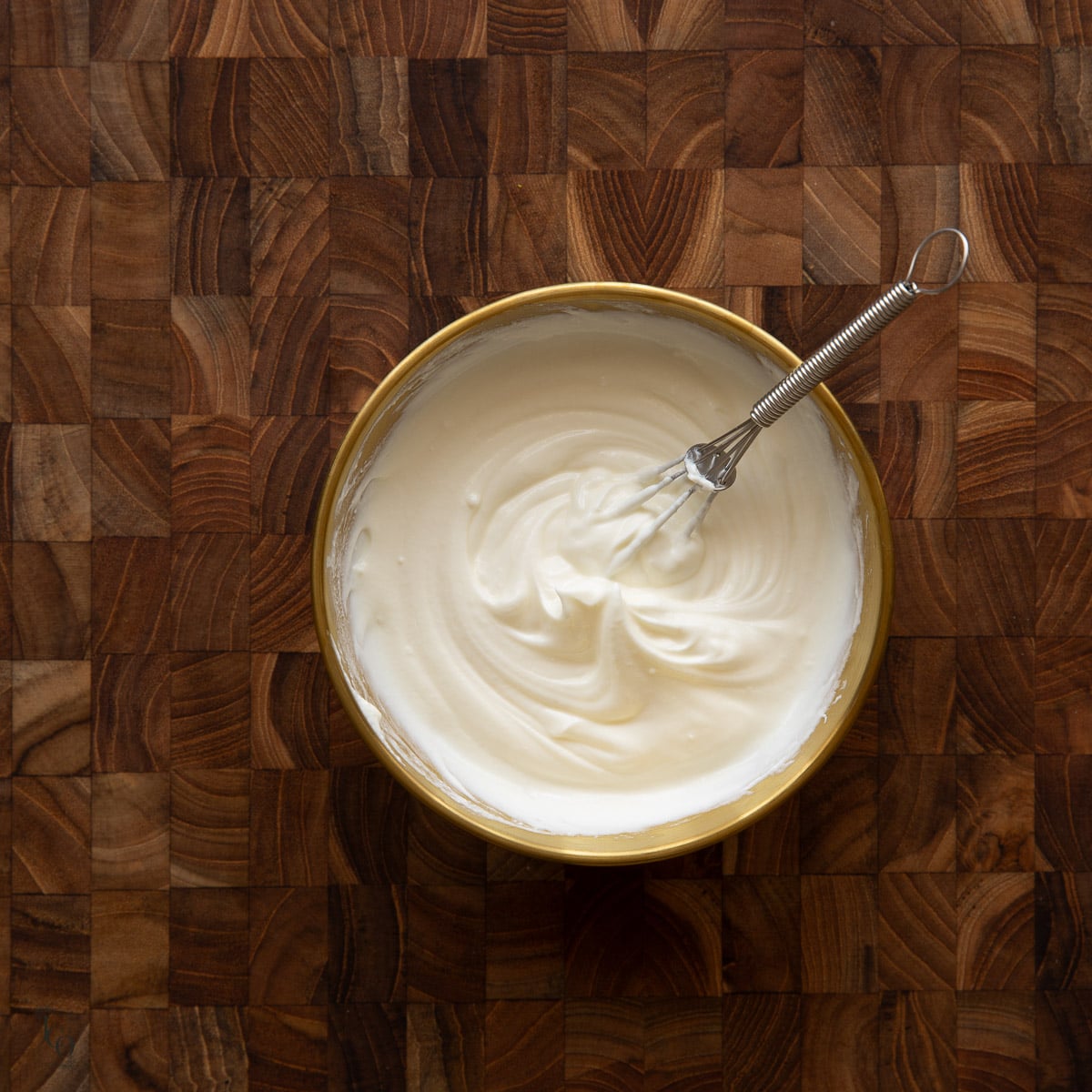
- Step 1: Whisk yogurt until smooth.
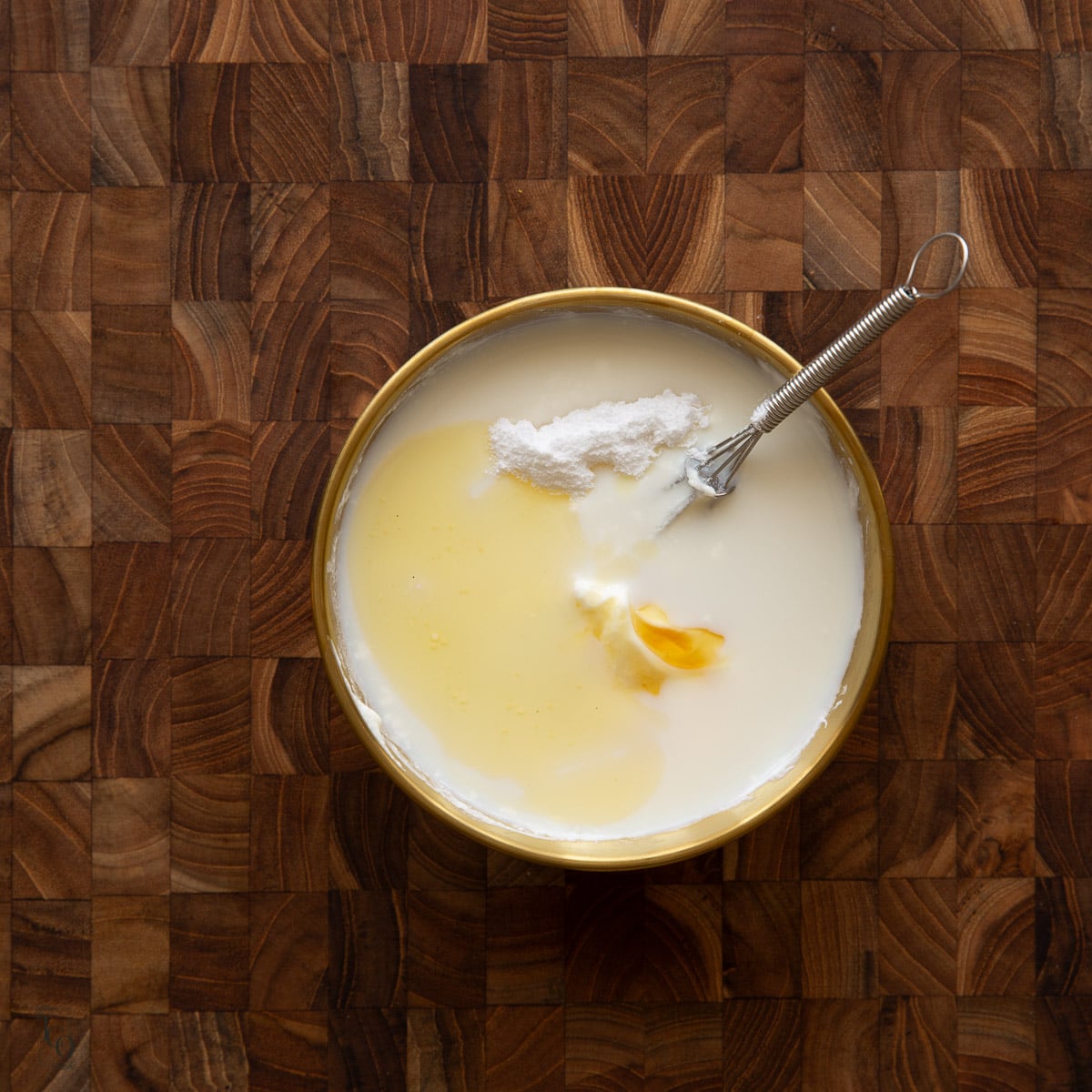
- Step 2: Mix with milk, sugar, honey, ghee and gangajal.
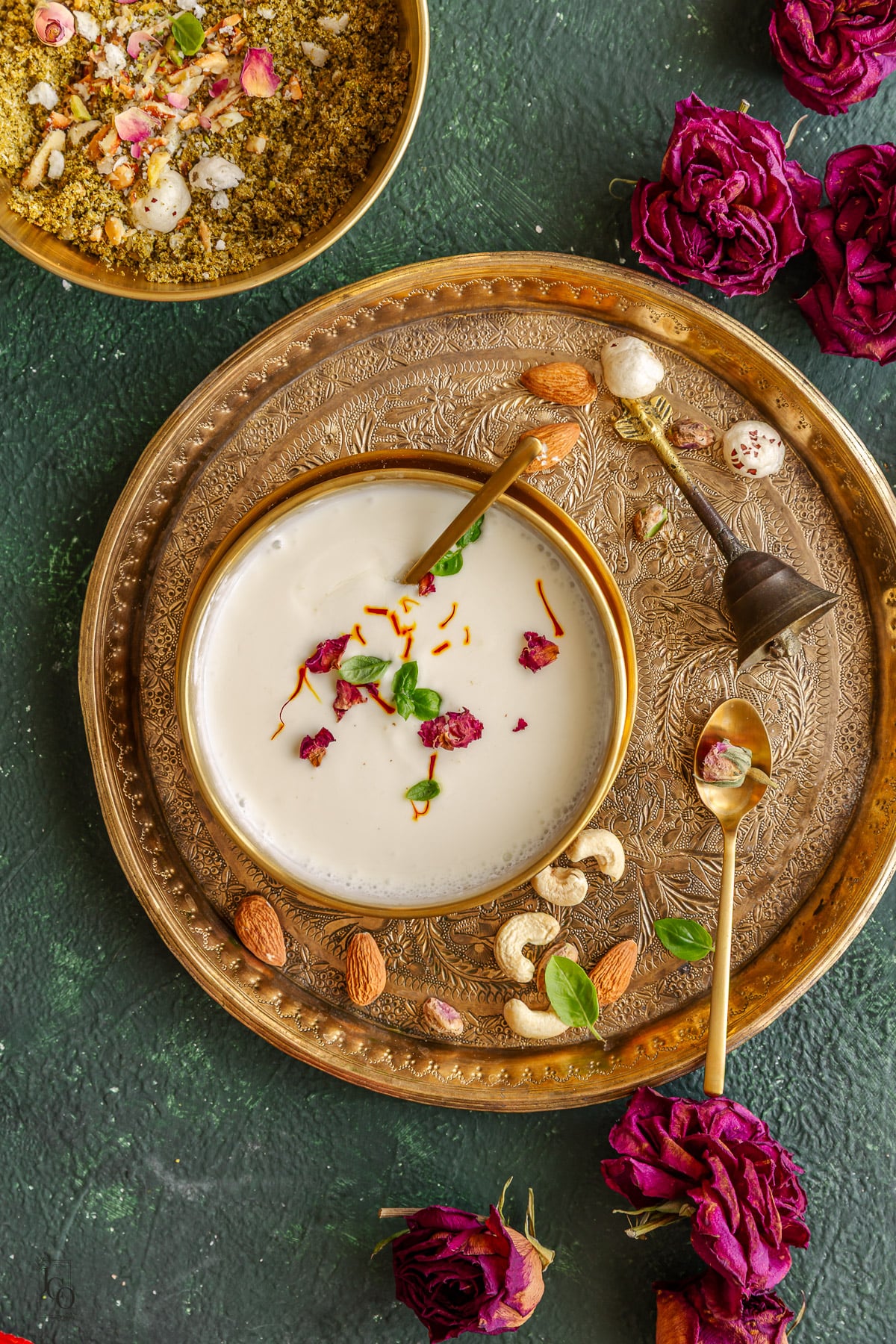
How I Serve Panchamrut
We usually make panchamrut for poojas at home. It is then served after the offering.
For Janmashtami, I like serving it alongside dhaniya panjiri prasad.
If making this for Diwali pooja, browse these Diwali dinner menu ideas for inspiration.
For satyanarayan ni katha, we make it with sooji no siro, poori and rasawalu bateta nu shaak.
Make Ahead and Storage
Panchamrut is best made fresh. I make it the same day and serve it after pooja.
Because it contains milk and yoghurt, keep it refrigerated if you are not serving it straight away.
I would not make it days in advance.
As always if you make this recipe, be sure to leave me a comment, rate this recipe and tag me on Instagram @jcookingodyssey or #jcookingodyssey. I love seeing all your photos of my recipe recreations!
Don’t forget to follow me on social media using the buttons below – I can't wait to see you all there!
📖 Recipe
Panchamrut (Charnamrit)
Ingredients
- ½ cup plain yogurt whisked
- ¼ cup milk
- ¼ honey
- 1 tablespoon ghee
- 1 tablespoon gangajal holy water or mineral water
- 5 leaves tulsi holy basil leaves
- 2 saffron strands optional
Instructions
- In a bowl, whisk the yogurt.
- Then combine milk, honey, sugar, ghee, and Gangajal or water. Mix well until smooth.
- Add the tulsi leaves and saffron strands if using.
Notes
- Use as required for puja, religious ceremonies, or prasad.
- Traditionally, Gangajal is used, but filtered or mineral water can be substituted if unavailable.
- Fresh tulsi leaves are preferred for authentic flavour and significance.
- Panchamrit is best prepared fresh on the day it is required.
Nutrition
PLEASE NOTE: Nutritional values are estimated by a computer and may vary based on ingredients and portion sizes. For personalised dietary advice, please consult a qualified healthcare professional.
Share on Facebook Pin This Recipe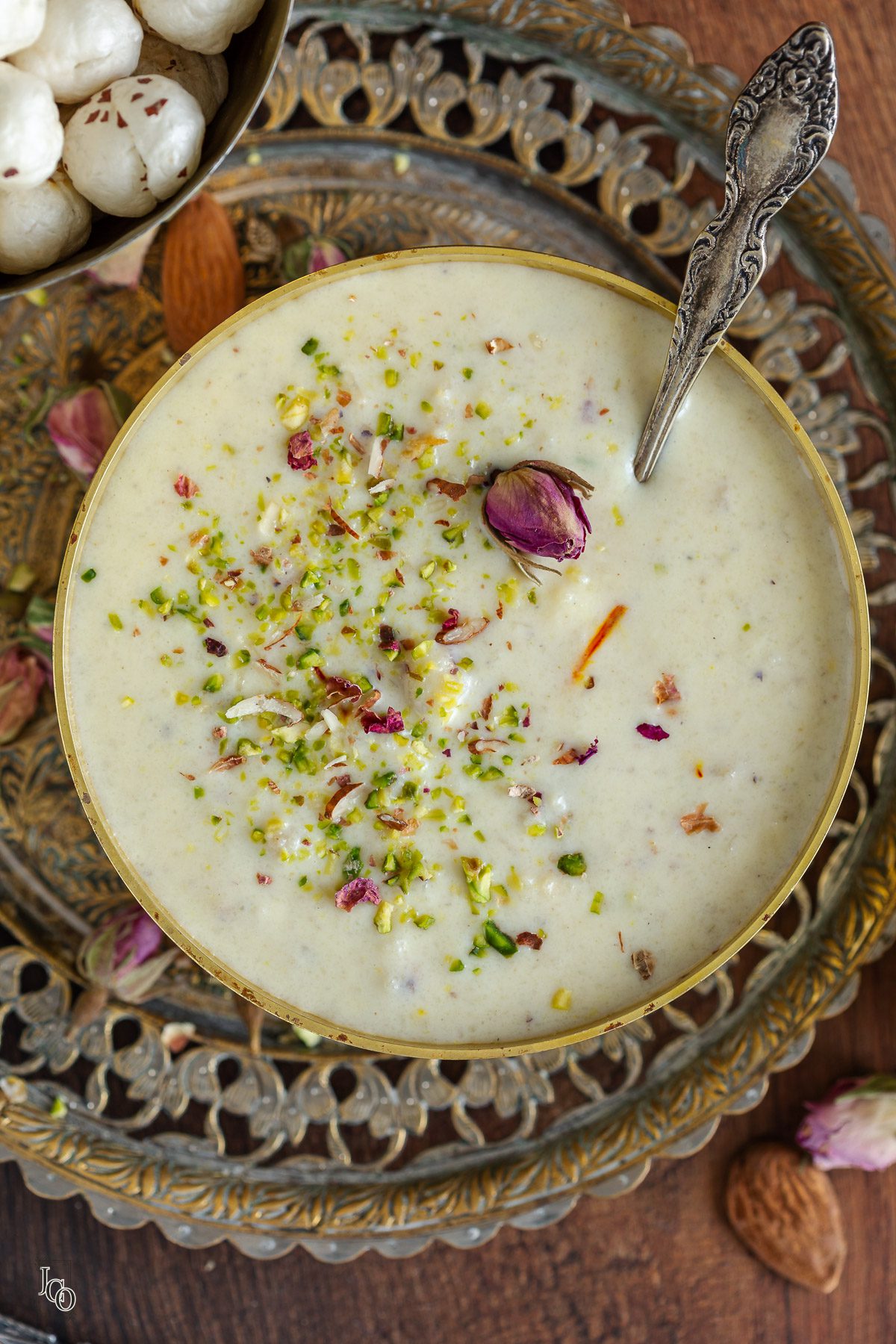


Hayley Dhanecha says
The combination of milk, yogurt, honey, ghee and sugar together is so sacred and yet so simple. Making this fresh at home with good quality ingredients for puja feels so much more meaningful.