
Elevate your Thai curry night with this authentic Thai yellow curry paste that is suitable for vegans and vegetarians. This curry paste follows a traditional recipe, you can make a big batch and freeze it ready for use any day to make perfect Thai yellow curry within minutes.

Authentic Thai Yellow/Orange Curry Paste - Prik Gang Garee
I absolutely love thai curries! Their flavour is so different to Indian curries and you can really experiment with different vegetables.
I took a recent trip to our local Asian grocery store and returned home with a bag heaving with fresh ingredients. I chose to split these ingredients and make two delicious curry pastes, this Thai yellow curry paste and a vegetarian Thai green curry paste.
This is a concentrated curry paste rather than a ready-made sauce so a little goes a long way. The ingredients seem expensive when buying from specialist shops but you only need a spoon or two for each recipe. Using this curry paste in your recipes will surpass the flavour of any takeaway!
Thai Curries
There are several different types of Thai curries each with their own unique flavour and gorgeous colour. The curries mentioned here are all coconut-based curries.
Thai Red Curries use red curry paste made using either fresh or dried red chillies.
Thai Green Curries are the hotest in spice level and are made from green curry paste which uses fresh green chillies. Yellow Thai Curry gets its colour from fresh turmeric which is added to the fresh paste.
In Southern Thailand, Thai Panang Curry is popular and takes its name from the Panang Island off the western Malaysian coast. It often has peanuts in the paste though shop bought pastes use mung beans due to allergy risk. It is dryer and sweeter than red and green curries and less spicy too.
Another Southern Thailand special is Thai Massaman Red Curry which is made with red chillies and Thai basil. It has Muslim routes and uses more dry spices like cinnamon, star anise, cloves, cardamom and nutmeg.
What does Thai Yellow Curry Paste taste like?
Thai Yellow Curry is a wonderul alternative to thai green and red curries. In terms of flavour, it is milder than green and red curries and has a more sweeter flavour.
The addition of fresh tumeric gives you sunshine yellow curry and a fresh herbal bitterness.
In comparison, green curry is spicy and fresh with floral tastes from the fresh thai green chillies. Thai red curry is spicy with a citrus taste.
Use thai yellow curry paste to make:
- curries
- soups
- as a marinade
- in fried rice
- dipping sauces or in salad dressings
- in stir-fries
- stirred through vegan mayonnaise
- in Macaroni and Cheese
I love to use it in:
- Thai Coconut Pineapple Fried Rice - recipe includes Instant Pot method
- Roasted Cauliflower Thai Soup
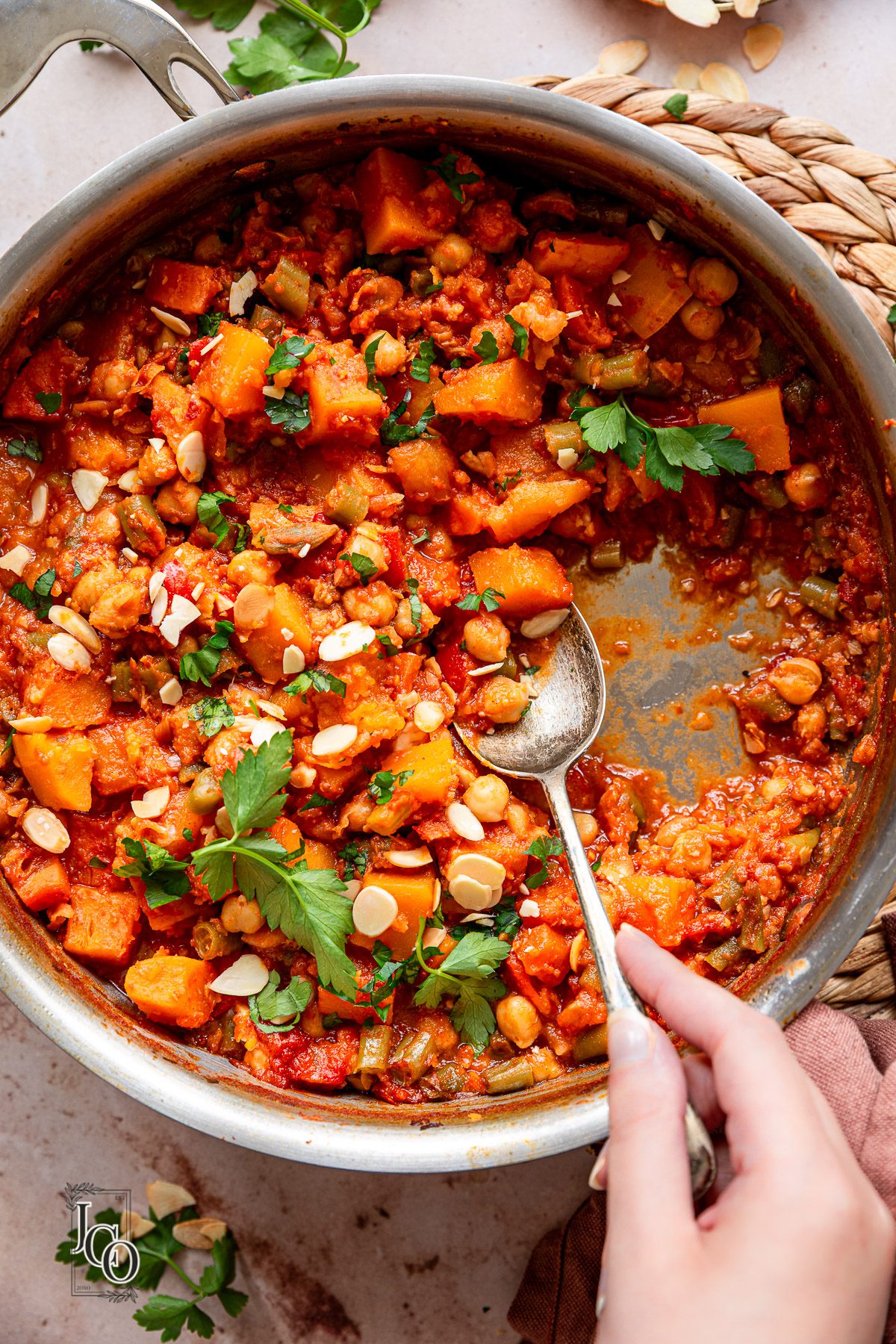
- Thai Sweet Potato, Chickpea and Mushroom Curry
- Carrot Cashew Soup
- Thai Curry Hummus
- Thai style Squash and Sweet Potato Noodle Soup

Why you should make this homemade thai curry paste
- Suitable for vegans and vegetarians
- Without shrimp paste
- No added MSG
- No food colouring
- Without preservative
- Easy to make ahead and freeze for later
- Easy to scale up or down
- Follows an authentic recipe
- Great for kids because it is a less spicy Thai curry
Ingredients for the best Thai Yellow Curry Paste
I was watching a TV program a few years back of Chef Reza who was visiting Thailand and sampling local cuisine. They made the most incredible looking Thai Yellow Curry paste of which I quickly scribbled the recipe. The recipe used some non-vegan ingredients which I have left out but this closely mimics the traditional thai recipe.
For a closer look at these ingredients and substitutes, see our Thai Green Curry Paste recipe.
Fresh red chillies - we used thai red chillies. Adjust how many you use according to your spice tolerance/preference. Use dried red chillies soaked in warm water as an alternative.
Aromatics - these include shallots, garlic and galangal


Fresh lemongrass - finely chopped
Fresh turmeric - chopped, if you cannot find fresh turmeric then use powder but half the amount if using powder as it is stronger than fresh turmeric.
Kaffir/makrut lime leaves


Soy sauce - see FAQ for gluten-free alternatives
Coconut milk - a dash of coconut milk makes the blending process easier and achieves a finer paste. You can also use water or oil in replacement for similar effect.
Palm sugar - Thai palm sugar or Nam Taan Puek is a staple in Thai cuisine and is most commonly derived from the sap of the palm tree. The sap is boiled with water until crystals of palm sugar are left behind which is why it is considered an unrefined sugar. It has a unique caramel like taste making it essential for maintaining authentic Thai flavours. It will be found sold as either palm sugar paste, palm sugar block or palm sugar discs/cubes.
Coriander/cilantro - use the stem and roots if your coriander comes with roots. Leave out the coriander leaves as they will give the paste a green colour. Also, fresh leaves do not withstand the cooking that the curry paste needs for a recipe.


Cumin and coriander seeds roasted - you can substitute for ground spices if you cannot find whole. You do not need to roast the ground spices and also, use half the amount than stated.
Lime juice
White pepper powder - use black pepper if you cannot get hold of white
Salt
How to make easy Thai Yellow Curry paste from scratch?
Traditionally, thai curry paste is made by grinding down the fresh ingredients in a pestle & mortar until a paste is achieved. Although this must be very rewarding, it is time-consuming and the same or even better results can be achieved by using a blender.
For the smoothest paste, use a blender rather than a food processor. Simply prepare the ingredients, place in a blender and blend until smooth.
You can use some of the paste immediately, and the rest can be stored away for later use.


Pestle & Mortar Method + Tips
If you do want to really go down the handmade route, especially if you plan on only making a small amount, here are some tips to make the process easier.
- Use a large mortar as this gives you more space to pound away!
- Thinly slice the aromatics prior to grinding as it will make it much easier to pound smaller pieces.
- Similarly, adding one ingredient at a time will also make the process easier than adding all at once
- Start by crushing the ingredients along the side of the mortar with the pestle before pounding, it will help with breaking up the fibres
- Add the salt early as this helps release moisture from the ingredients making it easier to grind. Use a coarse grain salt because it helps provide more friction.
- Use one hand to steady the bowl and also cover it slightly so that the ingredients do not fly back up in your face!
- This process will take between 25-30 minutes.
Pros and cons of using a mortar & pestle include:
- Pro - You can make a small amount of paste
- Con - You are limited by the size of your pestle & mortar
- Pro - follows traditional preparation methods
- Con - It takes a lot of effort and time
Pros and cons of using a blender:
- Pro - It is fast!
- Pro - You get a fine paste
- Con - Small quantities will not work
Storage & Sterilisation
You can store this paste both in the fridge or the freezer if you have made a large amount
To store in the fridge in a sterilised jar, wash some jars with hot soapy water, without drying place on a baking tray in a preheated oven at 160C for 10-15 minutes. Fill the jars with the curry paste whilst the jars are still hot - handle the jars with some gloves as they will be hot. The paste can be stored for a month in the fridge. You can also transfer the paste into an airtight container and keep in the fridge for about 1 week.
To freeze, spoon into ice cube moulds. Once they are frozen, remove and place in a zip lock bag. This way, you will be able to use 1 or 2 blocks per recipe. Simply add directly into the recipe from frozen or thaw in the microwave for a few seconds.
How to jazz up store bought paste
Ok, so you've got a store-bought paste that is a bit lack-lustre but you do not want to throw it away. You can definitely improve on the flavour of these pastes in a few simple ways.
You can add more spices and/or herbs that it already contains. For example, if it isn't spicy enough, simply grind some extra dried/fresh chillies and add to the recipe. You could also add some normal fresh ginger or garlic to your recipe. A squeeze of lime juice will also give some zing to a weak curry paste.
FAQ
Yes, palm sugar is a greener palm product that uses sustainable methods and minimises processing. The Food and Agriculture Organisation reports that coconut palm sugar is a sustainable industry as palms can produce high yields of sugar for up to 100 years of production.
Simply switch the soy sauce for tamari for a gluten-free recipe.
Shrimp paste provides umami or savoury flavours to thai curry pastes. As our paste is suitable for vegetarians, this is left out. Miso paste is vegan and has umami but an entirely different flavour which may clash in this recipe. You could source a vegan fish or vegan oyster sauce but I find this recipe is perfect as it is.

As always if you make this recipe, be sure to leave me a comment, rate this recipe and tag me on Instagram @jcookingodyssey or #jcookingodyssey. I love seeing all your photos of my recipe recreations!
Don’t forget to follow me on social media using the buttons below – I can't wait to see you all there!

Vegan Thai Yellow Curry Paste (authentic)
Equipment
- Chopping board
- Knife
- Food processor/Blender
Ingredients
- 2 shallots skin removed and chopped
- 3 stalks lemongrass finely chopped
- 2 tablespoon galangal chopped
- 5 cloves garlic
- 1 tablespoon turmeric root fresh chopped
- 7-8 Thai red chillies fresh
- 2 kaffir lime leaves
- ½ tablespoon soy sauce
- 2-3 tablespoon coconut milk
- 2 tablespoon palm sugar
- 4 tablespoon coriander roots
- 1 tablespoon cumin seeds roasted
- ½ tablespoon coriander seeds roasted
- ½ teaspoon white pepper powder
- sea salt
- 3 dry red chillies soaked
- 1 tablespoon lime juice
Instructions
- Combine all the ingredients into the food processor and process to a fine paste.
- Use it right away in your recipe.
- This paste can be stored in an airtight container in the refrigerator for up to 2 weeks or in the freezer for up to 2 months.
Notes
Nutrition
PLEASE NOTE: Nutritional values are estimated by a computer and may vary based on ingredients and portion sizes. For personalised dietary advice, please consult a qualified healthcare professional.
Share on Facebook Pin This RecipeNote – This recipe has been updated from our recipe archives with new images and content, but the recipe remains the same. First time published in May 2015.



[…] You may find that alot of these ingredients are sold in packets and this can get EXPENSIVE which is yet another reason to make a big batch and freeze it! You can also split the ingredients in half and make Thai red curry paste or yellow/orange curry paste. […]