
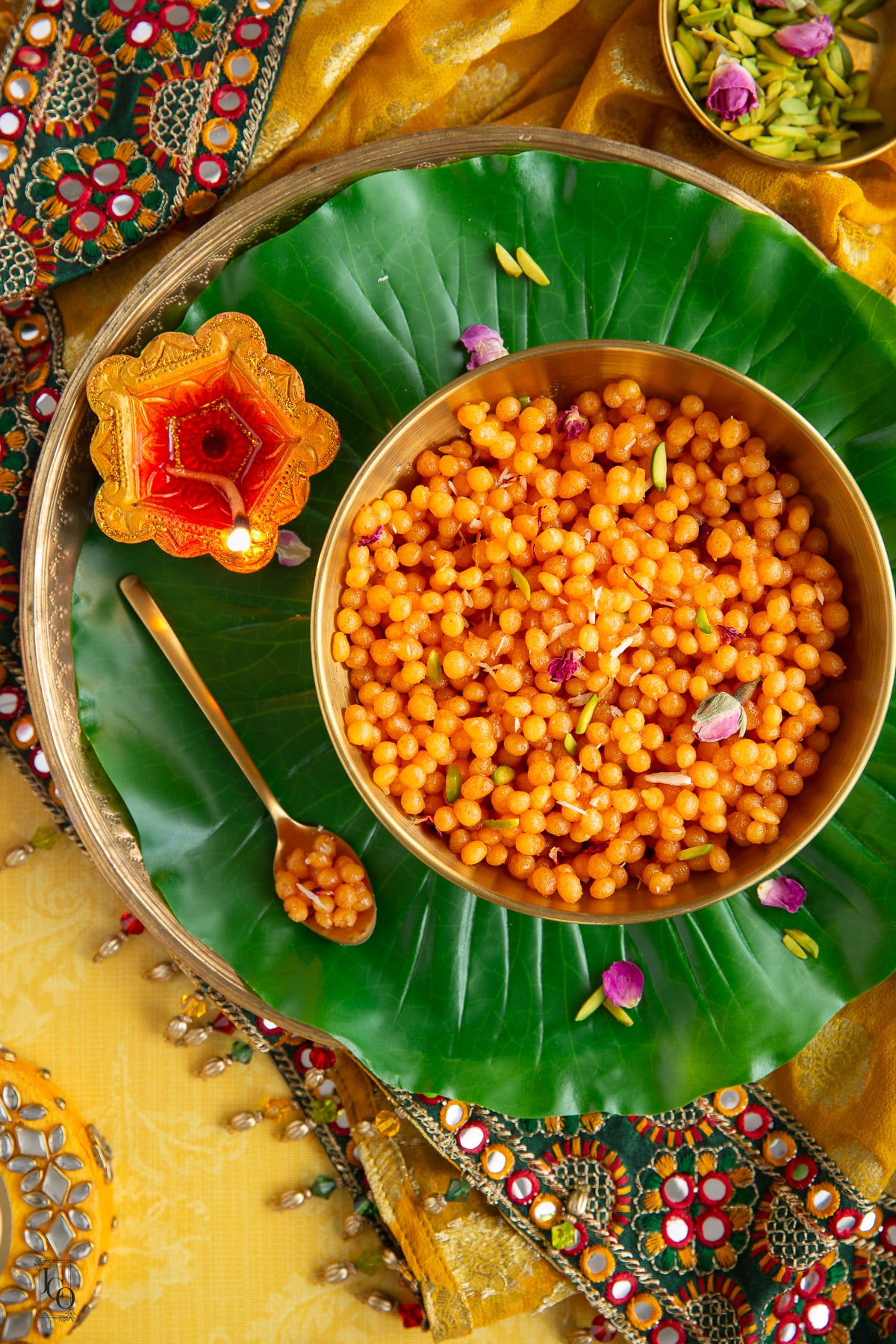
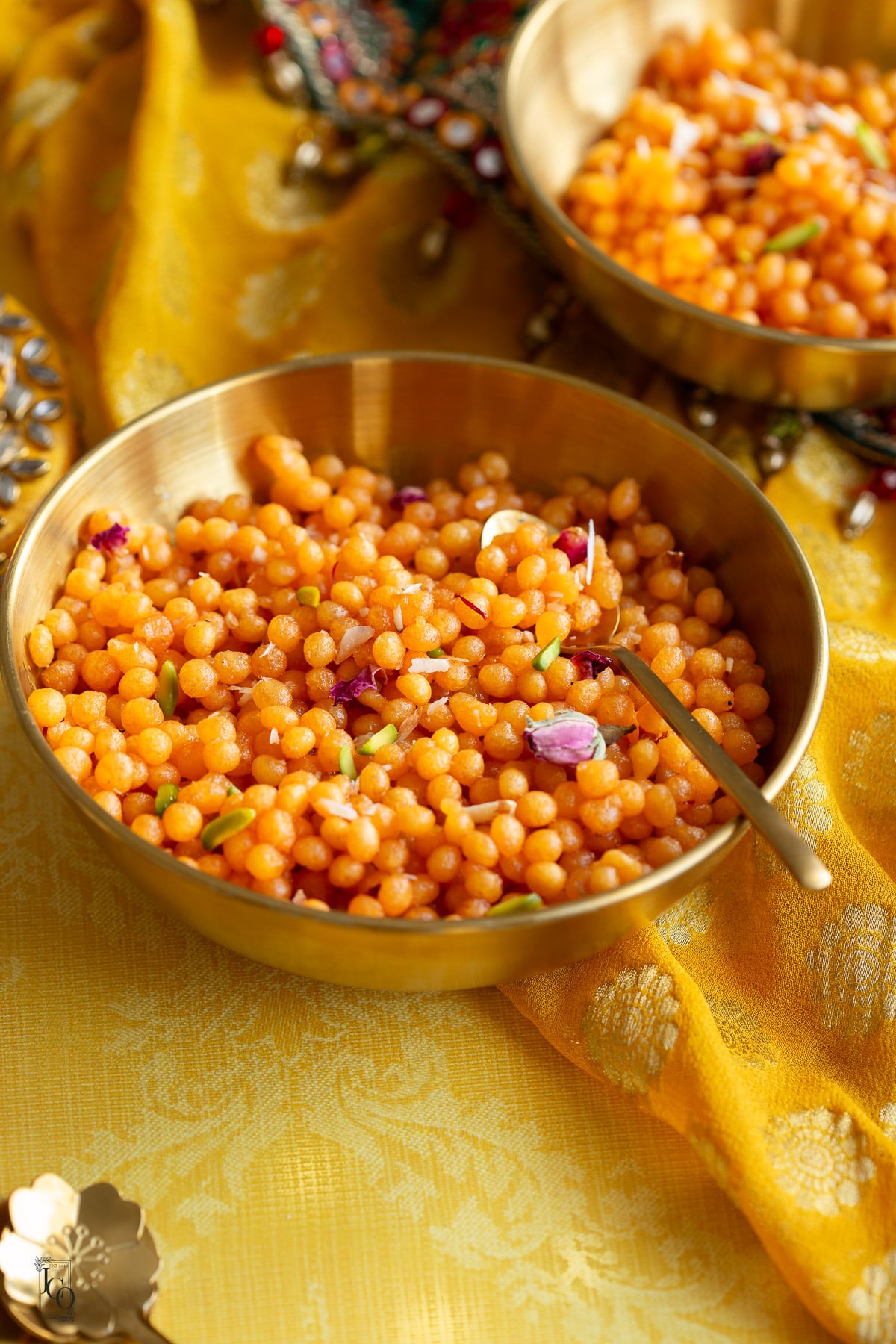
These Meethi Boondi are soft, juicy little pearls of besan soaked in saffron and cardamom-scented sugar syrup. The batter is dropped through a boondi jhaaro for perfectly round pearls, lightly fried, then left to soak until sweet and soft right through to the centre.
The quantities I've given below give approximately 400g of boondi but the recipe can easily be scaled.
Jump to:
Meethi Boondi Ingredients
You’ll find the full quantities in the recipe card below.
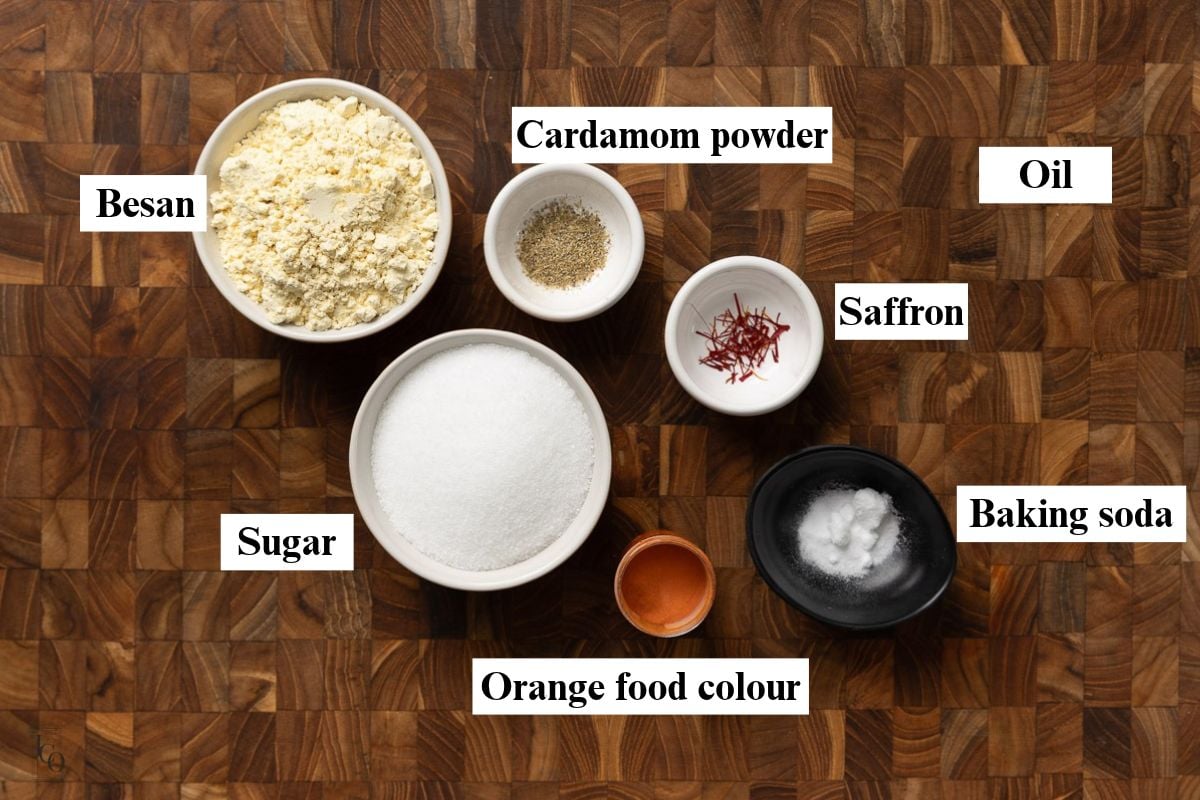
Fine besan
I sieve the besan before making the batter so there are no lumps blocking the jhaaro. I used 1 cup besan for this batch.
Water
I needed approximately ¾ cup water, but besan varies between brands.
Start with the measured amount, then judge the batter by how it falls through the jhaaro. During frying, I added just ¼ teaspoon water at a time whenever the batter thickened.
Bicarbonate of soda
I use only a tiny pinch - approximately ⅛ teaspoon.
You don’t want enough to make the boondi puffy or hollow.
Sugar syrup
Keep the syrup sticky but do not take it to a thread consistency as a thick syrup struggles to penetrate the fried boondi properly.
That’s especially important here because I want every pearl soft and juicy all the way through, rather than coated in sugar on the outside with a firmer centre.
Saffron and Cardamom
Green cardamom powder gives the syrup its classic flavour without overpowering the sweetness and saffron gives a little colour and flavour too.
Food colour
To achieve the orange mithai shop style boondi, I use a pinch of orange food colour. You can skip this if you wish.
The Secret To Perfectly Round Boondi
The batter should be smooth and fluid enough to fall through the jhaaro by itself, but not so thin that it rushes through uncontrollably.
You shouldn’t need to rub or spread it across the holes. The drops should fall at a steady pace and form round pearls without tails.
A quick way I check it is to drop a tiny bit of batter into a bowl of cold water. It should immediately float on the surface, although it will gradually sink if left there.
If the batter feels too thick, add water ¼ teaspoon at a time. Mine thickened slightly between batches, so I made tiny adjustments as I went.
Also wipe both sides of the jhaaro after each batch. Any batter left behind thickens quickly and can affect the shape of the next lot.
Sweet Boondi Stepwise Method
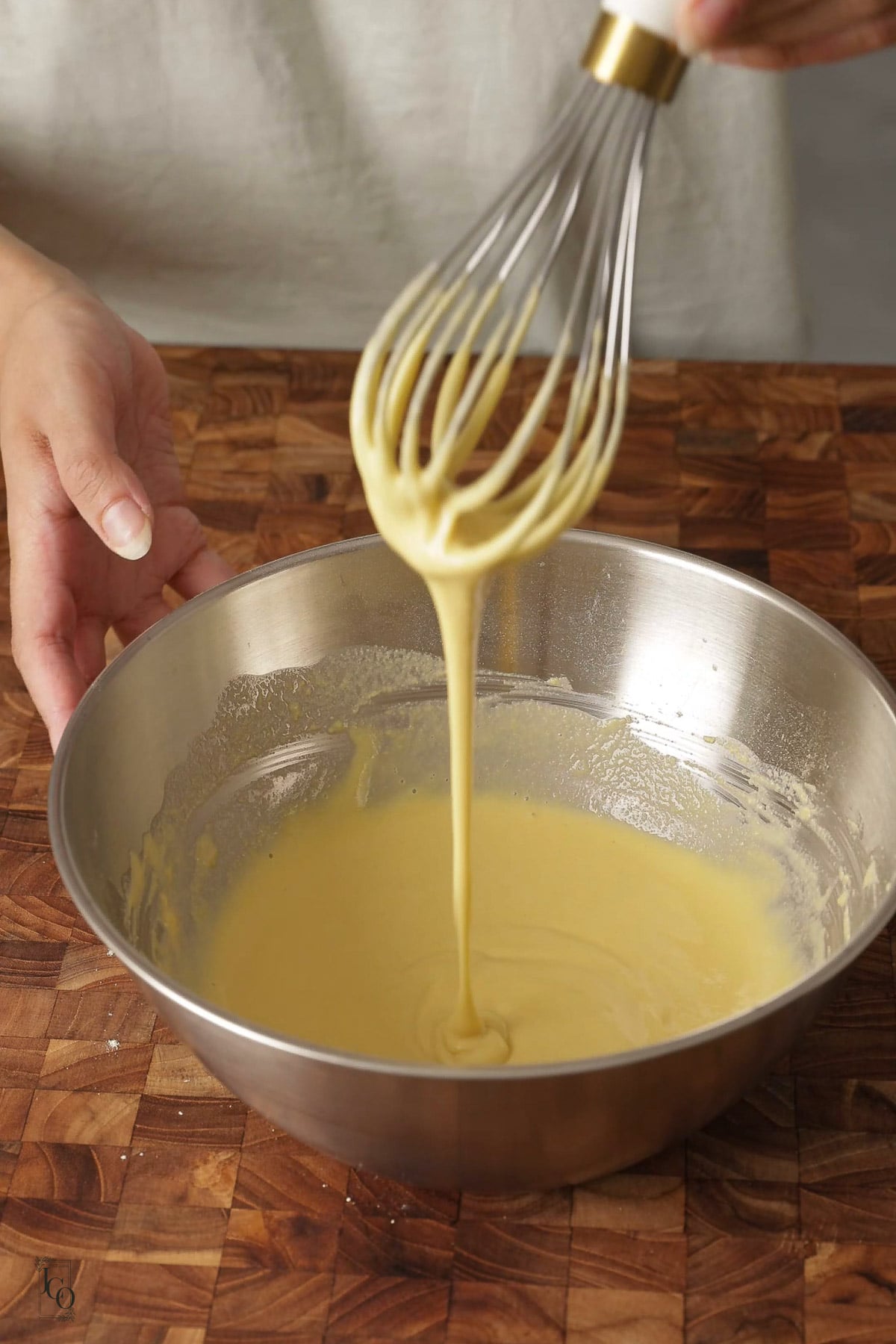
- Make the batter: Sieve the besan, then gradually mix in approximately ¾ cup water until smooth. Add bicarbonate of soda and whisk in well.
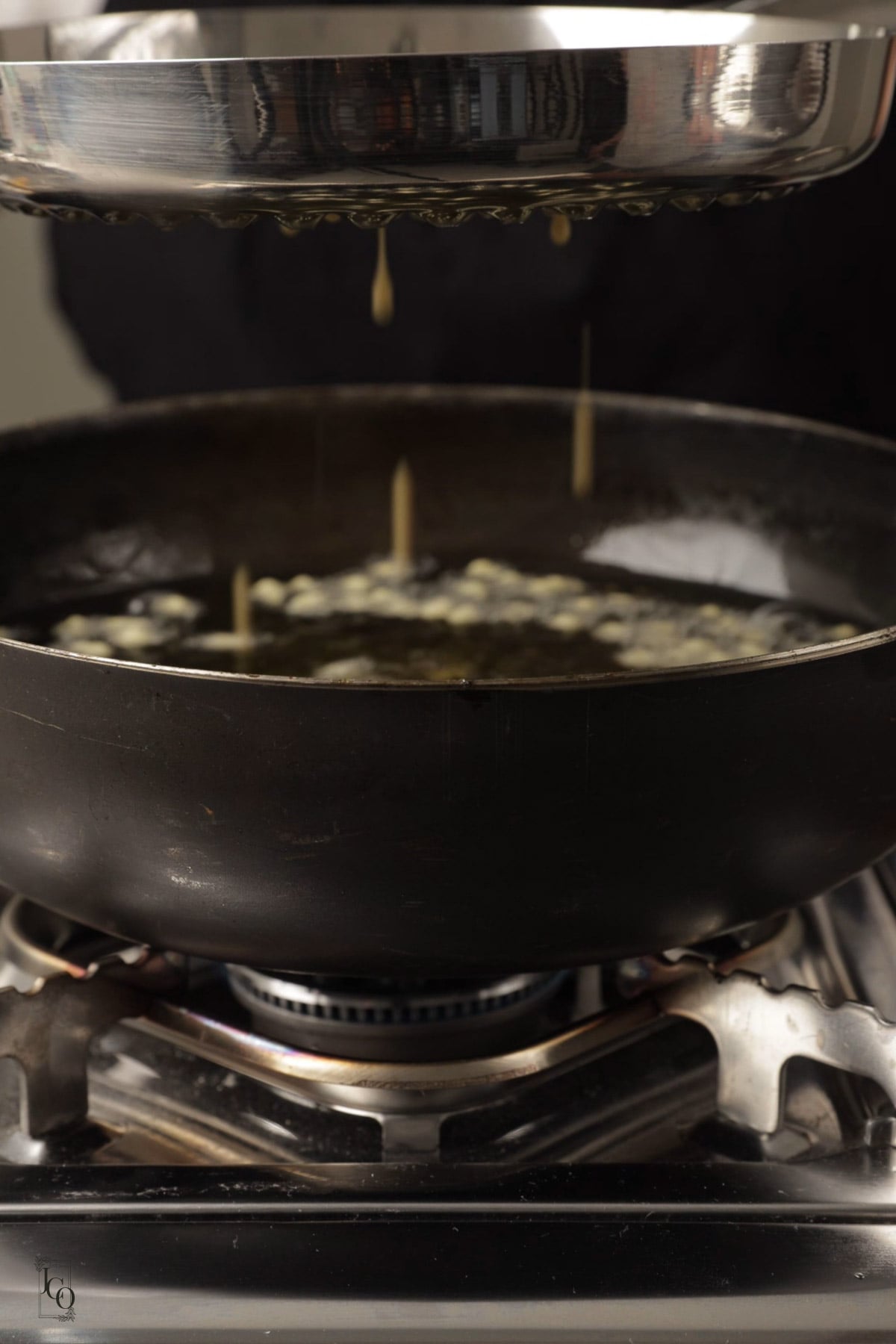
- Drop the boondi: Hold the jhaaro approximately 10cm above the oil. Add only a small ladleful of batter at a time and let it fall through naturally. Clean the jhaaro between batches.
Technique
Why Small Batches Matter
It’s tempting to pour a lot of batter onto the jhaaro at once, but that creates uneven cooking.
The first boondi hit the oil several seconds before the last ones.
If the batch is too large, or the oil too hot, the first pearls start browning while you’re still dropping the rest.
A small ladleful gives you much more control.
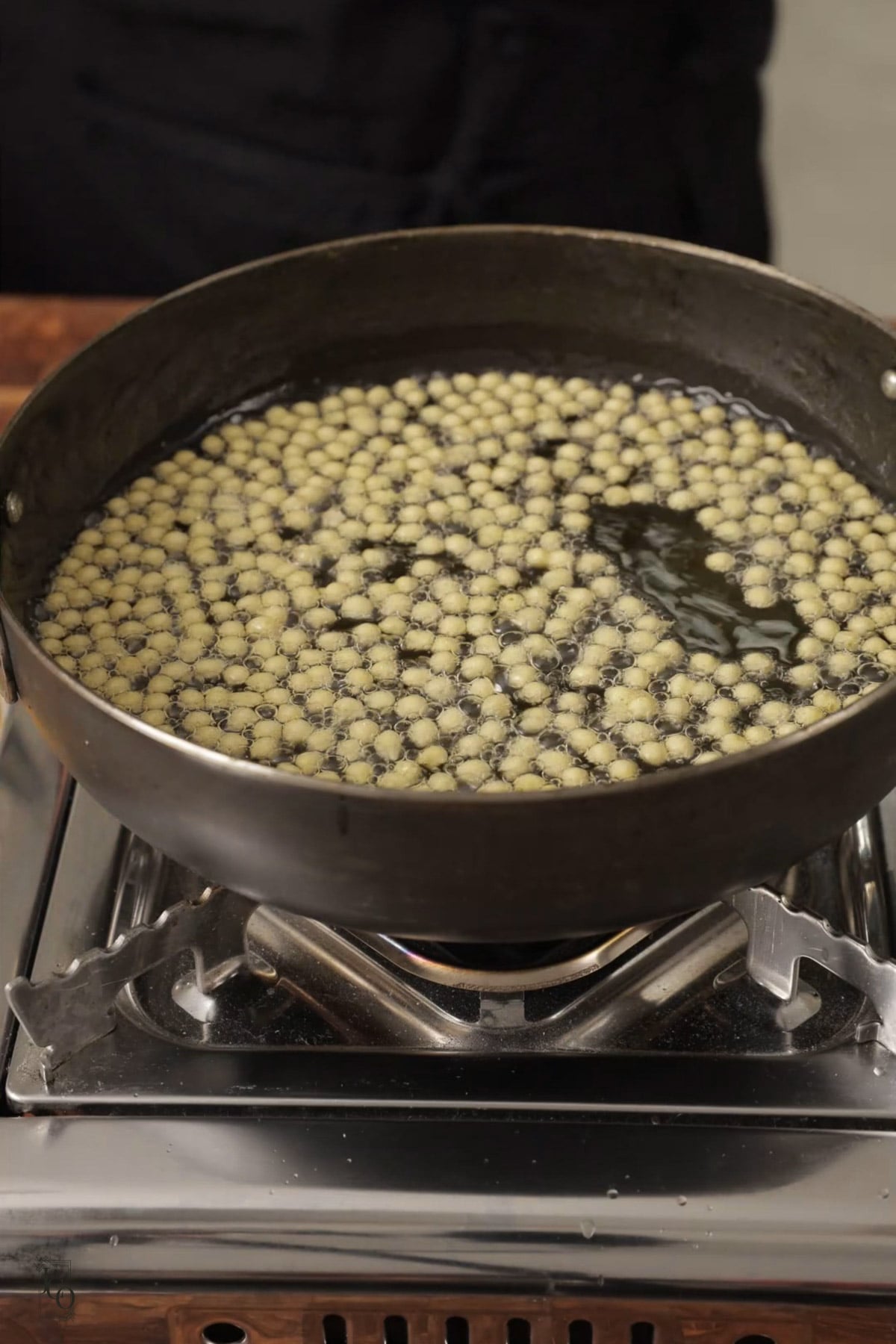
- Fry lightly: Fry until the boondi are cooked with a little bite and light crispness, but not extremely crunchy. Keep them pale rather than deeply browned.
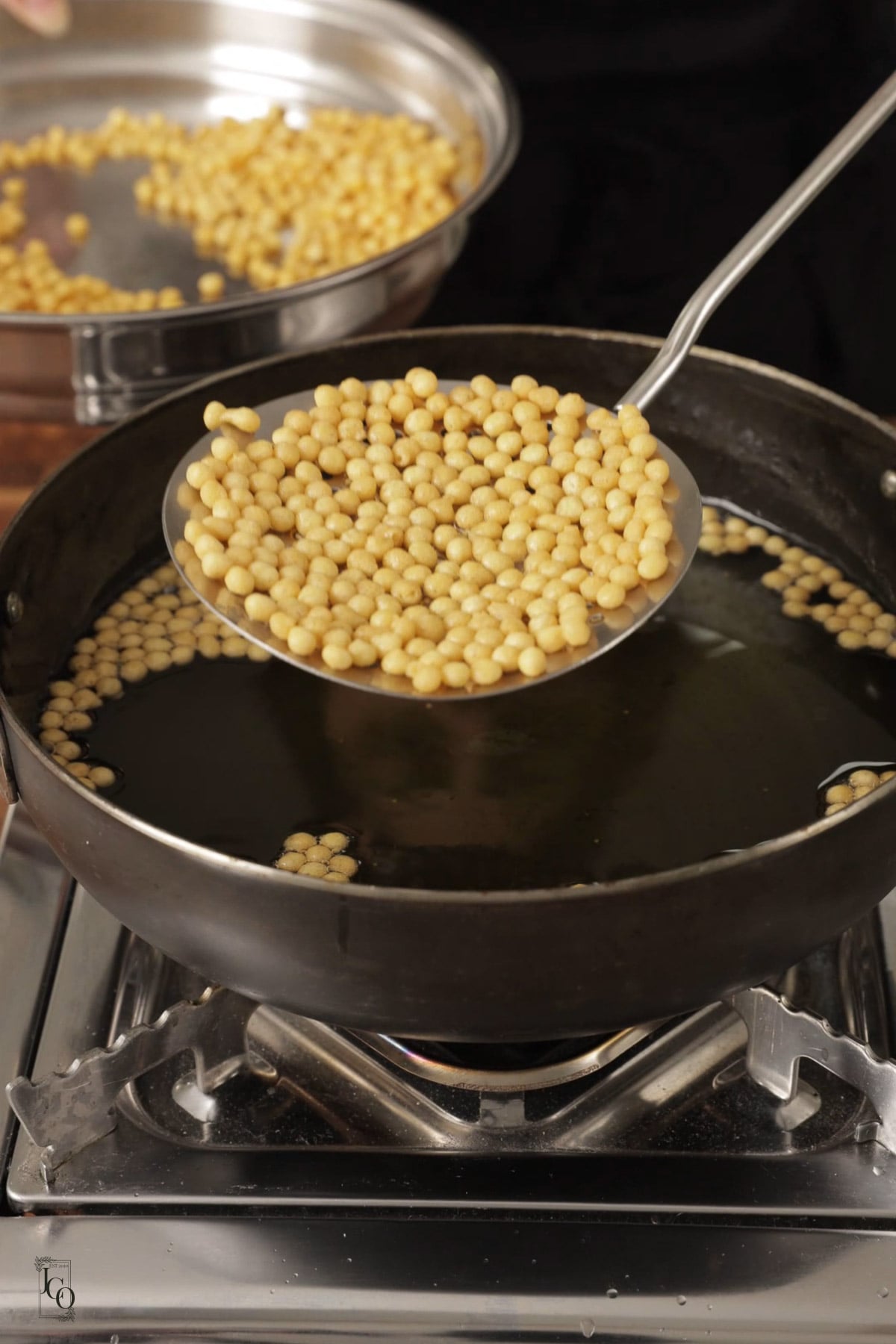
- Remove with a slotted spoon: Work fast so the boondi do not turn red/brown. Allow the oil to drain from the boondi.
Technique
How Do You Know The Fried Boondi Are Ready?
Before going into the syrup, they should have a little snap and bite, but shouldn’t be very crunchy. I wouldn’t fry them until deeply crisp.
If they are too hard, the syrup takes much longer to penetrate and the finished meethi boondi can retain a firm centre.
Keep the colour pale and yellow rather than golden-brown.
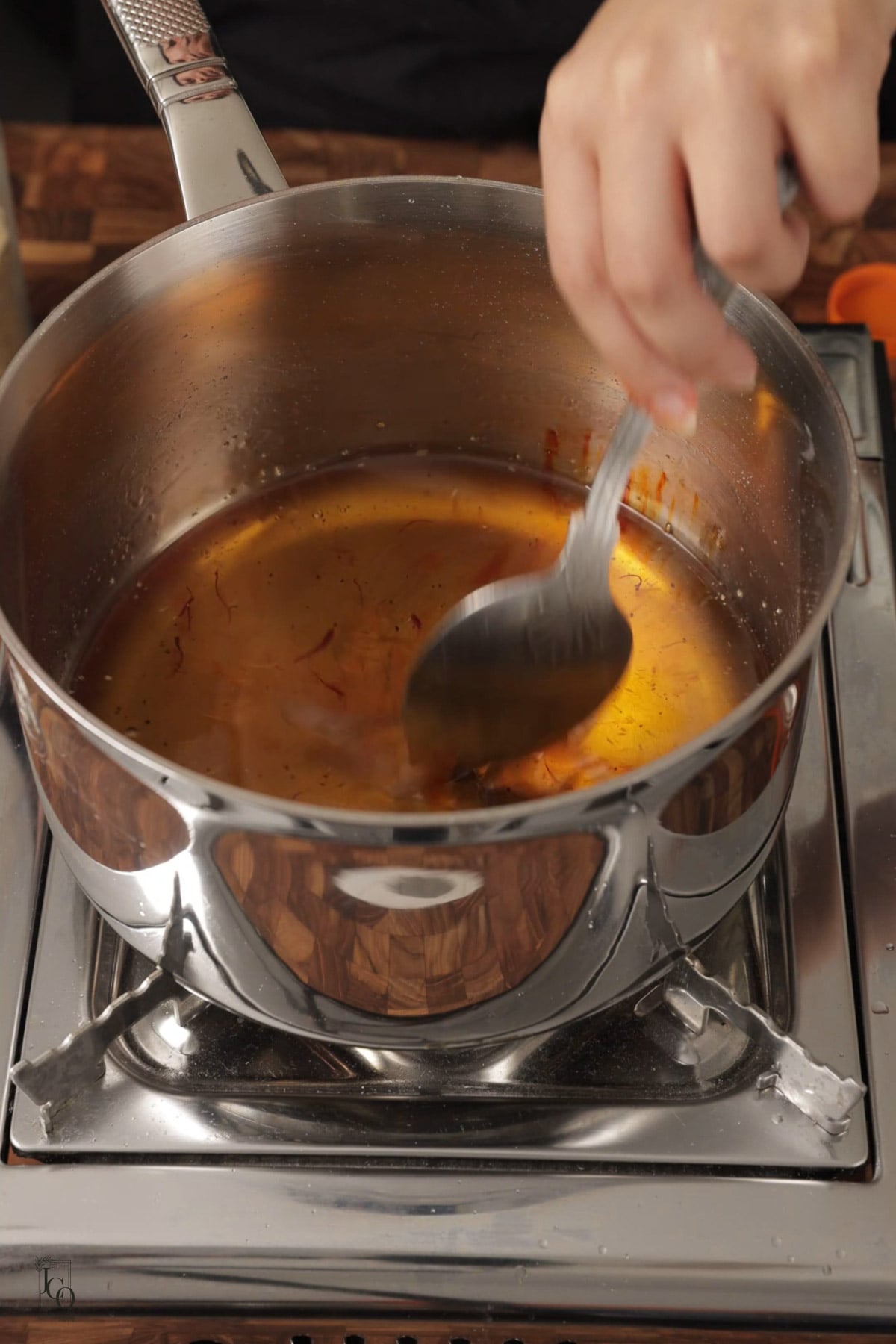
- Make the syrup: Heat the sugar and water with the cardamom and saffron until the sugar dissolves and the syrup becomes sticky. Optionally you can also add orange food colour. Do not cook it to a thread consistency. It should be similar to khoya gulab jamun syrup.
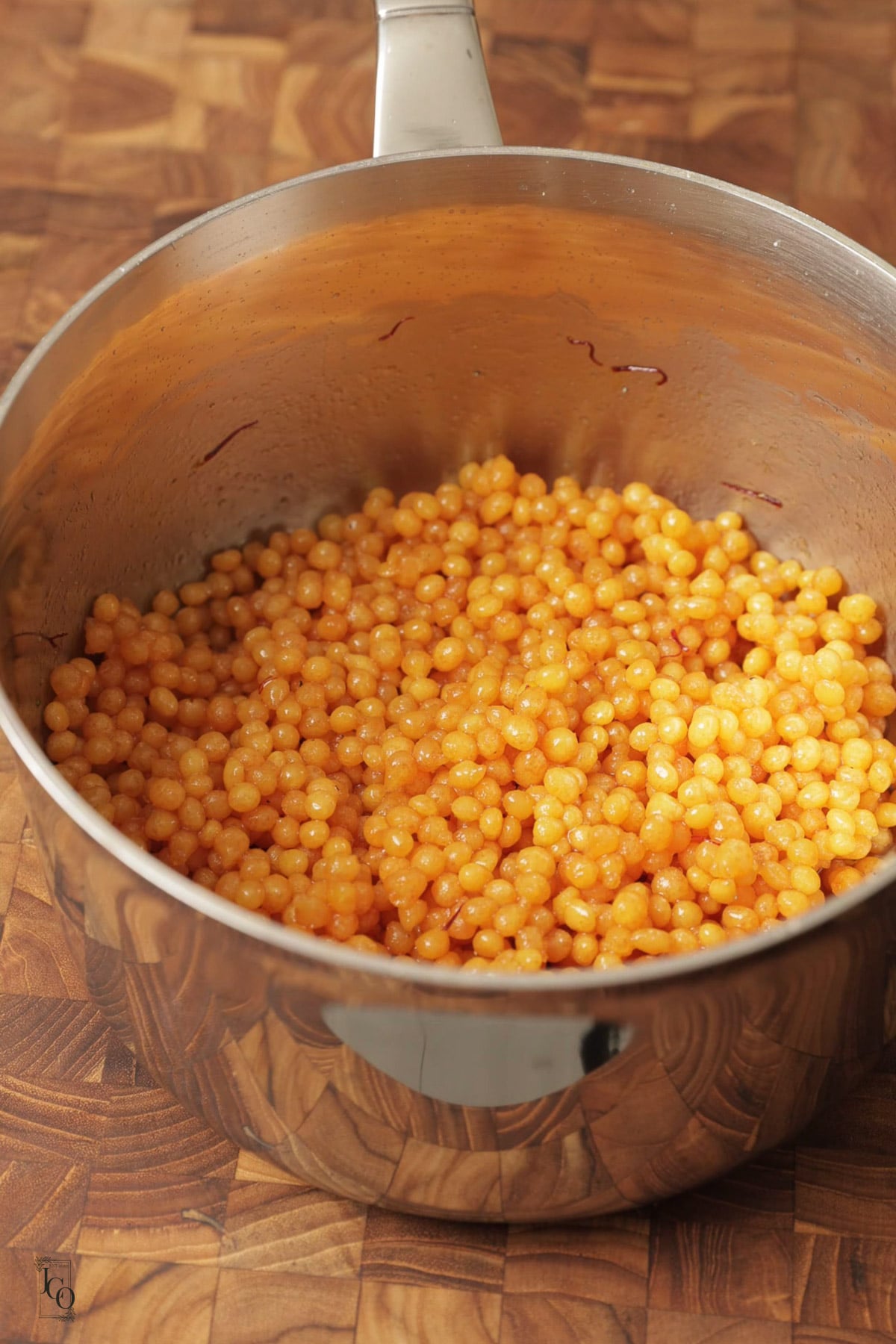
- Soak the boondi: Add the cooked boondi to the hot syrup. Leave for at least 4 hours if serving the same day. For the best texture, soak overnight. Finish with chopped nuts once the syrup has been absorbed.
Technique
How Long To Soak
This was the biggest thing I learnt from testing this batch.
After 1–2 hours, the syrup had sweetened the outside but hadn’t properly reached the centre. The boondi had an almost al dente bite inside.
At 4 hours, they were much better and absolutely fine if you need to serve them the same day.
But overnight was the best.
By then, they were soft and juicy all the way through while still holding their individual round shape.
So my recommendation is:
Minimum: around 4 hours
Best: overnight
What Should Finished Meethi Boondi Feel Like?
Soft all the way through, juicy in the centre and still recognisably individual pearls.
They shouldn’t be mushy or collapsing.
And they definitely shouldn’t have a hard, dry core.
That balance comes from three things working together: not over-frying, keeping the syrup fairly light, and giving it enough soaking time.
Make Ahead And Storage
Meethi boondi is actually better made ahead because the syrup needs time to penetrate the centre.
For the best texture, make it the day before and leave it to soak overnight.
Once ready, transfer to an airtight container and store according to your tested storage method.
As always if you make this recipe, be sure to leave me a comment, rate this recipe and tag me on Instagram @jcookingodyssey or #jcookingodyssey. I love seeing all your photos of my recipe recreations!
Don’t forget to follow me on social media using the buttons below – I can't wait to see you all there!
📖 Recipe

Sweet Boondi
Equipment
- Slotted spoon
- Boondi Jaro
Ingredients
Boondi
- 1 cup fine gram flour besan
- ⅛ teaspoon baking soda
- ½ cup water plus extra as needed
- oil for deep frying
Sugar syrup
- 1 cup sugar
- ¾ cup water
- pinch orange food colour optional
- ½ teaspoon cardamom powder
- 12 strands saffron
Garnish
- 3 tablespoon almonds and pistachios slivered
- 1 teaspoon edible rose petals
Instructions
Prepare Boondi Batter
- Sieve 1 cup fine gram flour and gradually add ½ cup water to form a smooth lump-free batter.
- Add ⅛ teaspoon baking soda and whisk in well.
Fry Boondi
- Heat oil in a heavy-bottomed kadai until hot.
- Hold a perforated spoon or a special boondi jharo about 10cm above the oil and pour 2 to 3 spoons of batter over it.
- Allow the batter to fall into the oil naturally to form small boondi pearls.
- Fry until golden but not becoming brown, then remove using another perforated spoon.
- Clean the jhaaro between batches to ensure you achieve round boondi. Repeat with remaining batches. Set aside.
Prepare Sugar Syrup
- In a pan, dissolve 1 cup sugar in ¾ cup water.
- Heat until the syrup feels sticky to touch but isn't forming any strings. Add 12 strands saffron and mix.
- Add a pinch orange food colour and ½ teaspoon cardamom powder.
Soaking
- Add the fried boondi into the hot sugar syrup.
- Let it soak for a minimum of 4 hours or ideally overnight until fully coated and softened.
Garnishing
- Add 3 tablespoon almonds and pistachios slivers and 1 teaspoon edible rose petals and mix well.
Video
Notes
- Batter check: Drop a tiny amount into cold water. It should float immediately, then gradually sink. The batter should also fall naturally through the jhaaro without needing to be pushed.
- Adjust as you fry: Besan batter thickens while standing. Add water only ¼ teaspoon at a time if needed between batches.
- Jhaaro: Hold approximately 10cm above the oil and wipe both sides clean after every batch.
- Batch size: Use small ladlefuls so the first and last drops cook evenly.
- Oil: Keep at medium heat. If too hot, the first boondi brown before the rest of the batch has dropped.
- Frying: Cook until lightly crisp with a little bite, not deeply crunchy or brown.
- Syrup: Keep it sticky but below thread consistency so it can penetrate the boondi.
- Soaking: Allow at least 4 hours. Overnight gives the softest, juiciest centre.
- Yield: 1 cup besan produced approximately 400g finished meethi boondi in my tested batch.
Nutrition
PLEASE NOTE: Nutritional values are estimated by a computer and may vary based on ingredients and portion sizes. For personalised dietary advice, please consult a qualified healthcare professional.
Share on Facebook Pin This Recipe Share by Text

Hayley Dhanecha says
These special tips have been a game changer for making round and soft boondi. I feel more confident every time I prepare a batch.
halal foodie says
thanks for a nice n descriptive post Jags, v helpful, i esp. like the pic of boondi in ur hand ...nice clicks
jcookingodyssey says
Thank you ladies...@ halal foodie, that hand is not mine, it's my daughter's 🙂
Nisha says
Beautiful looking boondi's
Priya Suresh says
Its been ages i had these sweet boondis, excellent Jags.
Aarthi says
boondhi looks so nice
Savi-Ruchi says
am yet to try making boondi at home. Yours look perfect!