
This Jamanvar Bateta nu Shaak is a Gujarati wedding-style potato curry with tender, skin-on potatoes in a rich, gently spiced, sweet-and-sour gravy. Whole spices, tamarind and jaggery give the raso its distinctive flavour, while floury potatoes naturally thicken it. It's made for scooping up with hot, puffy poori!

Recipe Summary: Rasawalu Bateta nu Shaak
- ✅ Recipe Name: Bateta nu Shaak
- 🕒 Ready In: approx 25-30 minutes
- 👪 Serves: 6 (easy to scale)
- 🍽 Calories: 396 per serving
- 🥣 Main Ingredients: Potatoes, whole spices, tamarind, jaggery and spice powders.
- 📖 Dietary Info: Vegan and vegetarian.
- ⭐ Why You'll Love It: It brings the flavours of a Gujarati wedding feast home, with plenty of rich raso for poori!
SUMMARIZE & SAVE THIS CONTENT ON
Jump to:
- Recipe Summary: Rasawalu Bateta nu Shaak
- What Makes This Wedding-Style Bateta Nu Shaak Different?
- Gujarati Potato Curry Important Ingredients notes
- The Secret To Perfect Raso
- Let's Make It In Steps
- How Do You Know The Potatoes Are Perfectly Cooked?
- What To Serve With Jamanvar Bateta nu Shaak
- Make Ahead and Storage
- Other Gujarati Shaak Recipes
- 📖 Recipe
Note – This recipe has been updated from our recipe archives with new images and content, but the recipe remains the same. First published in April 2016.
My Mum and Grandma remember eating this style of bateta nu shaak at local weddings in Gujarat. Just picture it piping hot served with undhiyu, bowls of khatti meethi dal, rice, poori and farsan like lilva kachori or Gujarati bateta vada. And they aren't finished yet, there's still sweets like shrikhand, creamy basundi or dhilo mohanthal.
Someone please invite me to their wedding!
Meanwhile, in the UK I grew up enjoying our family's version on special occasions, usually with tikhi masala poori or masala bhakhri, sometimes vaal nu shaak or kala chana nu shaak, and a sweet like churma ladoo with sugar.
It's one of those dishes that immediately makes a meal feel like a proper jamanvar!
What Makes This Wedding-Style Bateta Nu Shaak Different?
This isn't the same as the simple potato shaak (like bateta ni chips nu shaak), we'd make for an everyday meal.
The whole spices are a big part of the flavour. I use mustard seeds, cumin, cloves, cinnamon, bay leaf and star anise together, rather than relying on ginger, green chilli or tomato. Of course, this is a no onion-garlic curry.
There's also more oil than in our everyday version, which helps carry those spices through the gravy.
Then comes the khattu-mithu balance from tamarind and jaggery.
The finished curry shouldn't be intensely spicy or cloyingly sweet. It should have a rich, rounded flavour, with enough gravy to enjoy with poori.
If you're after a simpler, dry potato dish for an everyday meal, try my sukhi batata bhaji instead.

Gujarati Potato Curry Important Ingredients notes
You'll find the full ingredients list with measurements in the recipe card below, but these notes are worth reading first. They explain the small ingredient choices, swaps and texture cues I've learnt from making this recipe.
Potatoes
Floury potatoes work best because some of their starch breaks down into the gravy as they cook.
An all-rounder will work, but I wouldn't choose a firm, waxy potato for this particular shaak. You'd lose some of that natural thickening.
Wash the potatoes thoroughly and leave the skins on. This is how my Mum and Grandma remember the wedding-style version.
Leaving the skins on also saves time when you're cooking a large quantity and avoids peeled potatoes sitting around and discolouring. Honestly, the skin won't alter the flavour or texture of the shaak - it remains so so delicious, I promise!
I cut the potatoes into fairly large chunks. Small pieces are more likely to collapse into mash before the gravy is ready.
Whole spices
I use mustard seeds, cumin seeds, cloves, cinnamon, bay leaf and star anise, along with dried red chillies and hing which work together to create its rich flavour. I can't say exactly which combination every wedding cook in Gujarat uses, but this is ours!
Ground spices
Kashmiri chilli powder, turmeric, ground cumin and coriander, and garam masala build the flavour of the gravy.
This isn't meant to be a fiercely spicy curry. Adjust the chilli powder according to the brand you're using, as heat levels vary considerably.
Tamarind (imli)
I prefer soaking a little tamarind in hot water, then mashing it to extract its tangy liquid.
Add it once the potatoes are nearly cooked rather than right at the beginning.
The amount you need depends on how sour the tamarind is and what else you're serving.
Jaggery (gor)
Cut the jaggery into small pieces so it dissolves easily in the hot gravy.
I add it once the potatoes are cooked, then taste and adjust the sweet-and-sour balance.
If this shaak is the main event, I'll make the khattu-mithu flavour more pronounced. If it's part of a thali with sweet Gujarati dal, vaal or other sweet dishes, I ease back on the jaggery so the whole meal feels balanced.
A note on water quantity
Start with approximately 1½ - 2 cups for 500g potatoes and add more as they cook. I usually need at least 2-3 cups in total, but the exact amount depends on the potatoes and how quickly the gravy reduces.
The aim is plenty of cohesive raso, not a watery sauce with potatoes floating in it.
The Secret To Perfect Raso
The potatoes do most of the thickening for you.
As they cook, the edges soften and release starch into the gravy. The jaggery also helps give the finished raso a little body.
Wait until the potatoes are cooked before deciding whether the gravy needs extra thickening. If it still looks thin, mash just one or two potato chunks against the side of the pan and stir them through.
That's usually plenty for a family-sized batch.
You don't need flour, besan or any other thickener!
The finished gravy should flow from a spoon but still coat the potatoes. It shouldn't look watery or separate into liquid and potato pieces.
And don't panic if the potato skins begin to peel away slightly while cooking. Together with the gently breaking edges, that's one of the signs I look for when the potatoes are perfectly cooked.
Let's Make It In Steps
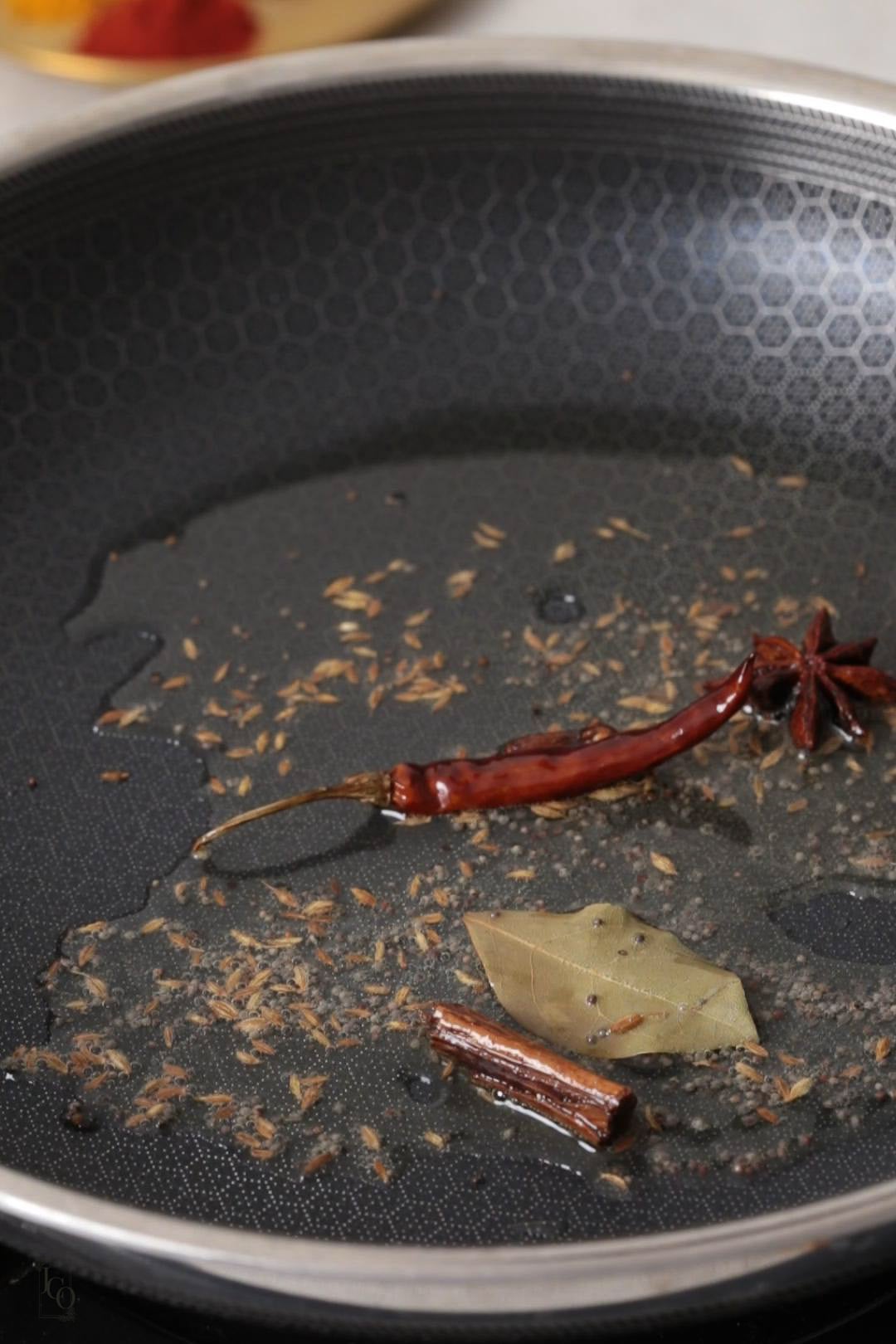
- Temper the whole spices: mustard seeds, cumin seeds, bay leaf, cinnamon, dried red chilli and star anise.
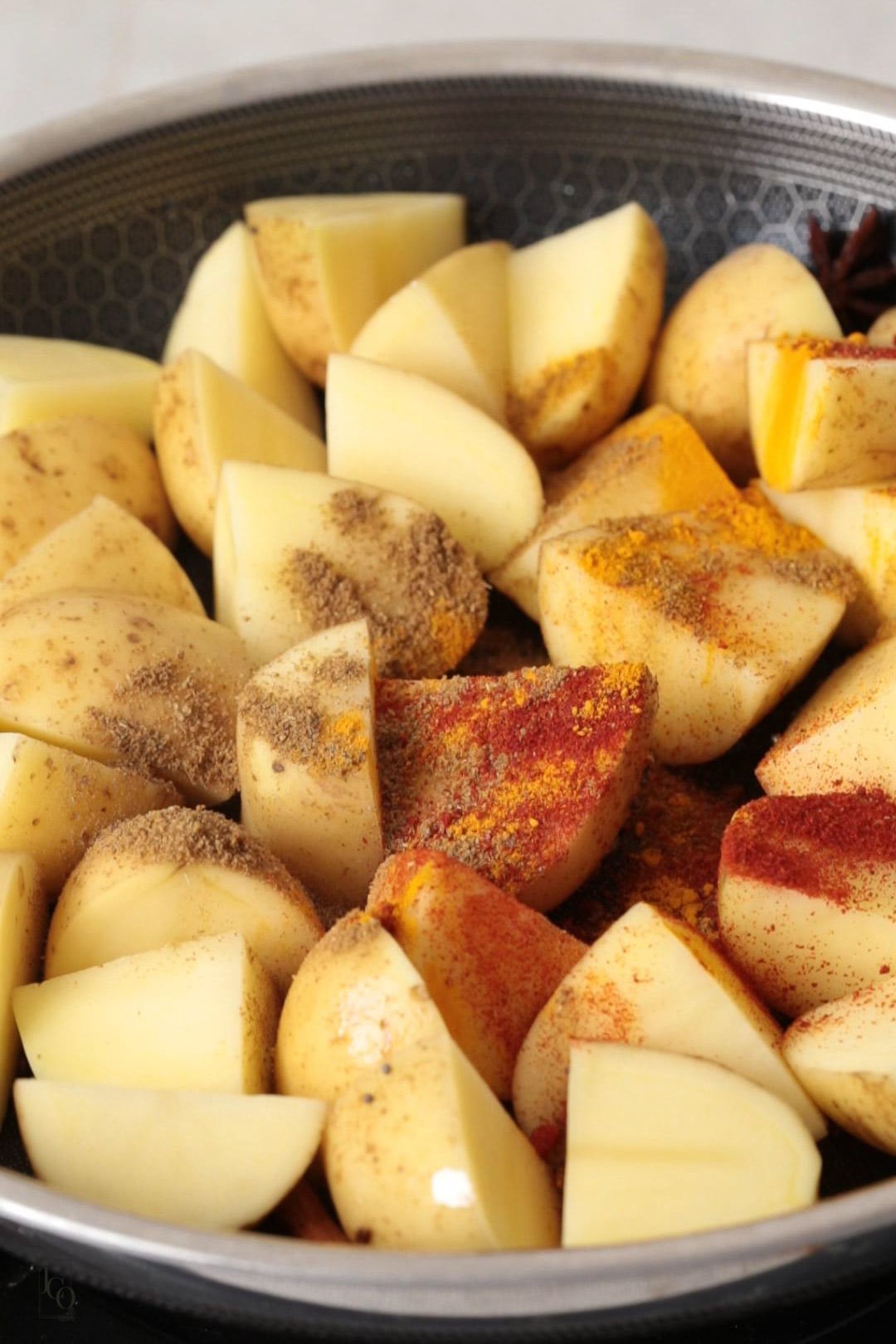
- Add potatoes and spices: Once the whole spices are sizzling, tip in potatoes (see the large chunks) and sprinkle over the spice powders.
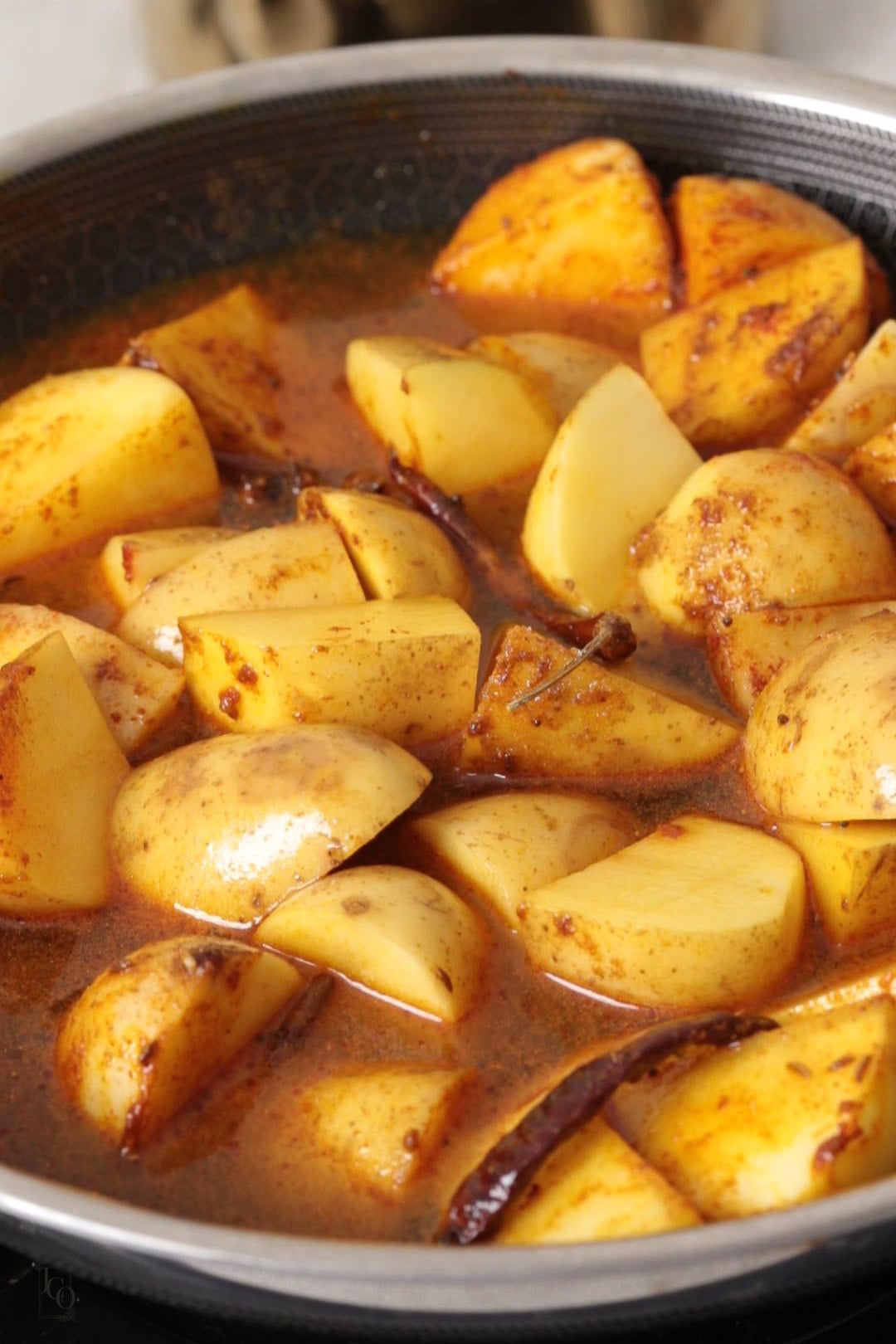
- Add water: Add sufficient water to cook the potatoes and keep a gravy.
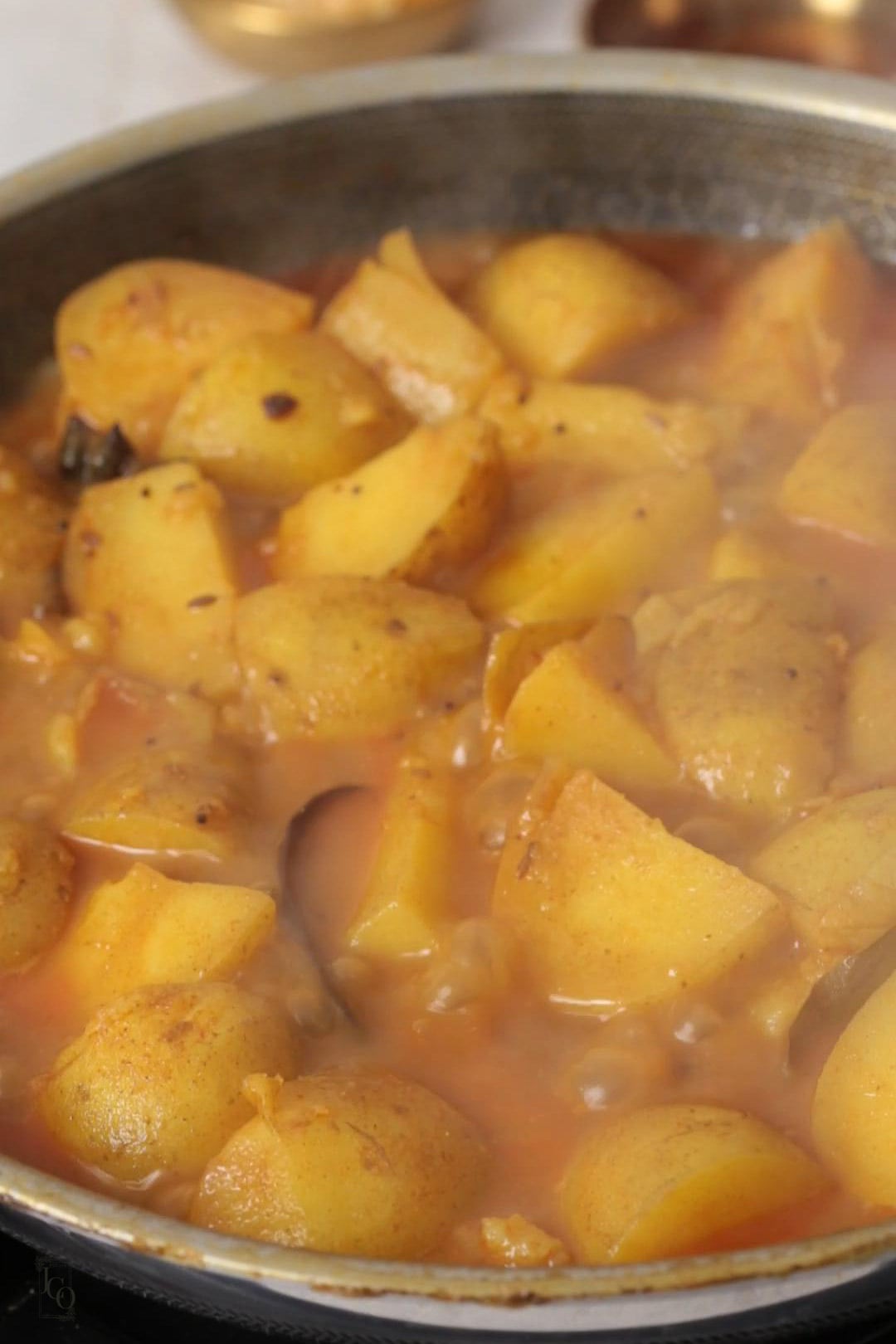
- Simmer: Cook until potatoes are tender, softening at the edges and the skin is falling away.
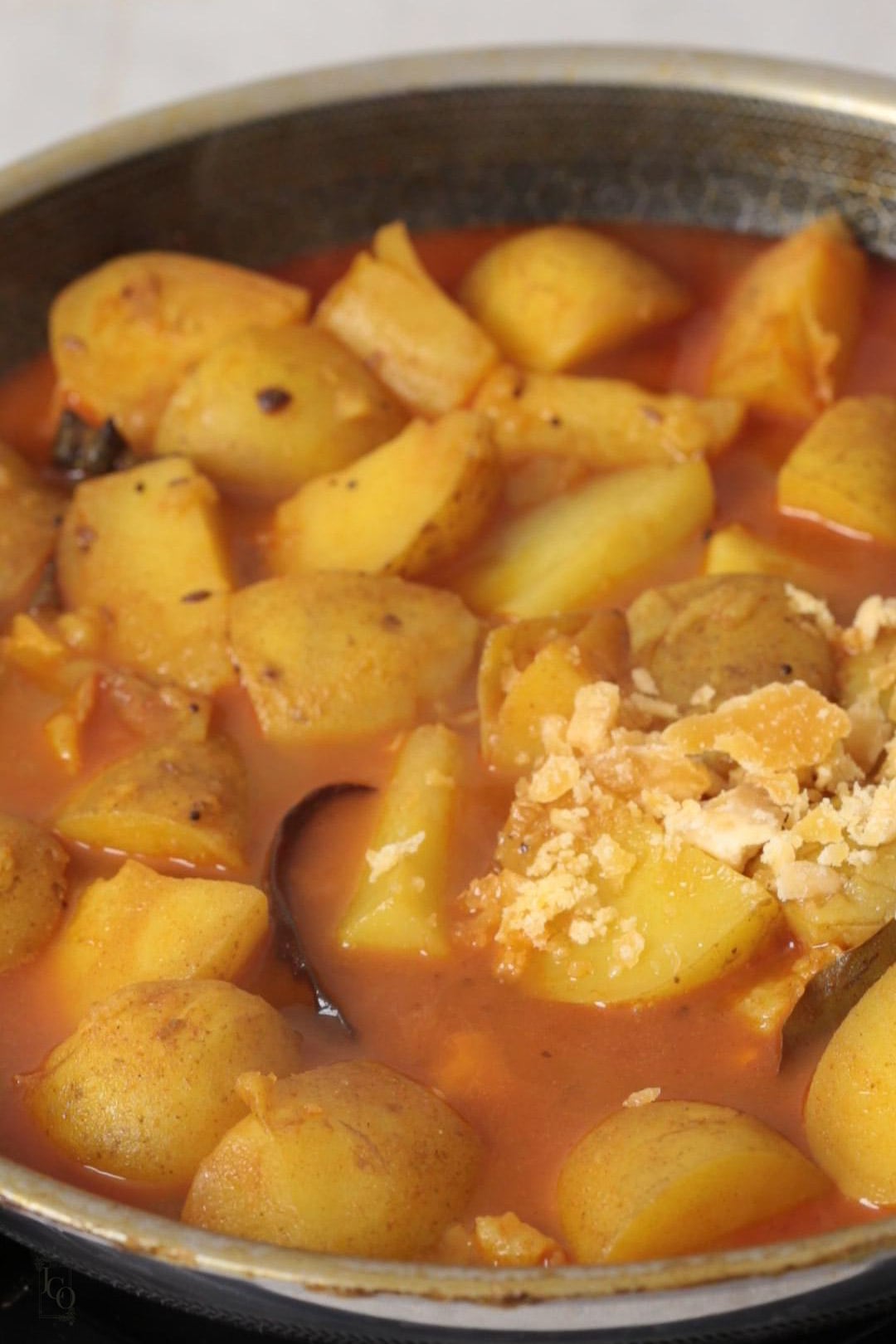
- Add imli and jaggery: Stir in jaggery (small pieces so easy to dissolve) and imli that has been soaked in hot water.
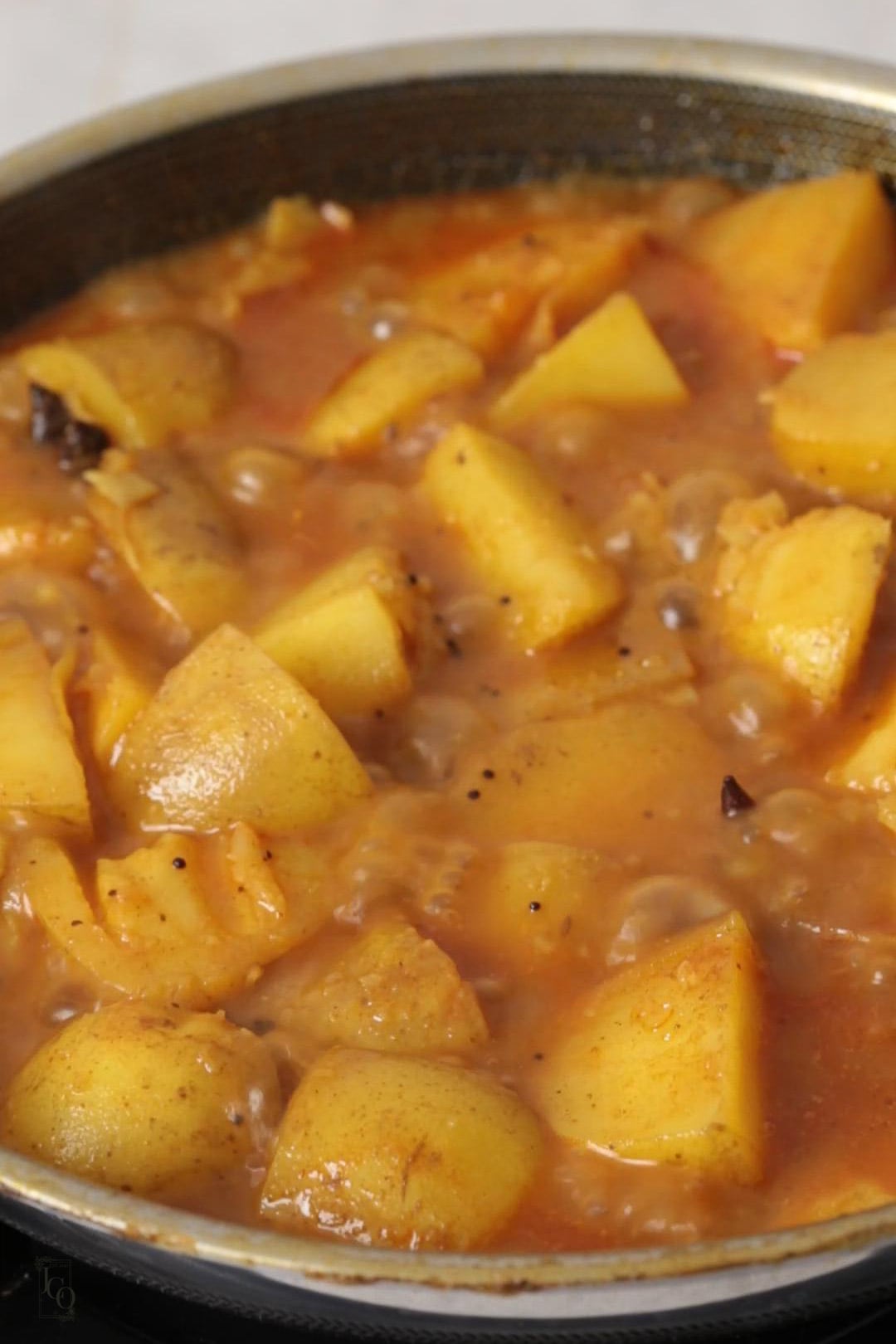
- The gravy will thicken: As soon as the jaggery dissolves, remove from the heat. You should see a nice and thick rasawalu shaak.
Technique
How Do You Know The Potatoes Are Perfectly Cooked?
Look at the edges rather than just testing the middle.
The potato chunks should be completely tender, with the edges beginning to break down and some of the skin gently peeling away.
They should still hold their general shape, though. You want recognisable chunks of potato, not a pan of mashed potatoes.
That's why I cut them slightly larger than I would for an everyday shaak, especially when making a bigger batch.
What To Serve With Jamanvar Bateta nu Shaak
My favourite pairing is hot Gujarati bhakhri or poori.
For a special-occasion Gujarati thali at home, we add add vaal, dal, cabbage sambharo, masala fulwadi, methi na gota and gajar marcha nu atanu. We then usually pick a Gujarati mithai based on the season.
Often you'll see karela aloo in occasion thalis too - but not in mine!!!
I adjust the jaggery in this curry according to the rest of the menu. If there are already several sweet Gujarati dishes on the plate, I don't want every single one competing to be the sweetest!
For more ideas on building a complete meal, browse my Gujarati thali guide.
Make Ahead and Storage
This is a useful shaak to make ahead, and I think the flavours are lovely the next day.
The gravy thickens considerably as it sits because the potatoes continue to absorb moisture.
When reheating, add a splash of water and warm it gently on the stove until piping hot. Adjust the consistency before serving rather than making the original batch too watery.
Cool leftovers promptly and refrigerate them in an airtight container.
I don't freeze this curry because the potatoes lose their texture after defrosting.

Other Gujarati Shaak Recipes
Fulavar Bateta Nu Shaak (cauliflower and potato)
As always if you make this recipe, be sure to leave me a comment, rate this recipe and tag me on Instagram @jcookingodyssey or #jcookingodyssey. I love seeing all your photos of my recipe recreations!
Don’t forget to follow me on social media using the buttons below – I can't wait to see you all there!
📖 Recipe

Gujarati Rasawalu Batata Nu Shaak
Ingredients
- 5 large potatoes
- ⅓ cup oil
- 1 teaspoon cumin seeds
- 1 teaspoon mustard seeds
- ¼ teaspoon hing
- 2 dried red chillies
- 1 bay leaves
- 1 star anise
- 1 cinnamon small piece
- 5 cloves
- salt
- 2 tablespoon jaggery
- 1 tablespoon tamarind pulp
- 1 tablespoon kashmiri chilli powder
- 1 teaspoon turmeric powder
- 2 tablespoon ground cumin and coriander
- ½ teaspoon garam masala
- 3 tablespoon coriander leaves
Instructions
- Soak 1 tablespoon tamarind pulp in 2-3 tablespoon hot water for 10-15 minutes. Mash it into the water to extract the flavour, then strain and use in the recipe in the later steps.
- Wash 5 large potatoes thoroughly and cut into fairly large chunks, leaving the skins on.
- Heat ⅓ cup oil in a kadai over medium heat. Add 1 teaspoon mustard seeds then 1 teaspoon cumin seeds. Once they crackle, add ¼ teaspoon hing, 2 dried red chillies , 1 bay leaves, 1 star anise, 1 cinnamon, 5 cloves. Sauté briefly until fragrant.
- Add the raw potato chunks and stir to coat them in the spiced oil.
- Sprinkle 1 tablespoon kashmiri chilli powder, 1 teaspoon turmeric powder, 2 tablespoon ground cumin and coriander, ½ teaspoon garam masala and salt over the potatoes. Stir briefly, then immediately add approximately 2 cups of water so the spices don't burn.
- Cover and cook until the potatoes are nearly tender, stirring occasionally. Add more water as needed to maintain a generous amount of gravy. Continue cooking until the potatoes are completely tender. Their edges should begin to break down, and the skins may start peeling away slightly.
- Add the strained tamarind liquid, 2 tablespoon jaggery, cut into small pieces, and stir until dissolved. Taste and adjust the sweet-and-sour balance.
- Check the gravy. If it is too thick, add a little water. If it needs thickening, mash one or two potato chunks against the side of the pan and stir them through.
- Simmer briefly until the raso is cohesive and coats the potatoes without being watery. Switch off the heat and leave to rest for a few minutes.
- Garnish with chopped 3 tablespoon coriander leaves and serve hot.
Video
Notes
- Potatoes: Floury potatoes work best. Keep the skins on and cut into large chunks so they don't turn to mash.
- Perfectly cooked: The chunks should be tender with slightly broken-down edges and skins beginning to peel away.
- Ground spices: Add them over the potatoes, not directly into hot oil, to prevent burning.
- Tamarind and jaggery: Add tamarind when the potatoes are nearly cooked and jaggery once they are cooked. Adjust the balance to suit the rest of your thali.
- Water: Start with approximately 2 cups for 5 large potatoes. Add more as needed; around 3 cups or more may be required.
- Raso: The gravy should flow but still coat the potatoes. Mash just one or two chunks if it needs thickening.
- Make ahead: The gravy thickens as it sits. Reheat gently on the stove with a splash of water.
- Freezing: Not recommended, as the potatoes lose their texture.
Nutrition
PLEASE NOTE: Nutritional values are estimated by a computer and may vary based on ingredients and portion sizes. For personalised dietary advice, please consult a qualified healthcare professional.
Share on Facebook Pin This Recipe


Debbie says
This looks very comforting, and sounds delicious! - VA for Denise Wright
Tina Dawson says
I've been looking for a good potato curry to make this weekend - will try this one!
Beth says
This looks so delicious! Very interesting history lesson you shared with us! It's a shame that sometimes traditional dishes are lost!
Unknown says
Sounds like a great flavor combo!
Unknown says
This sounds so incredibly delicious. I am so excited to try this!