
Aate ka Halwa is a popular Indian sweet that is made with whole-wheat flour, ghee and sugar. We have added mawa/khoya in this wheat flour halwa for an extra luxurious Shahi touch. Just 4 main ingredients and 20 minutes are required to make this perfect atta halwa with a divine khasta and melt-in-the-mouth texture.

Ghao no Siro, Atta Halwa, Aate Ka Halwa, Wheat Flour Halwa, Gehun ka Halwa, Godhumai Halwa, Atta ka Sheera. Whatever you choose to call it, it is a classic in Indian homes anytime throughout the year.
Wheat flour halwa is a homely Indian sweet that can be made for special occasions such religious festivals or simply enjoyed after a meal. It is a no-frills mithai, made with basic ingredients, making it the perfect recipe to make last-minute as a warming treat.
This great recipe is often enjoyed during the winter season. It is a favorite dessert of mine as I am always on the lookout for easy recipes.
This unique aate ka halwa recipe is made with rich khoya and an abundance of mixed nuts to make it a Royal or Shahi halwa. It still follows the traditional recipe of this popular halwa.
Aate ka Halwa is known as Ghao no Siro in Gujarati. In North India, this wheat halwa recipe is called Aate ka Halwa.
I can eat these super delicious Gujarati sweet Sukhdi and Almond Gor Papdi any time, which is also made with wheat flour.
Gurudwara style Aate ka Halwa Recipe - Kada Prasad
Kada Prasad is the name given to Aate ka Halwa that is served in Gurudwaras. Gurudwara (Sikh temple) translates as the door to the guru.
Kada prashad or karah prasad is served to worshippers as one cannot come back empty handed after visiting the temple.
Kada prashad is made with four simple ingredients, similar to aate ka halwa though the proportion and method of cooking is slightly different. A proportion of 1:1:1:3 of whole wheat flour, ghee, sugar and water is required. In some recipes, a few tablespoons of semolina or sooji is also added.
This particular atta ka halwa recipe is a little different from Gurudwara style halwa because it also contains mawa and nuts. It also has a more danedar texture or grainy texture than the kada prashad that I have tried.
Why add khoya/mawa?
Mawa (or khoya) is dried evaporated milk solids that can be used in Indian cuisine, mainly desserts or curries. It is traditionally made by simmering whole milk in a kadai until the moisture evaporates leaving behind milk solids.
The addition of mawa to Indian sweets provides a richness, nuttiness and grainy (danedar) texture to the dish. The khoya is usually crumbled or grated and folded into the mixture of the sweet.
Normal recipes of aate ka halwa are usually smooth and stickier but the addition of khoya adds a graininess which makes it so much better to eat. The halwa becomes melt-in-the-mouth and also has a slight creaminess and milky flavour.

When to serve Aate ka Halwa
Aate ka Sheera is often served during Indian festivals and Religious occasions such as Raksha Bandhan, Asthami and Navmi feast during Navratri, Ganesh Chaturthi and Bhaidooj.
Often it is prepared in the Winter months for breakfast or chilly evenings as a warming and energy providing sweet.
It can be eaten after a meal or as a treat at anytime in the day.
I love to eat this halwa warm whilst the ghee is still melted!

Aate ka Halwa Ingredients
The measurements or ratio of wheat flour, ghee, sugar and water that I have used is 1:1:0.75:3
For full measurements, head to the recipe card below where you can also leave a star rating
Main ingredients
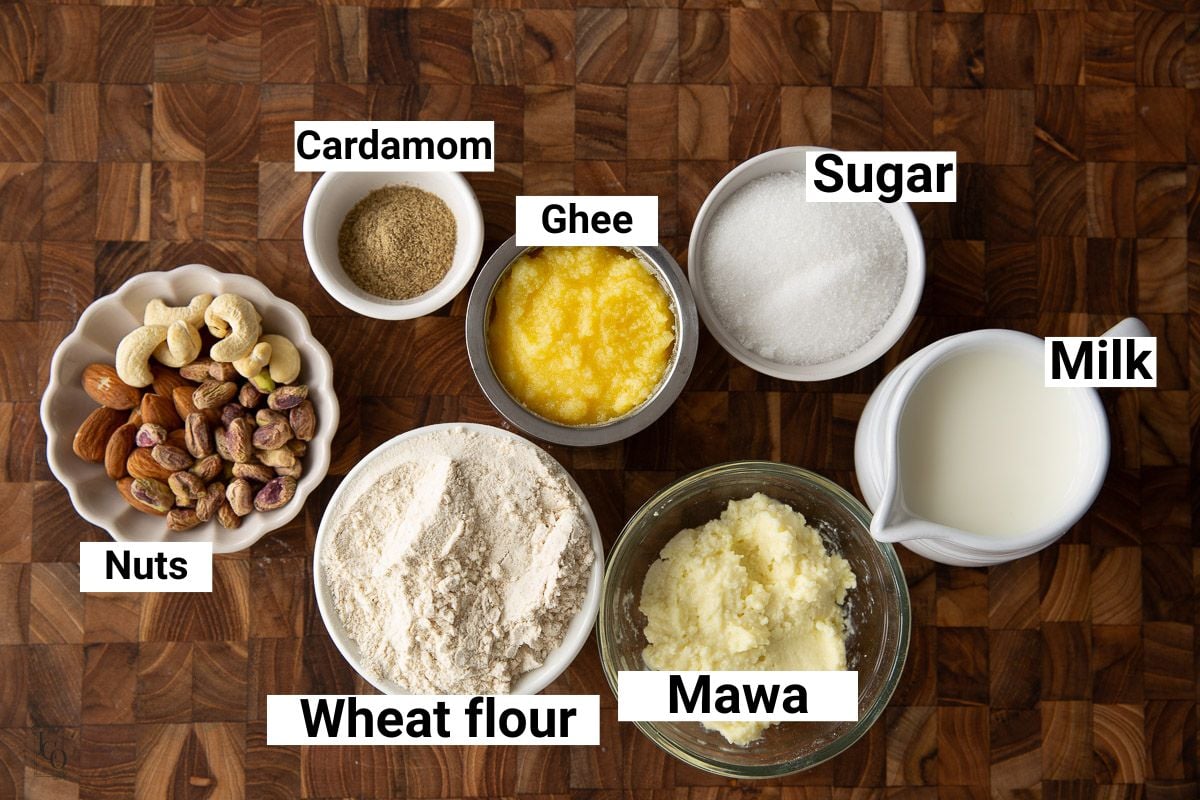
Wheat flour – Wheat flour is the main ingredient in this wheat flour halwa recipe. You need to use chapati atta, the same type used for round and soft Gujarati rotlis.
I have used whole wheat flour.
For the best tasting halwa, do not use multigrain flours.
Do not use all-purpose flour or plain white flour as it does not have much flavor and is the wrong flour for this recipe.
Ghee – provides a nutty aroma and richness. Use desi ghee also known as pure butter ghee for this recipe. I like to use homemade desi ghee for the best flavour. Ghee is easily available in most supermarkets and definitely within South Asian grocery stores.
Note that products called vegetable ghee are vegan as they are made from hydrogenated vegetable oil.
Ensure the ghee is in liquid state or melted prior to measuring. If its cold, often ghee solidifies but leads to inaccurate measurements
Sugar – use white sugar for this recipe as the sweetener. Granulated sugar is fine. This halwa can be made with jaggery or gur though this has a different flavour.
Khoya or Mawa – the star ingredient of this recipe. You can either make your own homemade khoya from milk powder or buy it from the store. It is very easy to make homemade khoya.
You can leave out khoya if you want but you miss out on a unique aate sheera recipe.
Flavourings
Cardamom powder – a little pinch of ground cardamom powder goes a long way and is a staple flavouring in so many Indian sweets. I use green cardamom powder.
Nutmeg powder – I love the flavour of nutmeg in both Indian and Western recipes. Either use nutmeg powder or grate a little fresh nutmeg.
Mixed nuts – (known as dry fruits in India) Cashew, almond, pistachio are all brilliant in this halwa and give it a royal touch. You want to finely chop the nuts into slivers but you could leave them whole if you wish but they will taste raw.
If you keep the whole, fry the nuts in a little ghee prior to adding.
You can also add Charoli which I have added into this recipe. Charoli are also called chironji seeds or almondettes and are added to sweet and savoury Indian foods in a similar way to nuts. They are found in South Asian or Indian stores.
Optional:
Edible flower petals – petals such as rose give a pop of colour!
Gluten-free Aate Ka Halwa
Aate ka Halwa is made from wheat flour which contains gluten so it is not gluten-free.
However a similar recipe can be made using Rajgiro flour to make Rajgiro Halwa which is gluten-free and can also be eaten during fasts.
Aate ka Halwa for Prasad
If serving this halwa as prasad, garnish with some holy basil leaves also known as tulsi patta. Holy basil (Ocimum tenuiflorum), a flowering plant of the mint family, is native to the Indian subcontinent and grows throughout Southeast Asia.
Note - It is different to Italian Basil.
The holy basil plant is revered in Hinduism as a manifestation of the goddess Lakshmi (Tulsi) and the leaves are often using for garnishing in prashad.
For Satyanarayana Katha, we serve Sooji no Siro (suji ka halwa) with Banana.

How to make Aate ka Halwa/Wheat flour halwa
The basic recipe is made by roasting wheat flour in an abundance of ghee until the flour is aromatic and lightly browned. Hot water is then added followed by sugar and the mixture is cooked for a few minutes. Crumbled khoya is then folded in and flavourings such as spice powders and nuts are added.
Step by step recipe instructions with video:
Roasting the flour
Take a heavy bottom pan or kadai either with or without a non-stick coating
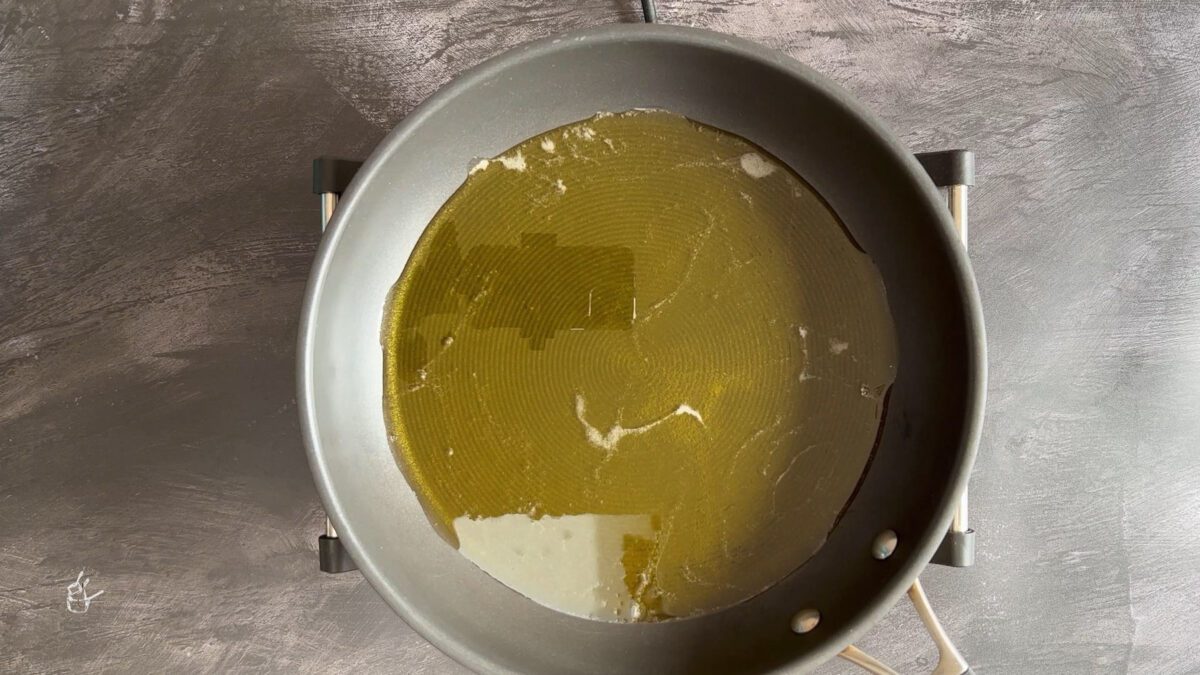
Over a medium flame, add the ghee
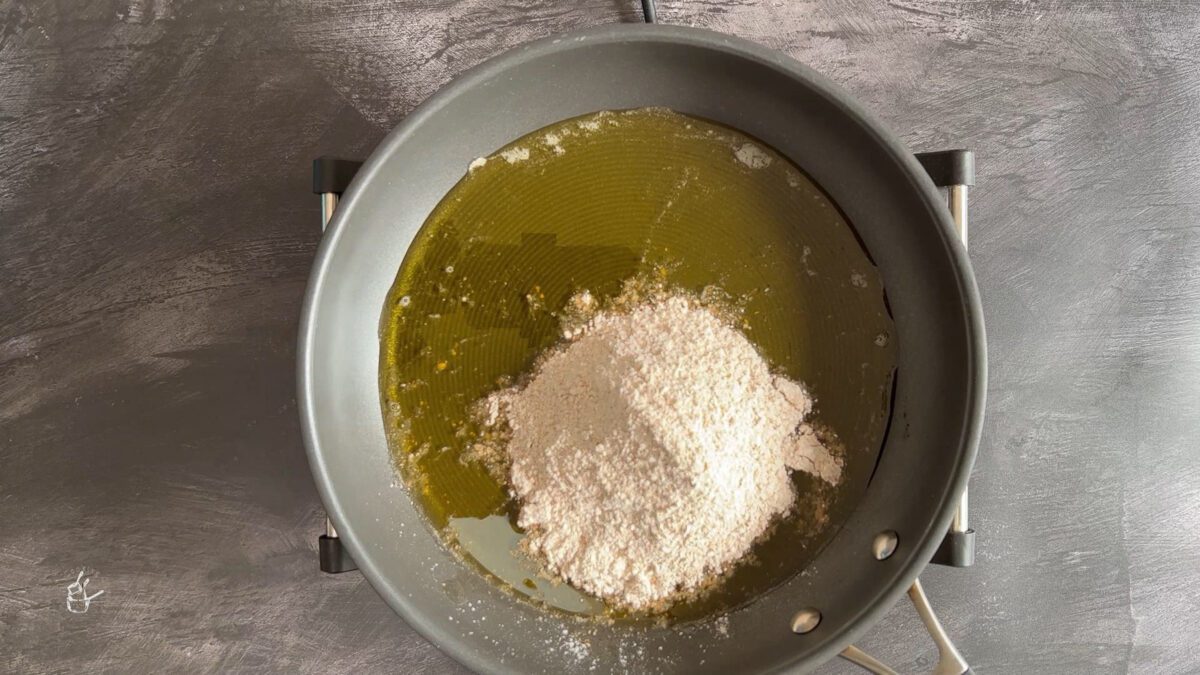
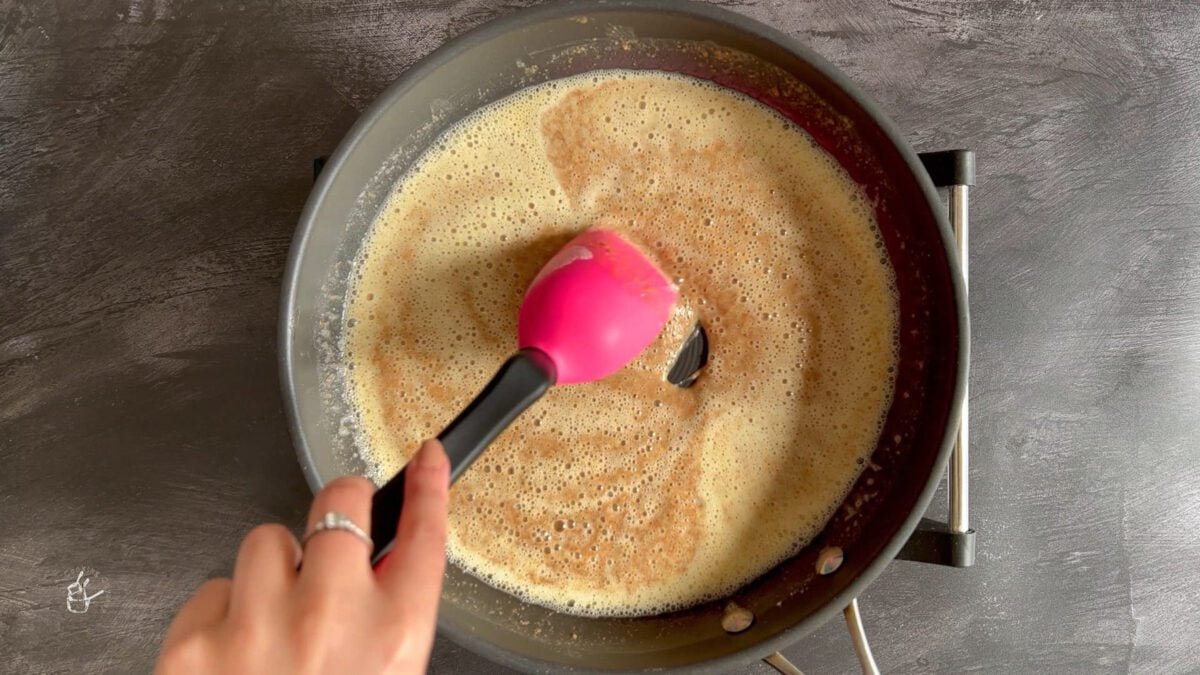
As the ghee melts, tip in the flour/atta. Mix this well and continue to mix on a low flame or low-medium heat
Take your time with this step as the best halwa is made by slow roasting the flour until you get a nice aroma. Keep the heat low-medium as high heat will cause the flour to burn and not cook. The flour will discolour and still taste raw.
You will see that the ghee begins to bubble and the colour of the ghee may lighten initially, this is normal. Keep going.
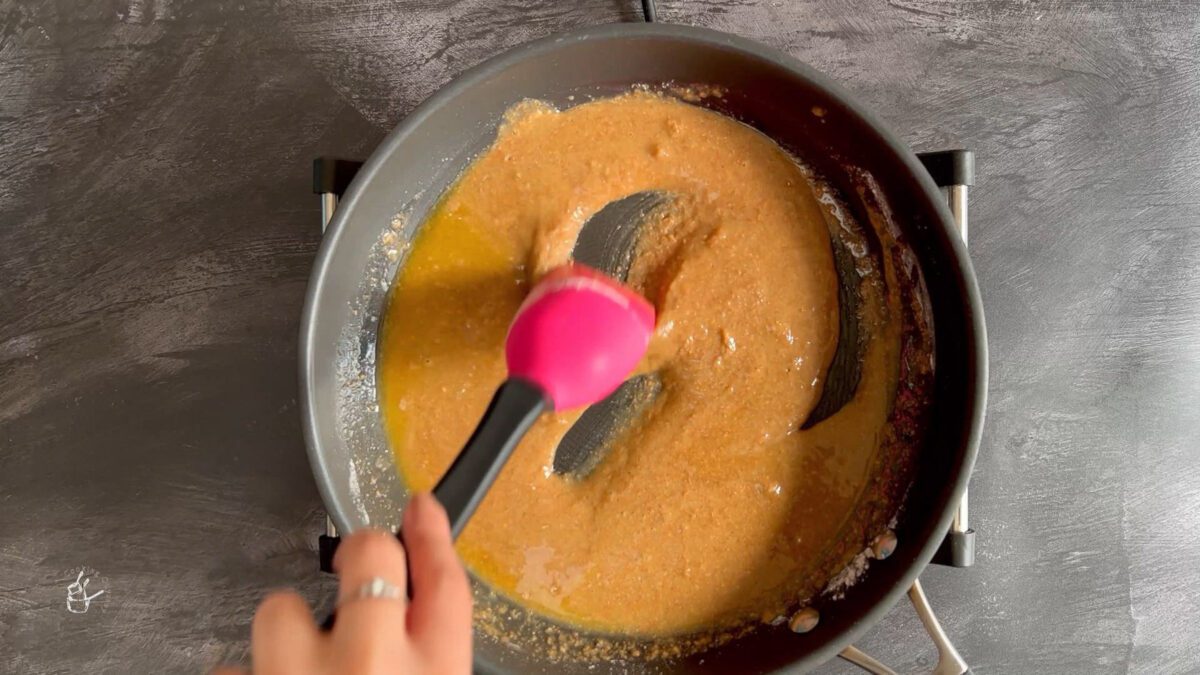
It will take around 5 – 10 minutes then you will see a color change (the flour and ghee mixture darkens and becomes golden brown) and will begin to smell roasted. The flour and ghee may separate and this is also an indication that the flour is well cooked.
Do not over-cook the flour mixture otherwise it will become bitter.
Add water and sugar
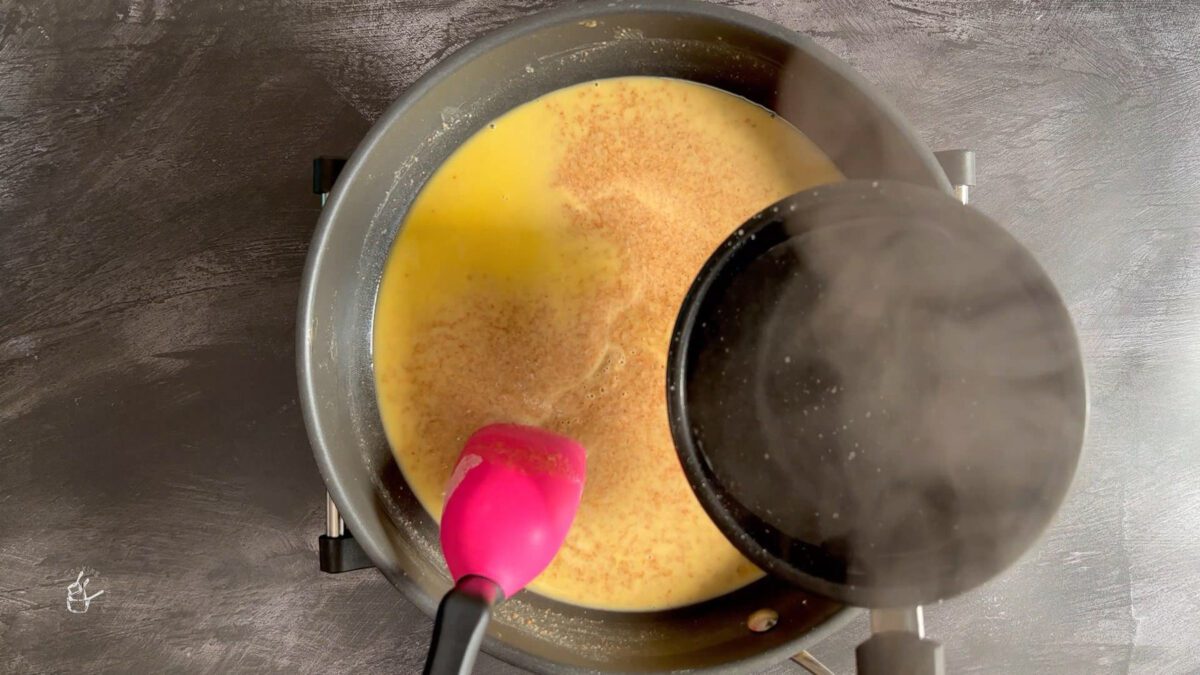
As the flour is roasting, have hot water ready either by warming on the stove or in the kettle. As the water is poured into the roasted atta mixture, the grains of flour will absorb the water and swell.
Keep stirring, the water will appear to dry out and the mixture will very quickly thicken.
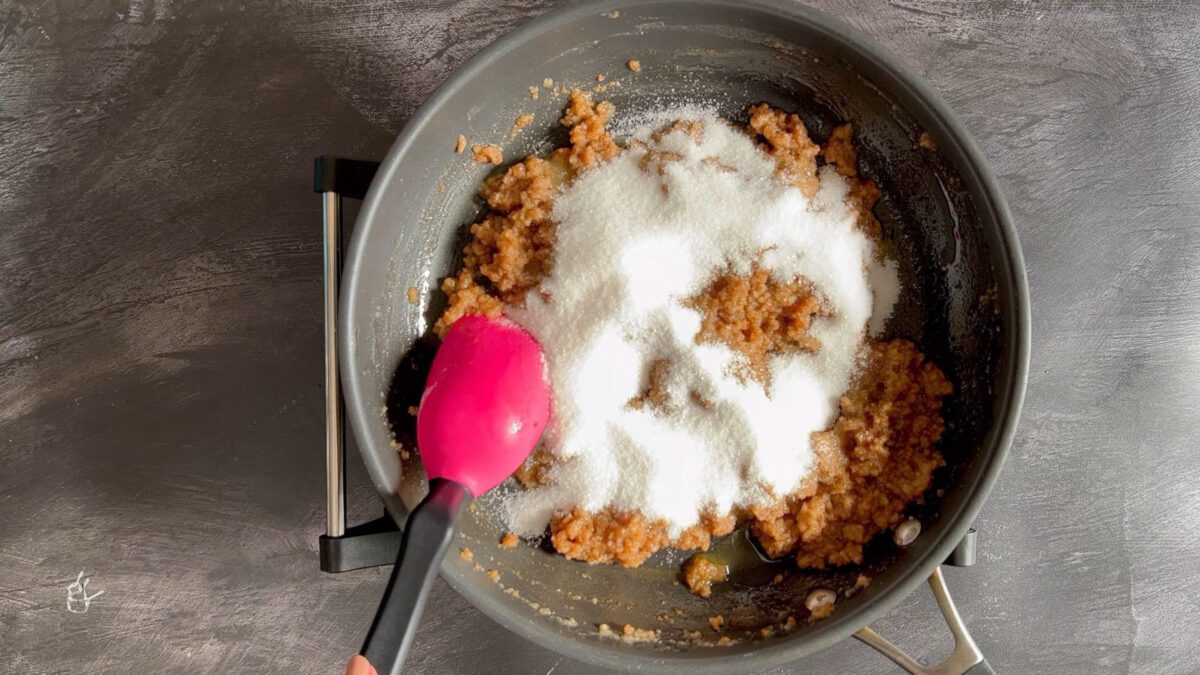
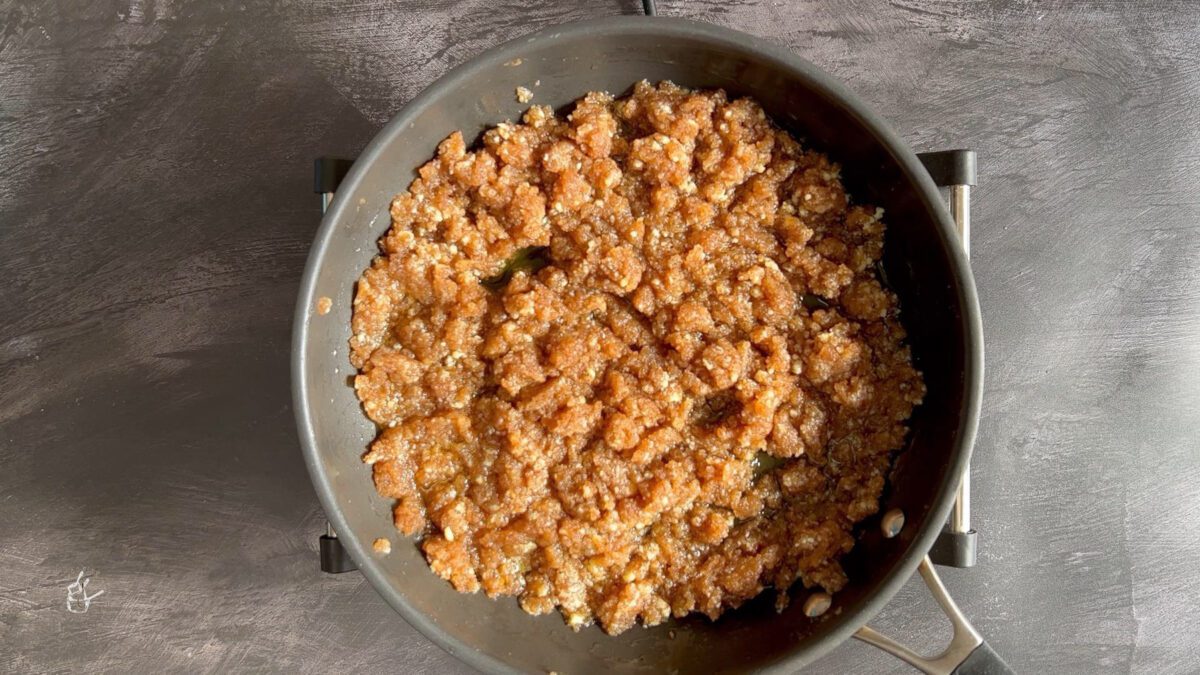
As the water dries, add the sugar and continue to stir on medium-low heat until the sugar dissolves. Cook a further 2-3 minutes. The halwa will begin to leave the sides of the pan as the sugar melts and small amounts of ghee will glisten at the edges.
Take the halwa off the heat at this point to add the remaining ingredients.
Add khoya & flavourings
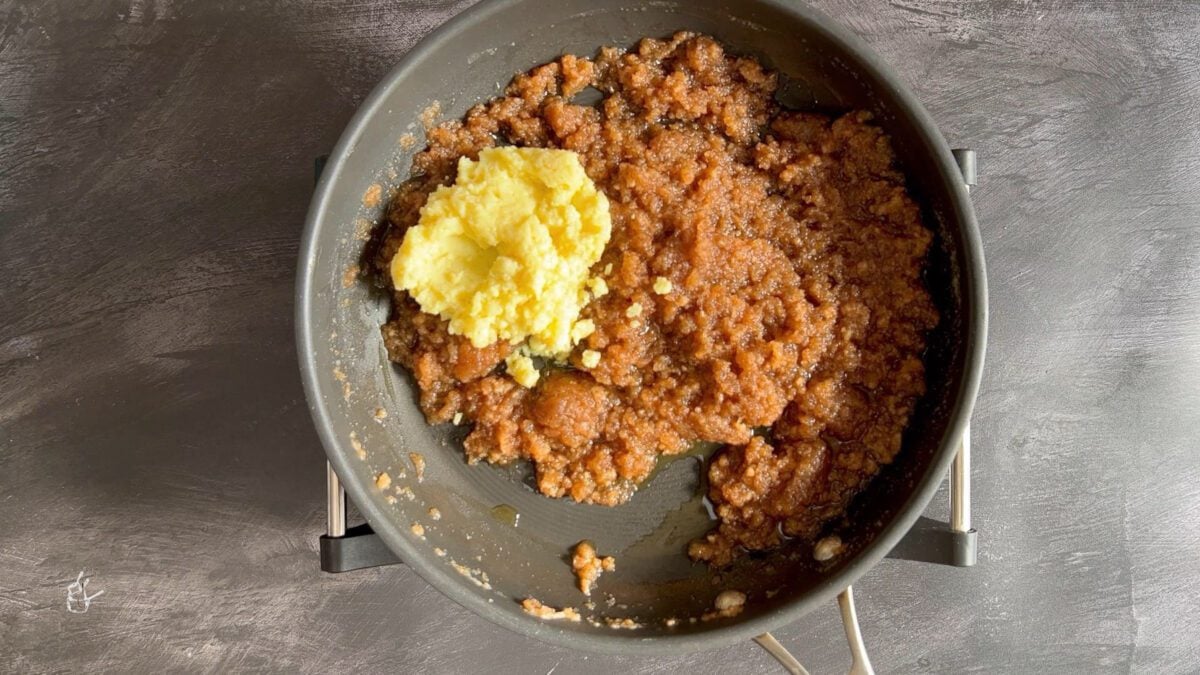
Add the khoya and mix well. The khoya will not totally disappear but you will see small white flecks between the grains of the dark brown halwa. This is fine, you do not need to mix further.
Add the spice powders and slivered nuts and mix.
Aate Halwa should be served warm.

Tips for the best aate ka sheera
For aate ka sheera that is perfectly cooked without a sticky texture, follow these steps.
- Use a good quantity of ghee – use good quality ghee whether it is shop bought or homemade. The ghee should be melted before it is measured – in the UK ghee is often solid due to the cooler weather but 1 cup of solid ghee is not the same as 1 cup melted ghee. Therefore use melted ghee to measure.
- Slow roast the flour in the ghee to ensure it is well cooked and looses its raw smell. Well roasted flour is the key for a best result
- Roast the flour until the colour changes – roasting too quick at high heat will cause the flour to burn
- Use a heavy bottomed pan or kadai to prevent burning and have greater control during cooking. You could also use a non stick pan for this. If using non-stick, your utensils should be silicon to prevent damage to the non-stick coating.
- Keep stirring the halwa continuously to ensure it is well cooked all over.
- Have your ingredients prepared and ready before you start cooking – this prevents mistakes and burning!
- Use the same cup/bowl for your measurements for the perfect ratio.
- Top tip for those in cold countries! – For perfect texture and flavour when serving up seconds, warm the halwa slightly either in the pan or in the microwave to melt the ghee. This way, the sheera will still feel melt-in-the-mouth, warm and rich.
How to store Aate ka Halwa
Aate ka Halwa can be stored in the fridge, in an airtight container, for up to 2-3 days. If it dries up, add a spoon of water if required and reheat on the stove or microwave.
You can also freeze the leftover halwa in a freezer-proof container. Defrost by leaving out the container at room temperature. Reheat on the stove or in the microwave until the ghee is released.
What to serve with Aate Ka Halwa
This halwa is a delicious and comforting Indian sweet or pudding that can be made and enjoyed any day.
Prasad - If holding/hosting a religious ceremony offer as a Prasad and distribute after the occasion has finished. A tablespoon of Prasad can be directly given into peoples right hand and they can consume there and then.
Or can be filled small amount in a small zip lock bag or eco friendly bowl and given to each person.
Family meal - In our family, we love to have aate ka halwa for Sunday brunch with any delicious curry such as Chickpea and coconut curry or Kala Chana Nu Saak (black chickpea curry without onion garlic) and Poori. A must try combination for your next Sunday Brunch!
Breakfast - Sometimes mum would make for me and my brother for a breakfast along with Kesar badam milk before we go to school to cope with a hectic and busy day.
Dinner Party - Don't under estimate the power of Aate Ka Halwa, this is just not a homely dessert and food for only religious purpose . This well made royal treat can be served at a dinner party too.
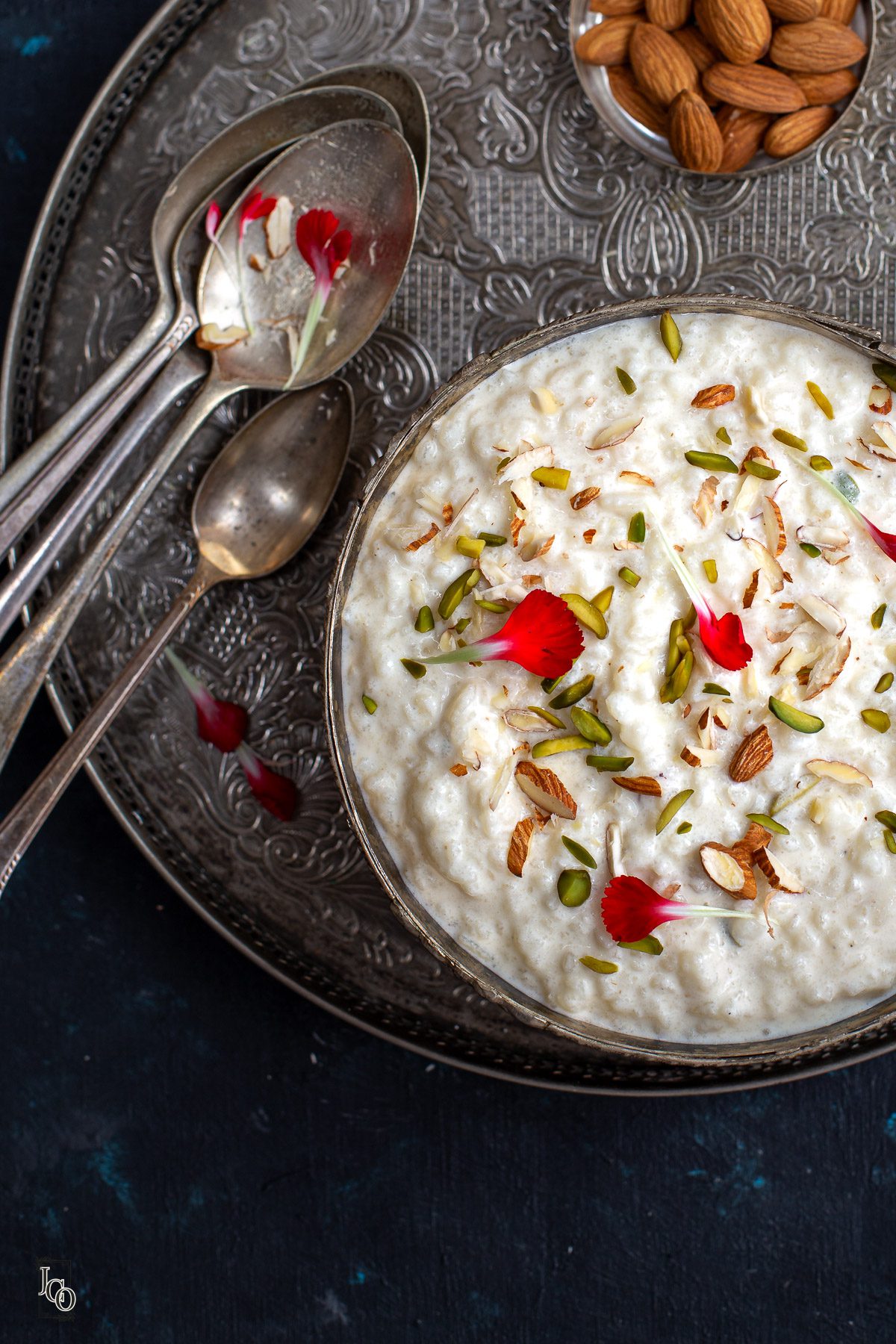
Serve piping hot in a beautiful vintage style tray or bowl with a serving spoon. Garnish it with perfectly cut nuts and edible flower petals, you may use some edible silver/gold foil too.
If hosting a big get-together or a dinner party at home, finish off your menu with our best party starters like Air fryer tandoori paneer tart or Methi corn bhajiya. Pair these starters with virgin Cardamom mojito or Caramel Lassi that you can mix up in a flash.
Spoil your friends and family with our main vegetarian curry Punjabi Saag paneer and Sultani dal and pair them with Peshwari naan or Masala Lachha paratha.
FAQs
You can use unsalted butter instead of ghee however the taste will not be the same. It does not take long to make ghee from unsalted butter.
You can replace the water directly with milk either whole or skimmed. You can leave out the khoya if you use milk. The more common recipe however is to use water.
You can use jado lot/mota aata for this recipe.

The best Halwa recipes:
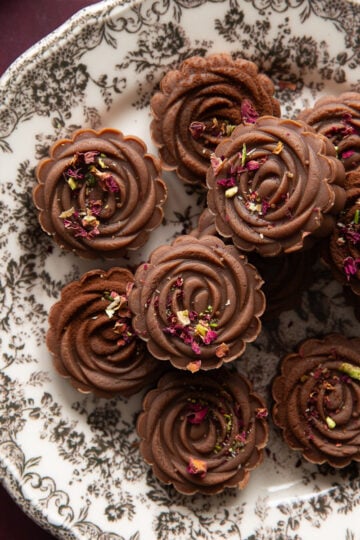
Badam Halwa - made with almond flour (ground blanched whole almonds)
As always if you make this recipe, be sure to leave me a comment, rate this recipe and tag me on Instagram @jcookingodyssey or #jcookingodyssey. I love seeing all your photos of my recipe recreations!
Don’t forget to follow me on social media using the buttons below – I can't wait to see you all there!
📖 Recipe

Aate Ka Halwa
Equipment
- 1 Thick based kadai/ I have used non-stick heavy based pan
- 1 Milk pan/Sauce pan
- 1 Spatula
Ingredients
Aate Ka Halwa
- 1 cup whole Wheat flour I used wholemeal chapatti Flour
- 1 cup ghee
- ¾ cup sugar
- ½ cup khoya or mawa
- 3 cup water
- ½ teaspoon cardamom powder
- ¼ teaspoon nutmeg powder
Garnish/Topping
- 4 tablespoon nuts almond, pistachio, cashews - finely chopped
- 1 tablespoon rose petals dried or fresh
Instructions
- Heat melted ghee in a kadai/pan and add flour.
- Saute the flour on a low to medium heat for good 12-15 minutes or until flour turns light brown, ghee separates from the flour and your kitchen fills up with incredible roasting aroma.
- Once ghee separates from the flour that indicates that your flour is well roasted and it is ready for the next step.
- Meanwhile, boil 3 cup water on the other stove or microwave and leave it aside.
- Gently and slowly pour boiling water into roasted flour, keep stirring same time.
- Once all the water dries up, add sugar and keep mixing for a couple of minutes.
- Add khoya, and mix well until you see Halwa separates ghee once again.
- Add cardamom and nutmeg powder and mix well.
- Garnish it with the finely chopped nuts and edible flowers and serve.
- If you are offering as a prasad, don’t forget to put holy basil ( Tulsi Patta ) on top of the Atta Ka Halwa prasad.
- Enjoy!
Video
Notes
- Use ghee generously - use good quality ghee whether it is shop bought or homemade. The ghee should be melted before it is measured - in the UK ghee is often solid due to the cooler weather but 1 cup of solid ghee is not the same as 1 cup melted ghee. Therefore use melted ghee to measure.
- Slow roast the flour in the ghee to ensure it is well cooked and looses its raw taste.
- Roast the flour until the colour changes - roasting too quick at high heat will cause the flour to burn
- Use a heavy bottomed pan or kadai to prevent burning and have greater control during cooking. You could also use a non stick pan for this. If using non-stick, your utensils should be silicon to prevent damage to the non-stick coating.
- Keep stirring the halwa continuously to ensure it is well cooked all over.
- Have your ingredients prepared and ready before you start cooking - this prevents mistakes and burning!
- Use the same cup/bowl for your measurements for the perfect ratio.
- Top tip for those in cold countries! - For perfect texture and flavour when serving up seconds, warm the halwa slightly either in the pan or in the microwave to melt the ghee. This way, the sheera will still feel melt-in-the-mouth, warm and rich.
- If using fresh flower petals, ensure they are washed and pat dried to remove any dirt or small insects.
- To avoid sticky or lumpy halwa, make sure you do not skimp on ghee. Take your time to roast the flour on a low heat, and the water is boiling hot.
Nutrition
PLEASE NOTE: Nutritional values are estimated by a computer and may vary based on ingredients and portion sizes. For personalised dietary advice, please consult a qualified healthcare professional.
Share on Facebook Pin This RecipeNote - This recipe has been updated from our recipe archives with new images and content, but the recipe remains the same. First time published in August 2016.

safira says
I am sure I would love this as thus is my kind of dish! Also awesome photos! My fave photos on the blog 🙂
Holly says
Hi Jagruti, I have not heard of Shahi Atte Ka Halwa but would love to try it! With the roasted wholewheat, cardamom, nutmeg and mixed nuts it sounds so delicious!
Anonymous says
A new recipe for me as well! Your photo's are beautiful!
jcookingodyssey says
Thank you laughingspatula for the lovely words.
Unknown says
What an interesting recipe! I've never had this, but it looks like something I'd love to try. I can only imagine how fragrant the whole wheat flour is as it's toasting!
jcookingodyssey says
Thanks Amanda for the lovely comment. Oh boy ! the aroma of toasting flour is incredible 🙂
Unknown says
Very interesting seeing recipes from other cultures! Where do you get the Indian spices from?
jcookingodyssey says
Thanks Lisa for lovely comment. I reside in the UK and we get all the Indian spices here everywhere, even you can buy them in British supermarket too.