
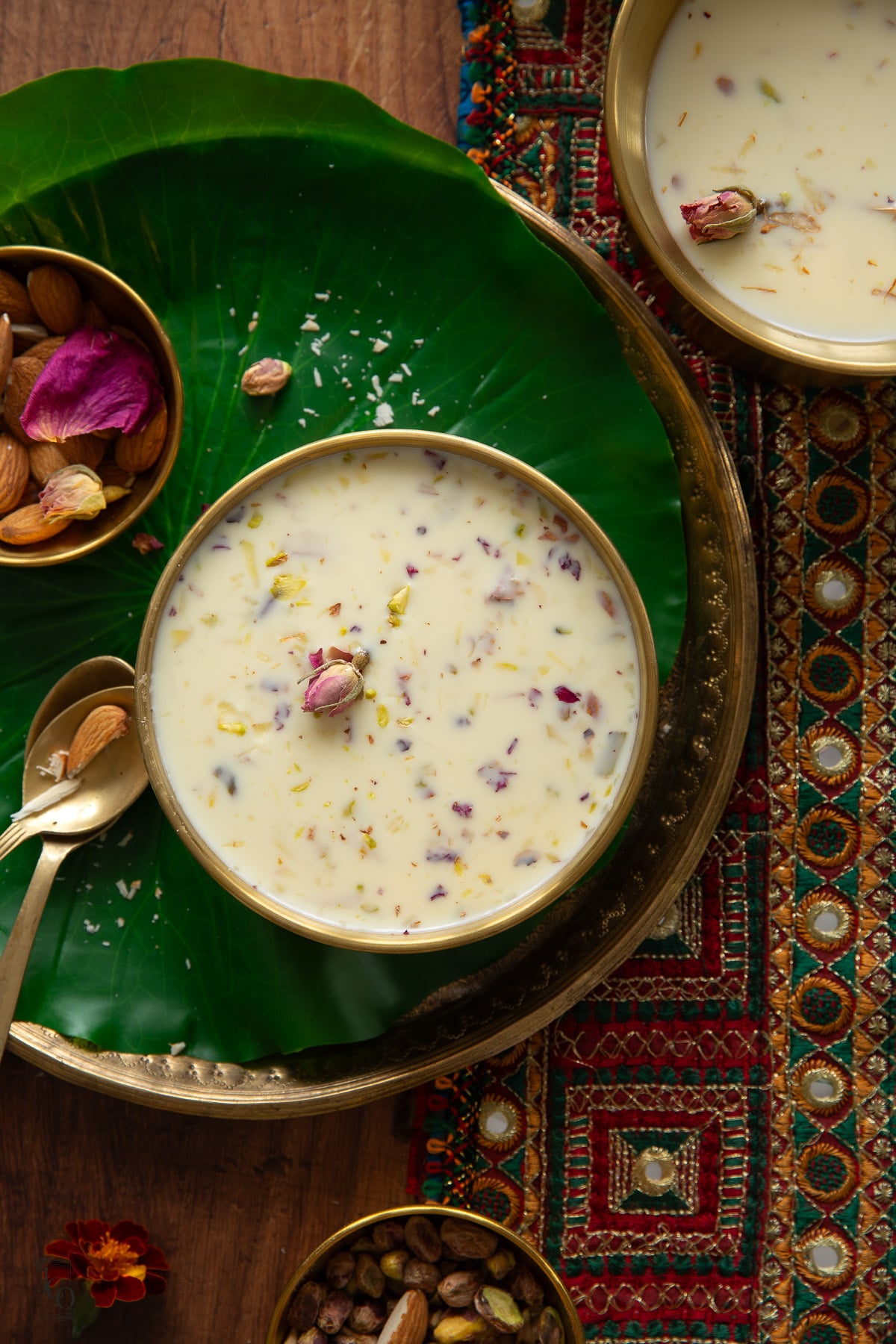
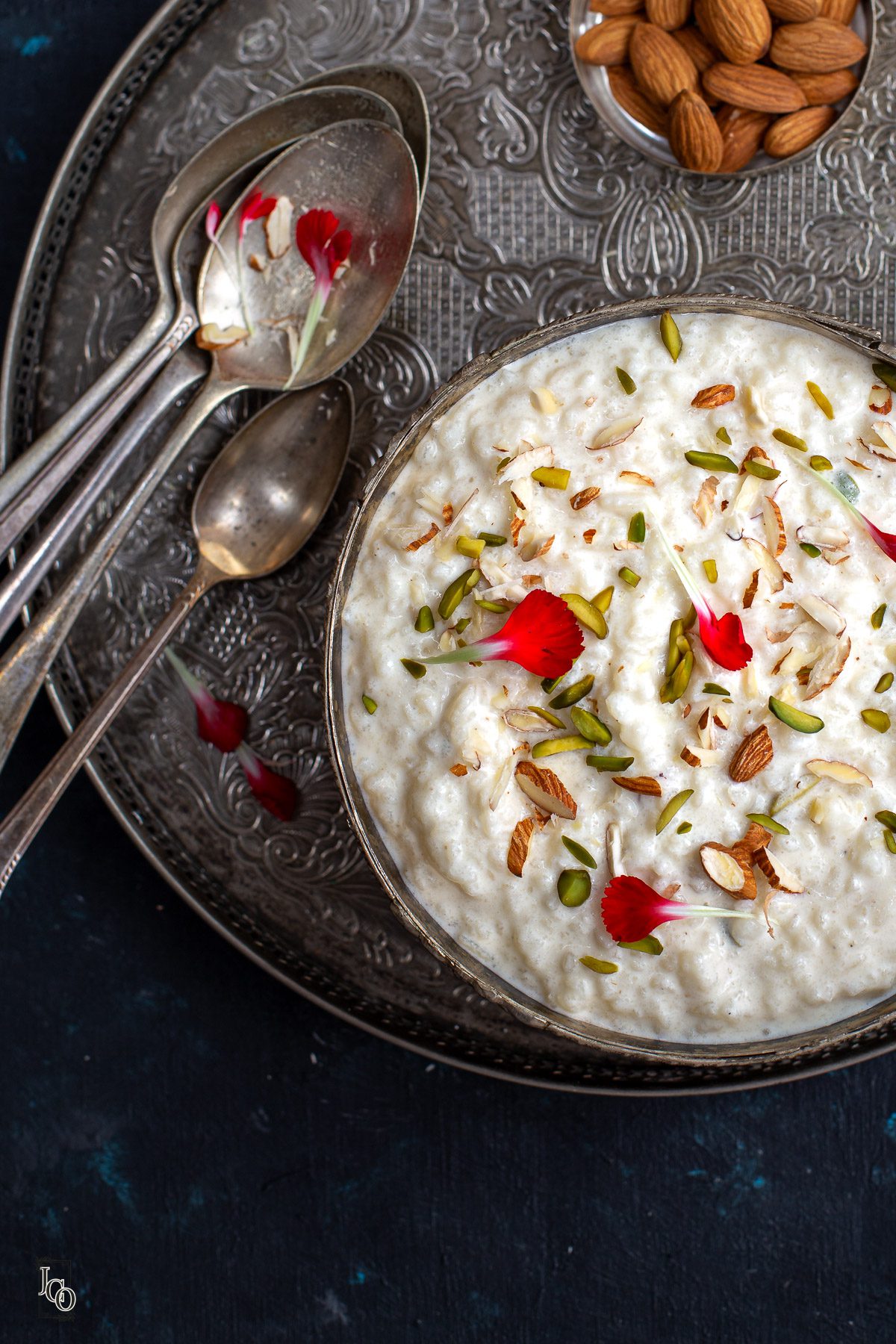
Basundi is a rich, creamy Gujarati milk dessert made by slowly reducing whole milk with sugar and cardamom. It's smooth and pourable, with a lovely cooked-milk flavour that you simply can't get from shortcuts. Serve it chilled with either on its own or alongside poori.
Jump to:
This is a recipe my Gujarati Mum picked up from neighbours and old recipe books rather than one passed down from my Grandma.
We've made it so many times over the years together that the method has become second nature. There's nothing particularly difficult about it, but you do need a good pan, a sturdy spatula and enough time to give the milk your full attention.
That's really the secret. Don't rush it!
Why Basundi Is Different From Rabdi
For me, basundi is all about the flavour you get from slowly reducing milk. It becomes naturally creamy with a rich, slightly nutty taste that condensed milk, milk powder or custard powder shortcuts just don't quite give.
The texture is also different from lachha rabdi. Basundi should stay smooth and pourable, roughly like single cream, with any malai stirred back in as it forms. Rabdi is reduced further and keeps those thicker layers of malai.
So once the basundi is creamy and pourable, stop there. Take it much further and you're heading into rabdi territory!
For another variation, try my dudhi basundi, or browse my Indian milk desserts collection for more ideas.
Basundi Ingredients
You'll find the full ingredients list with measurements in the recipe card below, but these notes are worth reading first. They explain the small ingredient choices, swaps and texture cues I've learnt from making this recipe.
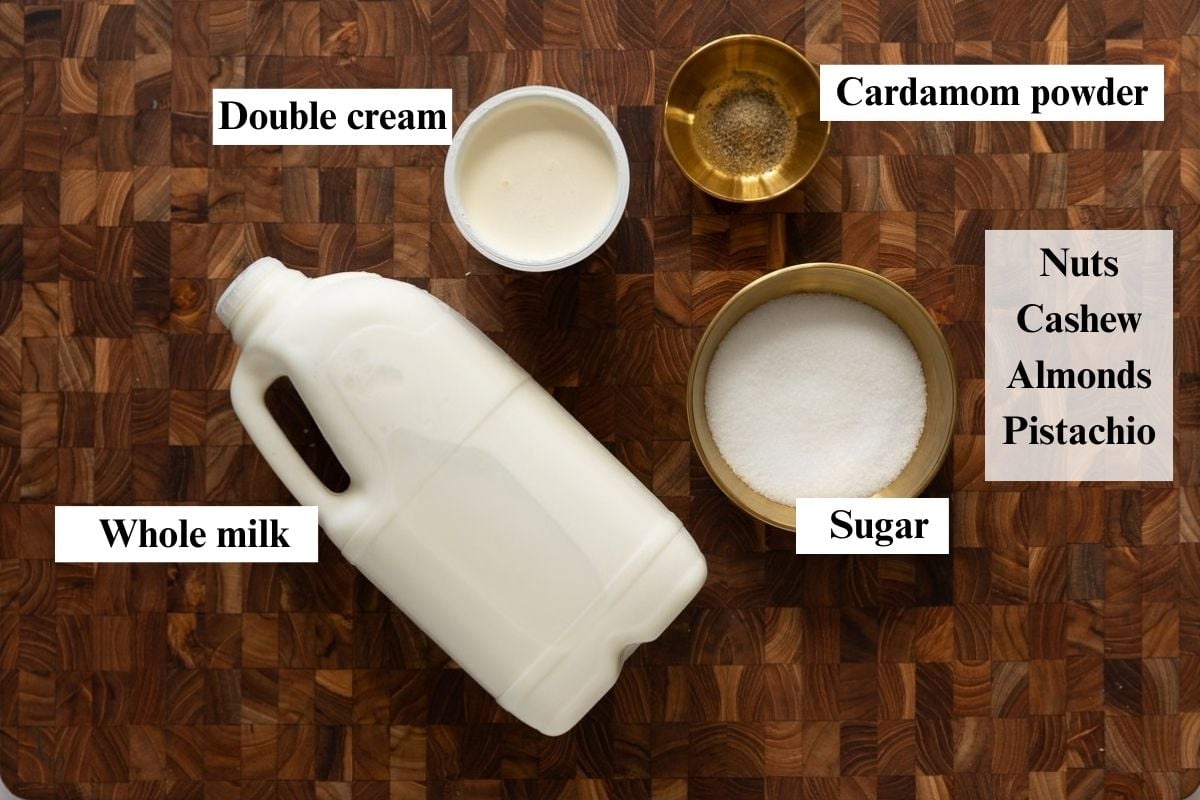
Whole milk
Use whole milk. You need its natural fat and milk solids to develop a rich flavour as it reduces.
I sometimes use Jersey Gold milk, which is naturally richer. It can give the basundi a head start, although I still add double cream to my recipe.
Double cream
This is one of Mum's little tricks for milk desserts made in the UK.
Our regular whole milk isn't quite as rich as the milk traditionally used for some Indian sweets, so I finish basundi with double cream for extra richness.
Once the milk has reduced and the sugar has cooked through, I add the cream and simmer for just another 1–2 minutes. There's no need to cook the cream for ages.
It's a trick I use in other desserts too, including my creamy greek yogurt shrikhand and rice kheer.
Sugar
I use regular white granulated sugar to keep the basundi a beautiful creamy-white colour.
The important thing is when it goes in. First, reduce the milk on its own. Then add the sugar and continue cooking. The sugar temporarily loosens the mixture, so give it time to thicken again before adding the cream.
Cardamom
Ground green cardamom gives the basundi its classic fragrance without overpowering the cooked-milk flavour.
I prefer traditional basundi to remain creamy white, so I don't add saffron. I personally find saffron overpowers the milky-ness!
A Little Note About Equipment
My favourite pan to use is a wide-mouthed, heavy-based kadai. The wide surface gives the milk room to reduce and makes it easier to stir and scrape the bottom. A good heavy-bottomed saucepan works reasonably well too.
Here's a little trick I've used for years when heating milk: rinse the pan with water and leave about a tablespoon at the bottom before adding the milk. It helps reduce the chance of the milk catching as it heats.
You'll also want a sturdy spatula that reaches right into the edges of the pan. Keep scraping the bottom and sides as you stir.
Basundi Stepwise Method
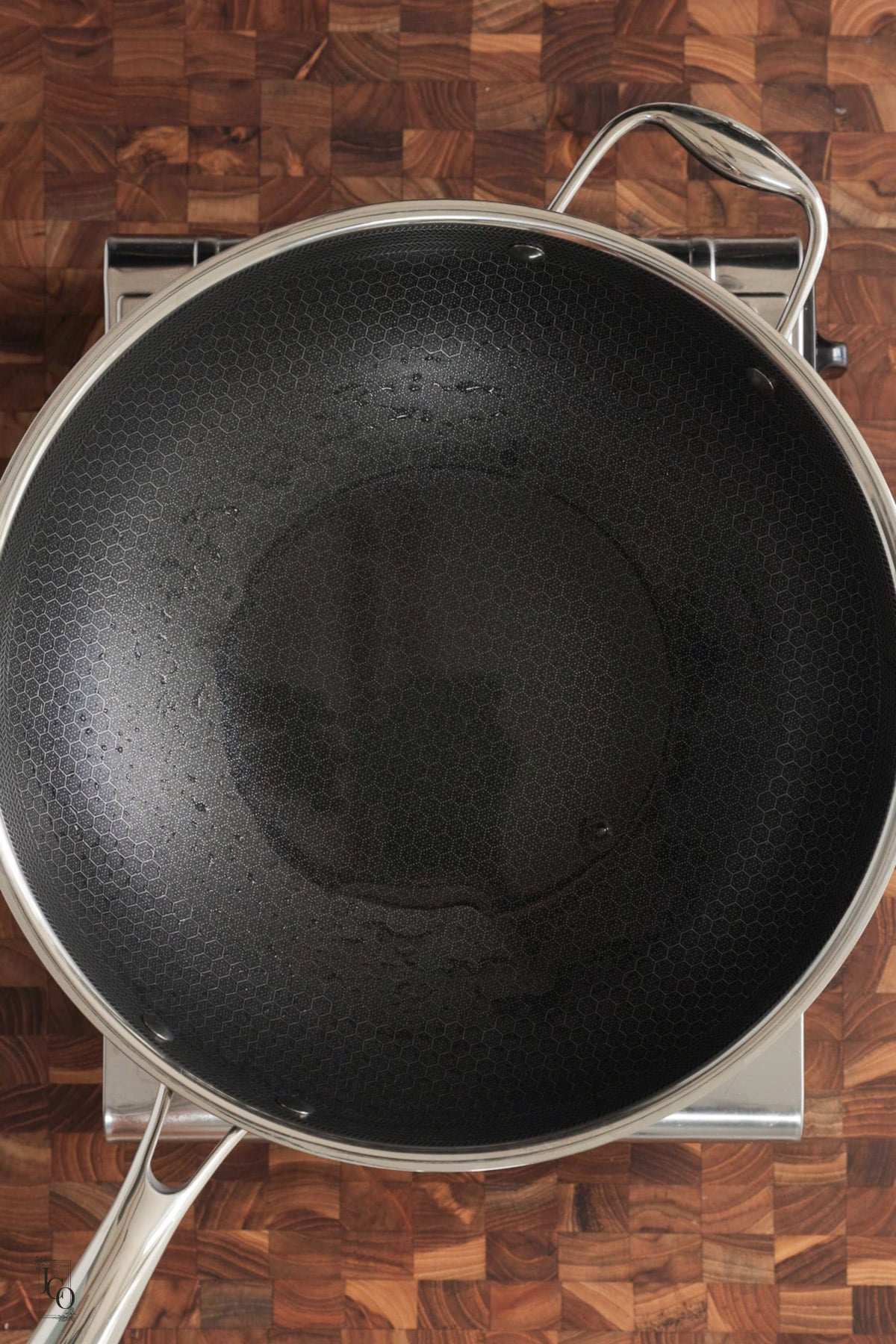
- Prepare the pan: Rinse a wide, heavy-based kadai with water, leaving approximately a tablespoon at the bottom. Pour in the whole milk.
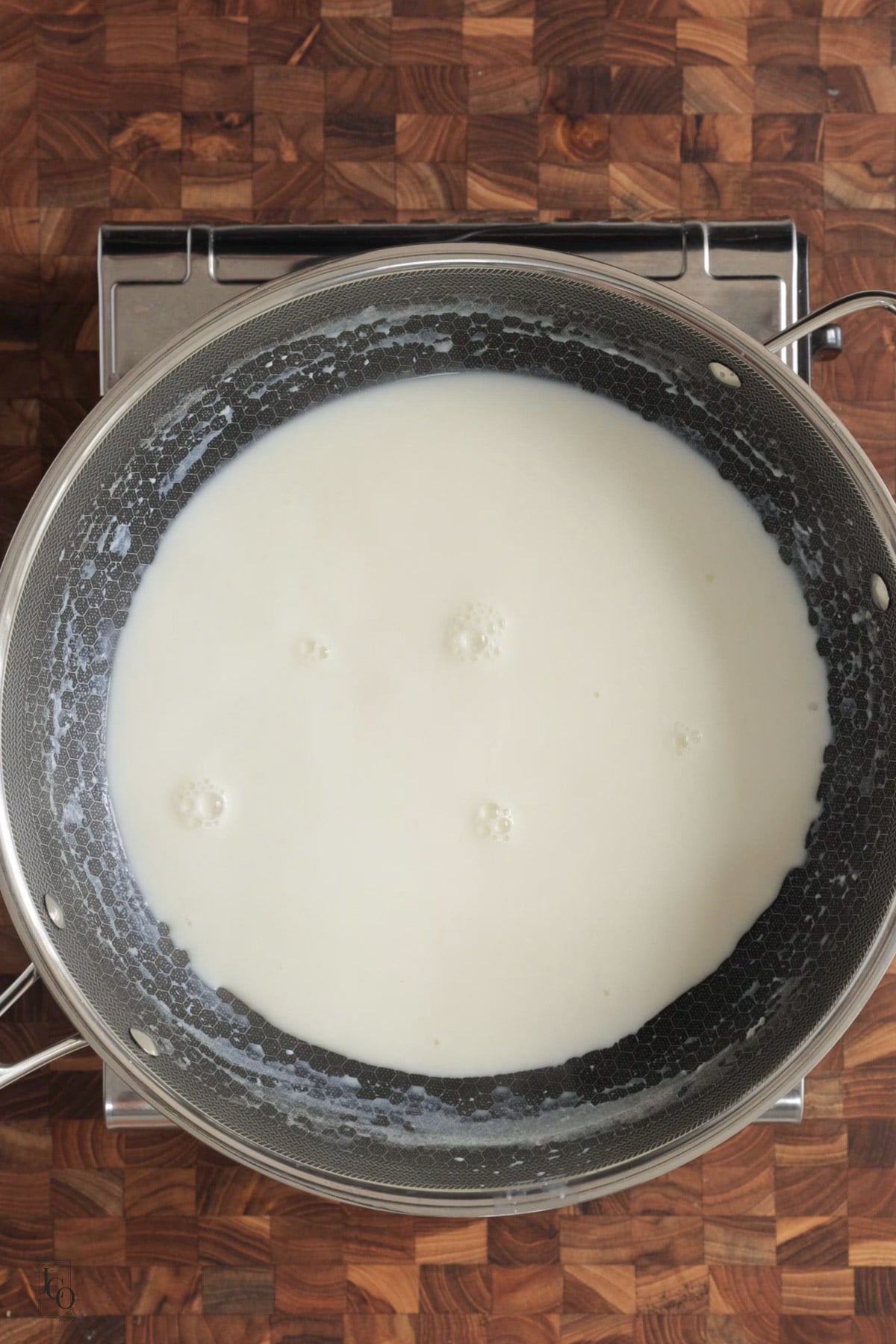
- Bring the milk to a boil: Heat over medium heat, stirring continuously and scraping the bottom and sides. Once the milk boils, reduce the heat to maintain a gentle simmer.
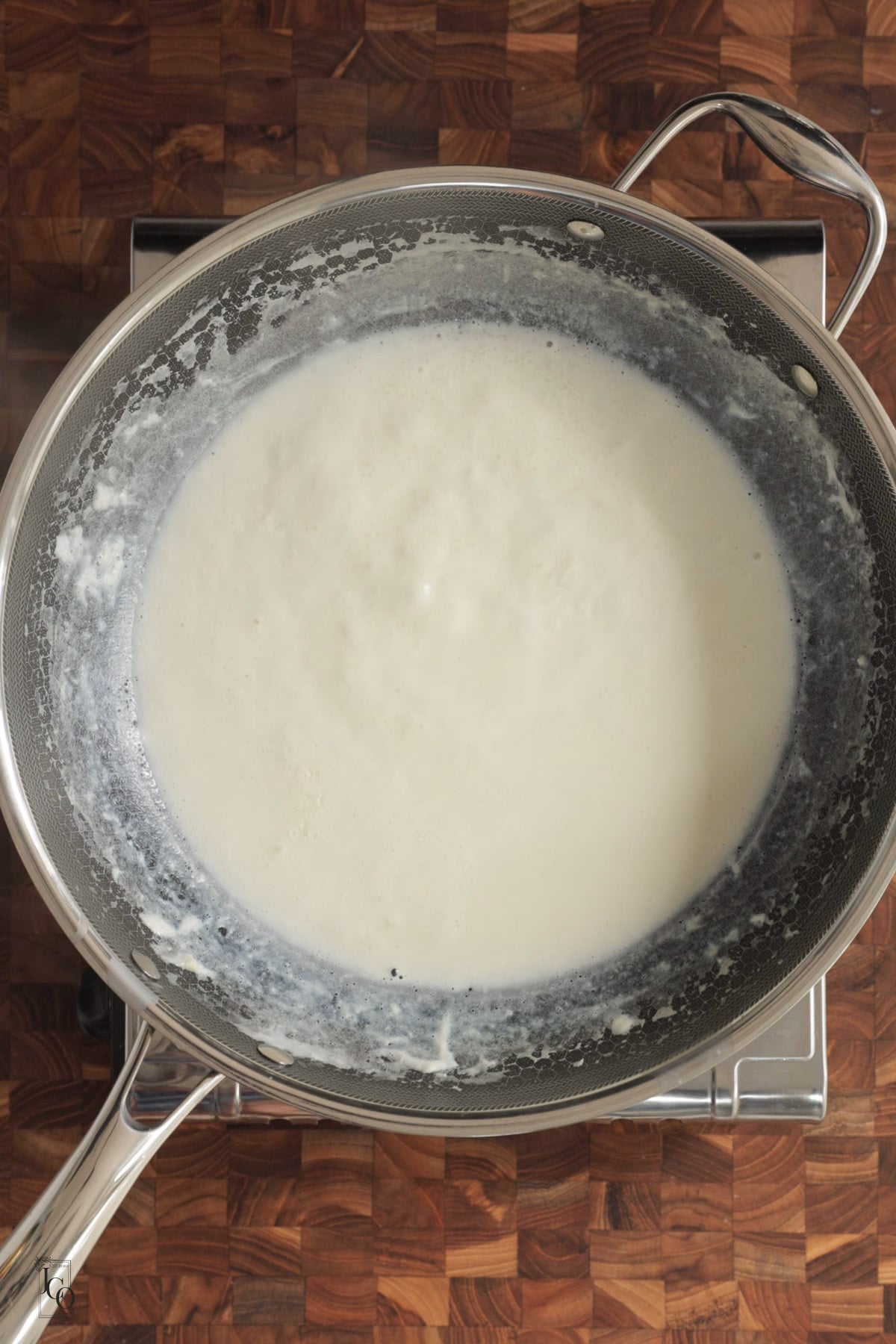
- Reduce the milk: Continue simmering and stirring until the milk has reduced substantially. Stir any skin that forms straight back into the milk to keep the texture smooth.
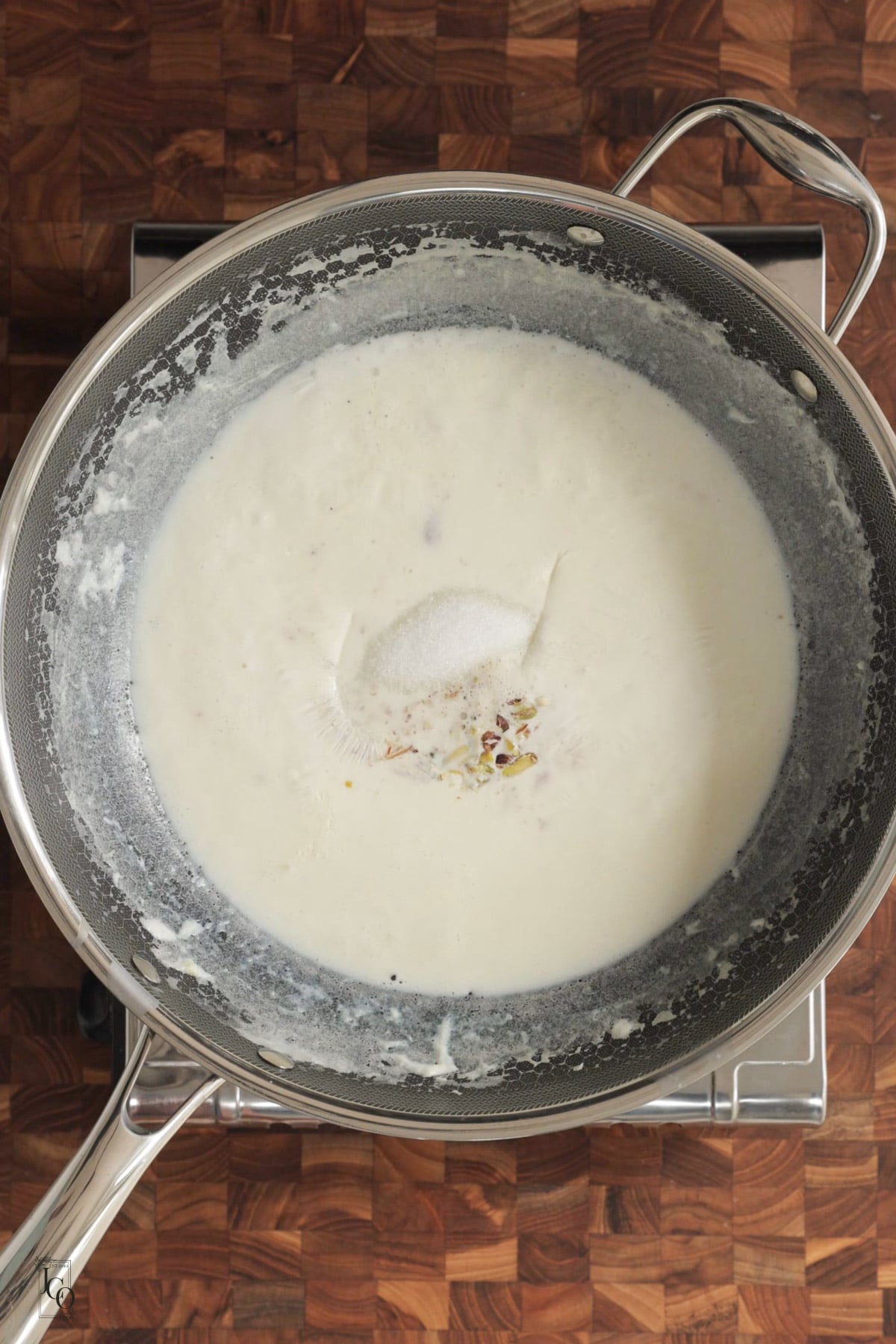
- Add the sugar: Stir in the sugar, nuts and cardamom once the milk has reached the initial reduction stage. The mixture may become a little thinner as sugar releases moisture. Continue cooking and stirring until it thickens again.
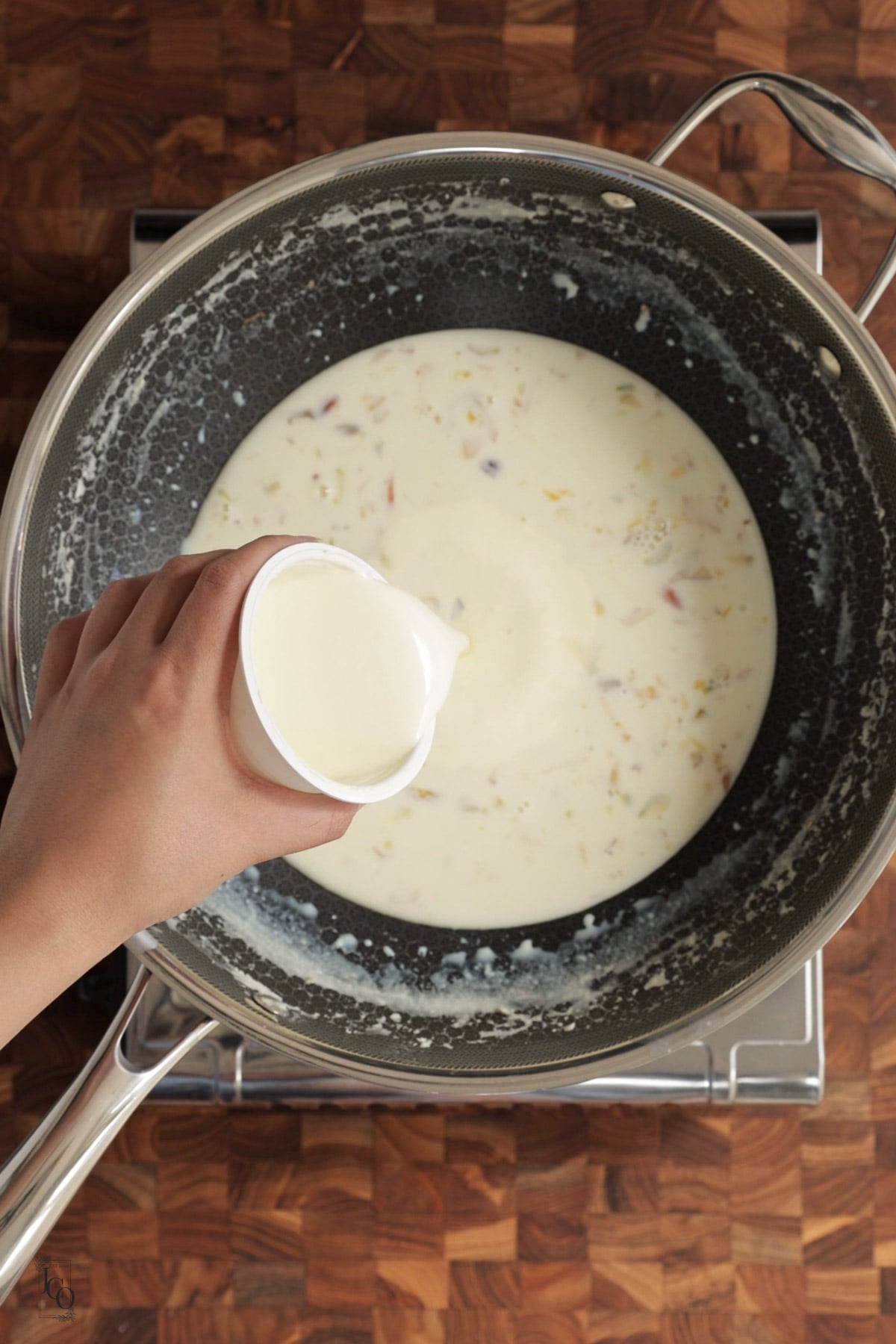
- Add the cream: Add the double cream and simmer gently for another 1–2 minutes. Do not overcook the cream.
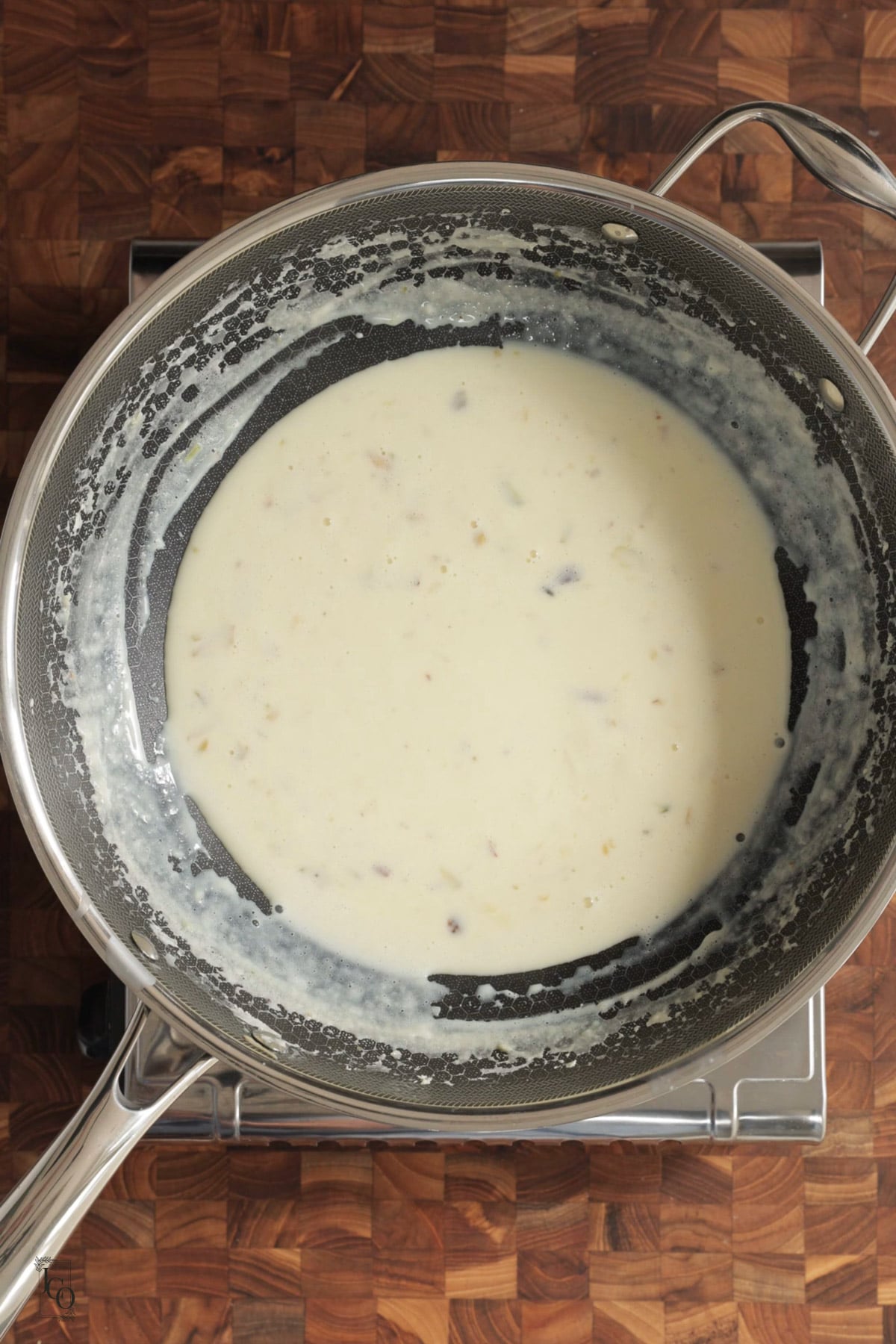
- Cool, chill and garnish: Remove from the heat and keep stirring occasionally as the basundi begins to cool, preventing a thick skin from settling on top. Cool promptly, refrigerate until chilled, then garnish with almonds, pistachios and rose petals.
Technique
How I Know When Basundi Is Ready
As the milk reduces, you’ll notice a change in resistance when stirring. It begins to feel creamier and develops that lovely cooked-milk aroma.
I reduce the milk before adding sugar, then continue cooking until the mixture thickens again. The cream goes in right at the end.
The finished basundi should pour like single cream. It should feel rich and creamy, but it shouldn’t be thick enough to mound on a spoon.
Remember that it will thicken further once chilled, so don’t take the reduction too far.
This is a much more reliable method than trying to work out exact cooking times!
What To Serve With Basundi
We usually serve basundi chilled as part of a special-occasion Gujarati thali, rather than making it as an everyday dessert.
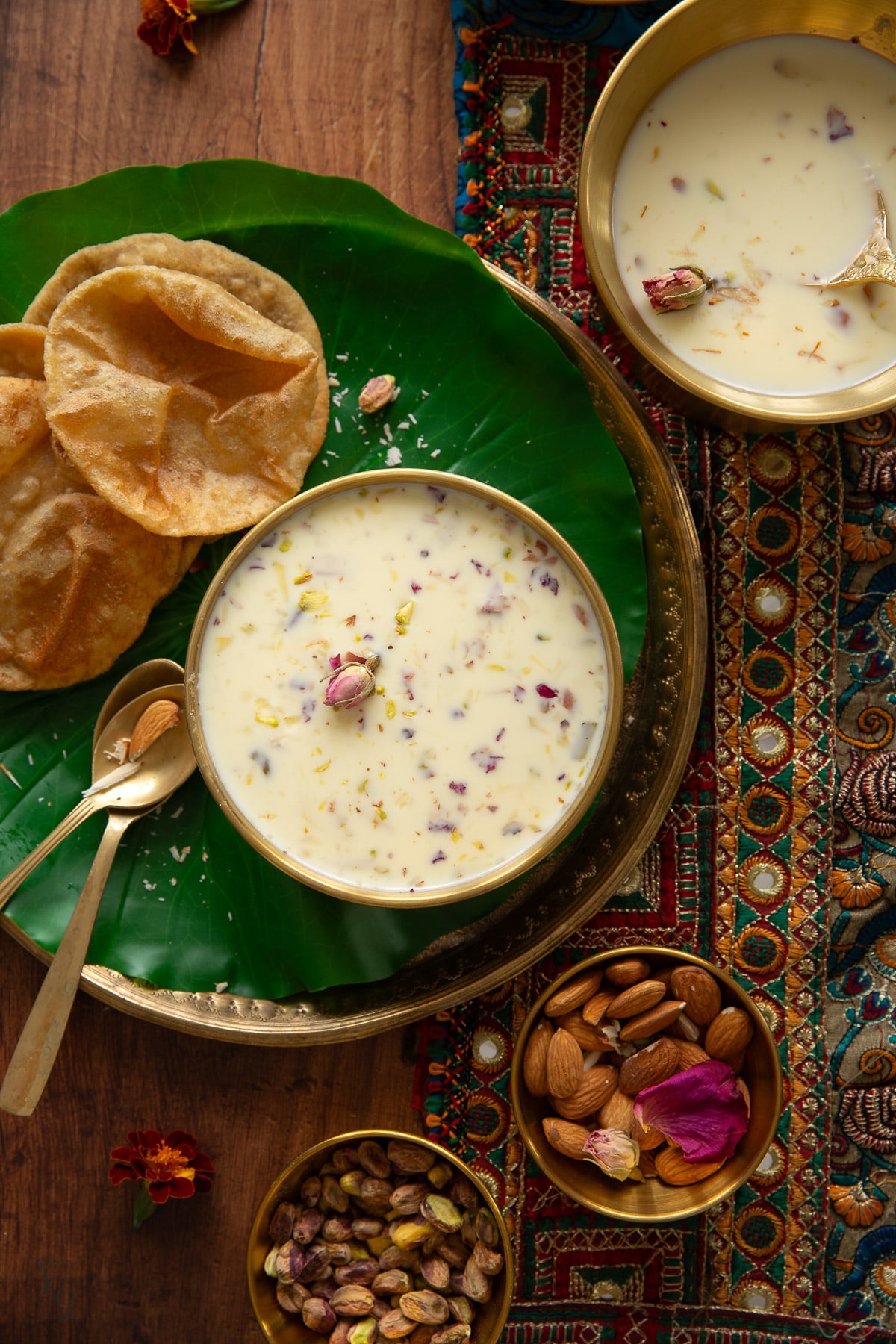
My favourite pairing is freshly fried Gujarati poori. There’s something so good about the contrast between the bread and cold, creamy basundi.
It’s also lovely for Diwali, Holi and other family celebrations. If you’re planning a bigger spread, browse my Gujarati sweets and desserts collection for more mithai ideas.
You'll also find it in Gujarati wedding thali along with rasawaru bateta nu shaak and fluffy bateta vada.
Basundi can also be enjoyed during farali days where milk, sugar and the chosen garnishes are permitted by your family’s fasting practices.
Make Ahead and Storage
Basundi is a lovely make-ahead dessert because we serve it chilled anyway.
It will thicken as it cools, so avoid cooking it too far in the first place.
Cool it promptly, transfer to an airtight container and refrigerate. Keep it chilled until serving.
If a skin forms on top, stir it back through gently before serving.
Basundi FAQs
Can I make basundi with condensed milk?
You can make quicker milk desserts with condensed milk, but I don’t use it for this traditional basundi. Slowly reducing fresh milk develops a particular cooked-milk flavour that I want in the finished dessert.
Why isn’t my basundi thickening?
Give the milk more time to reduce and use a wide pan. It will also thicken further after the sugar has been added and cooked through, and again as it chills.
Why is my basundi grainy?
Milk skin may have been allowed to collect in thick layers rather than being stirred back in. For my smooth basundi, I continuously incorporate the skin as it forms.
Is basundi meant to be as thick as rabdi?
No. My basundi is smooth and pourable, similar to single cream. Rabdi is thicker and has a more pronounced malai texture.
Can I make basundi in advance?
Yes. It’s best served chilled, making it well suited to festive meals and entertaining.
As always if you make this recipe, be sure to leave me a comment, rate this recipe and tag me on Instagram @jcookingodyssey or #jcookingodyssey. I love seeing all your photos of my recipe recreations!
Don’t forget to follow me on social media using the buttons below – I can't wait to see you all there!
📖 Recipe
Basundi
Ingredients
- 12 cups whole milk
- 2 cups double cream
- 1 ¼ cups sugar adjust to taste
- 1 teaspoon cardamom powder
- 4 tablespoon almond and pistachio slivers
Instructions
- Rinse a heavy-bottomed pan with tap water and then pour in 12 cups whole milk.
- Heat the milk gently over a medium flame whilst continuously stirring. When stirring, ensure you keep stirring and scraping the bottom and sides of the pan.
- The milk will eventually begin to reduce and thicken. Stir in any malai (milk skin) that forms on top. This can take 20-30 minutes but depends on the volume of milk you start with.
- At this point, add your 4 tablespoon almond and pistachio slivers and 1 teaspoon cardamom powder.
- Then add 1 ¼ cups sugar and continue cooking. The sugar will release moisture and temporarily thin out the milk but it will thicken.
- Once you have achieved the consistency of single cream, pour in 2 cups double cream and cook for a further 1-2 minutes.
- Remove from the heat, and set aside to cool completely. Occasionally stir in any malai that may have formed.
- Once cooled, chill in the refrigerator until ready to serve. Garnish with extra nuts and rose petals if you wish.
Video
Notes
- Pan: Use a wide, heavy-based kadai or saucepan and a sturdy spatula.
- Prevent sticking: Rinse the pan first and leave about 1 tablespoon of water at the bottom before adding the milk.
- Stirring: Stir regularly and scrape the bottom and sides so the milk doesn’t catch.
- Milk skin: Stir the malai back into the milk as it forms. Don’t collect it in layers as you would for lachha rabdi.
- Sugar: Reduce the milk first, then add the sugar. Continue cooking until it thickens again.
- Cream: Add the double cream at the end and simmer for only 1–2 minutes.
- Texture: Basundi should be smooth and pour like single cream. It thickens further once chilled.
- Garnish: Add almonds, pistachios and rose petals before serving.
Nutrition
PLEASE NOTE: Nutritional values are estimated by a computer and may vary based on ingredients and portion sizes. For personalised dietary advice, please consult a qualified healthcare professional.
Share on Facebook Pin This Recipe

Leave a Reply